

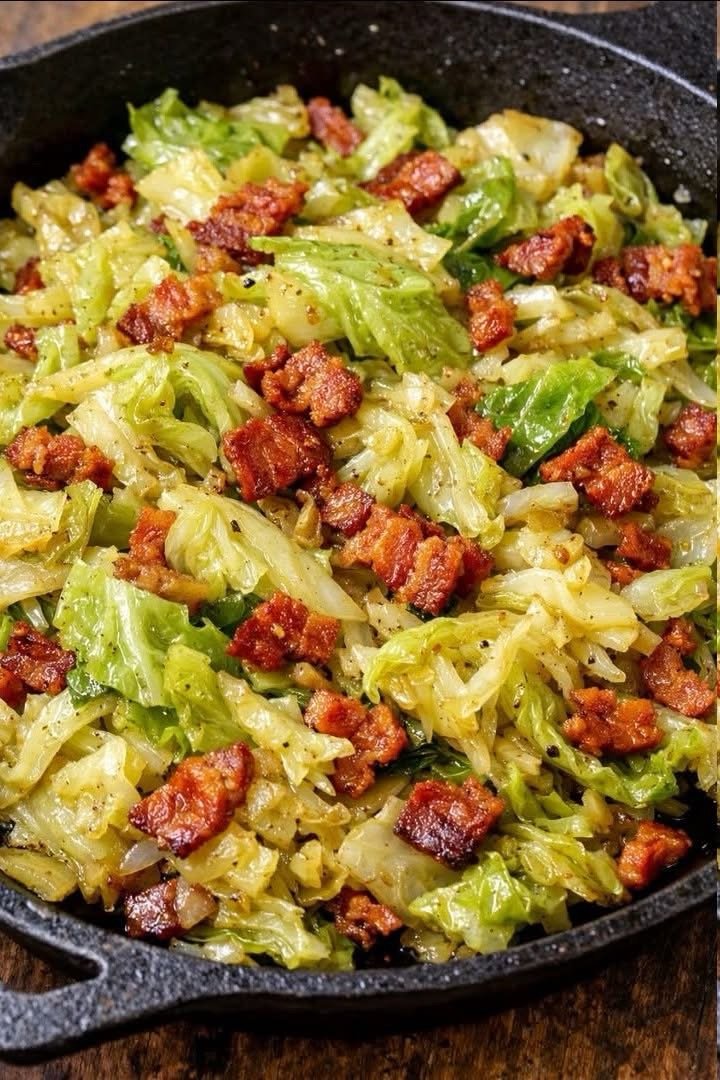
In Southern cooking, cabbage is a quiet hero. It is inexpensive, readily available, and transforms completely when cooked low and slow with a little fat and salt. This Southern 3-ingredient fried cabbage proves that you do not need a long ingredient list to create something deeply flavorful. With just cabbage, bacon, and onion, you can make a side dish that is smoky, savory, slightly sweet, and utterly irresistible. It is the kind of recipe that turns cabbage skeptics into believers.
This Southern 3-ingredient fried cabbage is not actually fried in the sense of deep frying. Instead, it is sautéed in bacon drippings until tender, caramelized at the edges, and infused with the smoky, salty essence of bacon. The natural sweetness of the cabbage emerges as it cooks, balanced by the savory depth of the onions and bacon. This dish is a staple across the South for good reason. It pairs perfectly with cornbread, buttermilk biscuits, or a plate of pinto beans. It also shines alongside smoked sausage, pork chops, or fried chicken. Best of all, it comes together in about 20 minutes with almost no hands-on work.
Ingredients List
· 6 slices bacon, chopped into ½-inch pieces
· 1 medium yellow onion, thinly sliced
· 1 medium head green cabbage (about 2 to 2½ lbs), cored and roughly chopped
Optional (but recommended) Add-Ins:
· ½ teaspoon black pepper
· Pinch of red pepper flakes (for heat)
· 1 tablespoon apple cider vinegar (for brightness)
Step-by-Step Instructions
Step 1: Prepare the Cabbage
Remove any wilted outer leaves from the cabbage. Cut the cabbage in half through the core, then cut each half in half again. Cut out the solid white core and discard it. Slice the cabbage into thin strips about ¼ to ½ inch wide. There is no need to be precise; rustic, uneven pieces are part of the charm.
Step 2: Cook the Bacon
Place a large skillet or Dutch oven over medium heat. Add the chopped bacon and cook for 5-7 minutes, stirring occasionally, until the bacon is crispy and has released its fat. Do not drain the fat; it is the flavor base for the cabbage.
Step 3: Sauté the Onion
Add the sliced onion to the skillet with the bacon and bacon drippings. Cook for 3-4 minutes, stirring occasionally, until the onion is softened and translucent.
Step 4: Add the Cabbage in Batches
Add about half of the chopped cabbage to the skillet. Stir to coat it in the bacon fat. As it wilts down (after 1-2 minutes), add the remaining cabbage. The skillet will look very full at first, but the cabbage will reduce significantly as it cooks.
Step 5: Cook the Cabbage
Increase the heat to medium-high. Cook the cabbage for 8-12 minutes, stirring every 2-3 minutes, until it is tender and wilted and the edges are lightly browned and caramelized. If the cabbage starts to stick, add 2 tablespoons of water and scrape up the browned bits from the bottom of the pan. For a softer, more stewed texture, cover the skillet for the first 6 minutes of cooking, then uncover to allow browning.
Step 6: Season and Serve
Remove the skillet from the heat. Add black pepper, red pepper flakes (if using), and apple cider vinegar (if using). Taste and add salt only if needed—the bacon provides significant saltiness. Serve warm.
Cooking Tips and Pro Tips for Best Results
· Do not drain the bacon fat: The rendered fat is liquid gold. It infuses the cabbage with smoky, savory flavor and helps it brown. If your bacon is very lean, add 1 tablespoon of butter or olive oil.
· Slice the cabbage thinly: Thin strips cook faster and caramelize more evenly. A mandoline makes quick work of this, but a sharp knife works well too. Cut across the core for naturally shorter strands.
· Use a large skillet or Dutch oven: Cabbage shrinks dramatically, but it starts with a large volume. A 12-inch skillet with high sides or a 5-6 quart Dutch oven gives you room to stir without spilling.
· Do not rush the browning: Allowing the cabbage to sit undisturbed for 2-3 minutes at a time lets the edges caramelize, which adds sweetness and depth. Constant stirring prevents browning.
· Add a splash of vinegar at the end: A tablespoon of apple cider vinegar brightens the dish and cuts through the richness of the bacon. This is optional but highly recommended.
· Make it a meal: Stir in 1 cup of diced smoked sausage (like kielbasa or andouille) along with the cabbage. The sausage adds protein and turns this side dish into a hearty one-pan meal.
Variations and Substitutions
Smoked Sausage and Cabbage:
Add 12 oz of sliced smoked sausage (kielbasa, andouille, or turkey sausage) to the skillet after cooking the bacon. Brown the sausage for 3-4 minutes, then add the onion and proceed with the recipe. This turns the dish into a complete meal.
Vegetarian Fried Cabbage:
Omit the bacon. Heat 3 tablespoons of olive oil or butter in the skillet. Add the onion and cook as directed. Add ½ teaspoon of smoked paprika to mimic the smoky flavor of bacon. Proceed with the cabbage.
Spicy Southern Cabbage:
Add ½ teaspoon of crushed red pepper flakes or 1 diced jalapeño (with seeds for heat) along with the onion. Finish with a drizzle of hot sauce or a pinch of cayenne.
Caraway and Apple Cider Cabbage:
Add 1 teaspoon of caraway seeds along with the onion. Substitute ¼ cup of apple cider for 2 tablespoons of water when deglazing. This German-inspired version is excellent alongside pork chops.
Bacon and Butter Cabbage:
After cooking the bacon, add 2 tablespoons of butter before adding the cabbage. The butter adds an extra layer of richness and helps the edges brown more deeply.
Low-Sodium Version:
Use low-sodium bacon. Rinse the bacon after cooking to remove excess salt, or use turkey bacon (which is lower in sodium but also leaner; add 1 tablespoon of oil).
Serving Suggestions
This Southern fried cabbage is incredibly versatile. Serve it:
· As a Side Dish: Alongside fried chicken, pork chops, meatloaf, or smoked sausage.
· With Beans and Cornbread: A classic Southern meal. Serve with pinto beans, black-eyed peas, or white beans and a slice of cornbread.
· Over Rice or Grits: Spoon the cabbage and bacon over white rice, brown rice, or creamy grits.
· As a Topping: Pile onto hot dogs, bratwurst, or pulled pork sandwiches.
· For Breakfast: Serve alongside eggs, bacon (more bacon!), and toast.
Pair with:
· Cornbread or buttermilk biscuits
· Mashed potatoes
· Collard greens or turnip greens
· Fried catfish or shrimp
Storage and Reheating Instructions
Refrigerator:
Store leftovers in an airtight container for up to 5 days. The flavor deepens overnight.
Freezer:
Freeze in a freezer-safe container for up to 3 months. The texture of the cabbage will become very soft, but the flavor remains excellent. Thaw overnight in the refrigerator before reheating.
Reheating:
· Stovetop (Best): Reheat in a skillet over medium heat for 5-7 minutes, stirring occasionally. Add a splash of water or broth if the cabbage seems dry.
· Microwave: Heat individual portions covered for 60-90 seconds, stirring halfway through.
Nutritional Information (Approximate, per serving – serves 4)
· Calories: 260
· Protein: 9g
· Fat: 20g
· Saturated Fat: 7g
· Carbohydrates: 13g
· Fiber: 5g
· Sugar: 7g
· Sodium: 580mg (varies by bacon brand)
· Potassium: 420mg
· Vitamin C: 70% Daily Value
· Vitamin K: 85% Daily Value
Frequently Asked Questions (FAQ)
1. Can I use red cabbage instead of green cabbage?
Yes. Red cabbage works well and adds beautiful color. It is slightly more bitter and takes a few extra minutes to soften. The final dish will have a purplish hue, which is visually striking. Do not use napa cabbage or savoy cabbage for this recipe; they are too delicate.
2. Why is my cabbage watery instead of caramelized?
Watery cabbage comes from overcrowding the pan or cooking at too low a temperature. Make sure your skillet is large enough (a Dutch oven is ideal). Cook over medium-high heat, not medium-low. Do not add liquid unless the cabbage is sticking. If the cabbage releases water, increase the heat to high and cook uncovered for 2-3 minutes to evaporate the liquid.
3. Can I use turkey bacon instead of regular bacon?
Yes. Turkey bacon is leaner, so you will need to add 1-2 tablespoons of olive oil or butter to the skillet to prevent sticking and add richness. Turkey bacon also has a less intense smoky flavor; consider adding ¼ teaspoon of liquid smoke.
4. How do I get the cabbage to brown?
Browning requires high heat and patience. After the cabbage has wilted, spread it in an even layer and let it cook undisturbed for 2-3 minutes. Stir, then let it sit again. Do not stir constantly. The bits that stick to the pan are the most flavorful; deglaze with a splash of water at the end to incorporate them into the dish.
5. Is this recipe keto or low-carb friendly?
Yes. Cabbage is low in carbohydrates, and bacon and onions are keto-friendly. Omit any added sugar. This dish contains approximately 8 grams of net carbs per serving (13g total carbs minus 5g fiber). Serve as a side dish with a protein like grilled chicken or steak.
6. Can I make this dish in a slow cooker?
Yes, but the texture will be very soft rather than caramelized. Cook the bacon and onion in a skillet first, then transfer to a slow cooker with the cabbage. Cook on low for 3-4 hours. The cabbage will be tender and infused with flavor but will not have the crispy, browned edges of the stovetop version.