

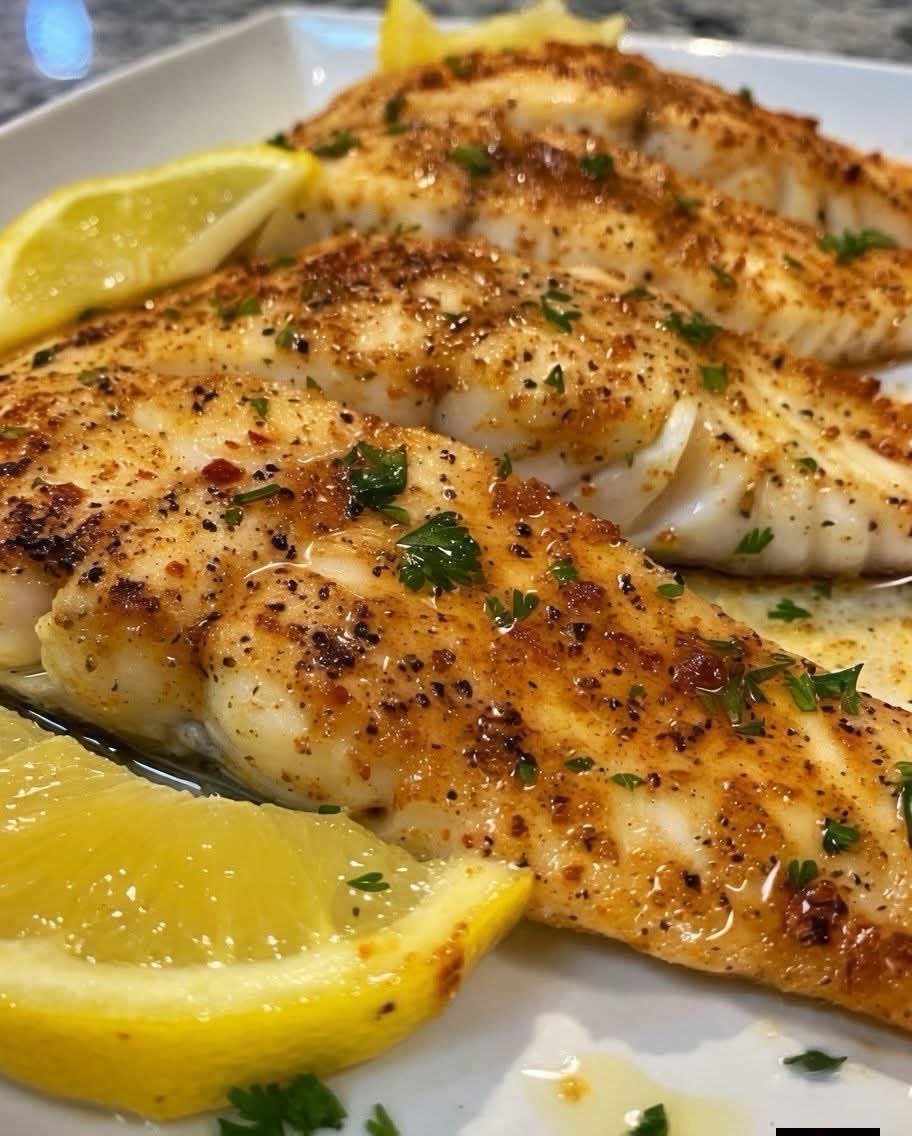
Some dishes prove that simple is best. This lemon butter fish fillet is one of them. With just a handful of ingredients and about fifteen minutes, you can transform a mild, flaky white fish into a restaurant-quality meal that is both elegant and effortless. The fish is gently simmered in a velvety sauce of butter, fresh lemon juice, and garlic, resulting in tender, moist fillets that are bright, savory, and utterly satisfying. It is the perfect dinner for busy weeknights, yet impressive enough for guests.
This lemon butter fish fillet recipe is all about letting the natural flavor of the fish shine. A delicate white fish like tilapia, cod, halibut, or sole is the perfect canvas for the bright, tangy lemon and rich, creamy butter. The sauce comes together in the same skillet as the fish, capturing all the savory browned bits and infusing every bite with flavor. A sprinkle of fresh parsley adds color and a touch of freshness. Serve it with steamed vegetables, rice, or a simple salad for a complete meal that feels light yet satisfying.
Why You Will Love This Recipe
· Ready in 15 Minutes: Faster than takeout, but elegant enough for date night.
· One Pan, Minimal Cleanup: Everything cooks in a single skillet.
· Light, Bright, and Flavorful: Lemon and butter are a classic, perfect pairing.
· Tender, Flaky Fish: Gentle cooking keeps the fish moist and delicate.
· Low-Carb and Keto-Friendly: Naturally low in carbohydrates.
· Versatile: Works with almost any white fish.
· Impressive but Effortless: Simple enough for beginners, beautiful enough for guests.
Ingredients List
For the Fish:
· 4 white fish fillets (tilapia, cod, halibut, sole, or haddock), about 6 oz each (1 ½ lbs total)
· ½ teaspoon kosher salt
· ¼ teaspoon black pepper
· 2 tablespoons all-purpose flour (optional, for light browning)
· 2 tablespoons olive oil or avocado oil
For the Lemon Butter Sauce:
· 4 tablespoons (½ stick) unsalted butter
· 3 cloves garlic, minced
· ¼ cup low-sodium chicken broth or fish broth
· 3 tablespoons fresh lemon juice (about 1 large lemon)
· 1 teaspoon lemon zest (optional, for extra brightness)
· 2 tablespoons fresh parsley, chopped
· Lemon slices for garnish
Step-by-Step Instructions
Step 1: Prepare the Fish
Pat the fish fillets completely dry with paper towels. This is essential for good browning and prevents steaming. Season both sides evenly with salt and pepper. If you want a light, golden crust, lightly dust the fillets with flour, shaking off any excess.
Step 2: Sear the Fish
Heat the olive oil in a large non-stick or stainless steel skillet over medium-high heat. When the oil is shimmering, carefully place the fish fillets in the skillet. Do not crowd the pan; cook in batches if necessary. Sear for 2-4 minutes per side, depending on the thickness of the fillets. The fish is ready to flip when it releases easily from the pan and is golden brown on the bottom. The internal temperature should reach 145°F (63°C) when done. Transfer the cooked fish to a plate and tent loosely with foil.
Step 3: Make the Lemon Butter Sauce
Reduce the heat to medium. In the same skillet, melt the butter. Add the minced garlic and cook for 60 seconds until fragrant, scraping up any browned bits from the bottom of the pan. Pour in the chicken broth and lemon juice. Bring to a gentle simmer and cook for 2-3 minutes, until the sauce has slightly reduced and thickened. Stir in the lemon zest (if using).
Step 4: Combine and Serve
Return the fish fillets to the skillet, spooning the lemon butter sauce over the top. Simmer for 1 minute to warm the fish through. Sprinkle with fresh parsley. Serve immediately, garnished with lemon slices.
Cooking Tips and Pro Tips for Best Results
· Pat the fish completely dry: Moisture on the surface prevents browning and causes the fish to steam. Use paper towels to remove all surface moisture before seasoning.
· Use a non-stick or well-seasoned stainless steel pan: Delicate fish can stick to the pan. A good non-stick skillet or a well-seasoned stainless steel pan makes flipping much easier.
· Do not overcrowd the pan: Overcrowding lowers the pan temperature and causes the fish to steam instead of sear. Cook in batches if necessary.
· Flip the fish only once: Let the fish cook undisturbed for 2-4 minutes until it naturally releases from the pan. Forcing it to flip too early can tear the fish.
· Do not overcook: Fish cooks quickly. It is done when it flakes easily with a fork and is opaque throughout. The internal temperature should be 145°F. Overcooked fish becomes dry and tough.
· Use fresh lemon juice: Bottled lemon juice lacks the bright, fresh flavor of real lemons. Always use fresh lemons for this recipe. The zest adds an extra layer of citrus brightness.
· Keep the sauce light: This is a light butter sauce, not a heavy cream sauce. Do not let it boil vigorously, or the butter can separate. A gentle simmer is perfect.
Variations and Substitutions
Garlic Lemon Butter Fish:
Increase the garlic to 5 cloves. Add ¼ teaspoon of red pepper flakes for subtle heat. The garlic becomes sweet and mellow as it cooks.
Caper Lemon Butter Fish:
Add 2 tablespoons of drained capers to the sauce along with the lemon juice. The capers add a briny, tangy pop that pairs beautifully with white fish.
Herbed Lemon Butter Fish:
Add 1 teaspoon of fresh thyme leaves or 1 tablespoon of fresh dill to the sauce. Dill is especially wonderful with cod or haddock.
White Wine Lemon Butter Fish:
Replace 2 tablespoons of the chicken broth with 2 tablespoons of dry white wine (Sauvignon Blanc or Pinot Grigio). The wine adds acidity and complexity.
Parmesan Lemon Butter Fish:
After returning the fish to the skillet, sprinkle 2 tablespoons of freshly grated Parmesan cheese over the top. The cheese adds a nutty, savory note.
Dairy-Free Lemon Fish:
Replace the butter with 4 tablespoons of olive oil or a plant-based butter alternative. The sauce will be less rich but still flavorful and bright.
Serving Suggestions
This lemon butter fish fillet is a light, versatile dish. Serve it with:
· Steamed Asparagus or Green Beans: A classic, elegant pairing.
· Roasted or Mashed Potatoes: The creamy potatoes soak up the lemon butter sauce.
· Rice or Quinoa: A simple, neutral base.
· Zucchini Noodles or Spiralized Vegetables: A low-carb, gluten-free option.
· Crusty Bread: Essential for sopping up every last drop of the sauce.
Side dishes that pair well:
· Steamed broccoli or cauliflower
· Sautéed spinach with garlic
· Simple green salad with lemon vinaigrette
Storage and Reheating Instructions
Refrigerator:
Store leftovers in an airtight container for up to 2 days. Fish does not keep as long as meat or poultry. The sauce may separate slightly upon reheating.
Freezer:
Freezing is not recommended for this dish. The delicate texture of the fish becomes mushy and watery upon thawing.
Reheating:
· Stovetop (Best): Gently reheat in a covered skillet over low heat for 3-5 minutes. Add a splash of broth or water to restore the sauce.
· Microwave: Heat individual portions at 50% power for 60 seconds. Watch carefully to avoid overcooking.
Nutritional Information (Approximate, per serving – serves 4, using tilapia)
· Calories: 340
· Protein: 34g
· Fat: 22g
· Saturated Fat: 10g
· Carbohydrates: 3g
· Fiber: 0g
· Sugar: 1g
· Sodium: 520mg
· Potassium: 580mg
· Vitamin C: 15% Daily Value
· Calcium: 4% Daily Value
Frequently Asked Questions (FAQ)
1. What is the best fish for this recipe?
Mild, flaky white fish works best. Tilapia, cod, haddock, sole, flounder, and halibut are all excellent choices. They are delicate, cook quickly, and allow the lemon butter flavor to shine. Avoid oily fish like salmon or mackerel, which have stronger flavors.
2. Can I use frozen fish fillets?
Yes, but you must thaw them completely first. Thaw frozen fish overnight in the refrigerator or under cold running water. Pat the fillets completely dry before seasoning and cooking. Frozen fish contains more moisture, so drying is especially important.
3. Why is my fish sticking to the pan?
Sticking usually happens when the pan is not hot enough, the fish is not dry enough, or you try to flip it too soon. Heat the oil until it shimmers. Pat the fish very dry. Let the fish cook undisturbed for 2-4 minutes; it will naturally release from the pan when it is ready to flip. Use a non-stick pan if possible.
4. Can I use salted butter instead of unsalted?
Yes, but reduce the added salt. Salted butter can vary in salt content. Start with no additional salt, taste the sauce, and add more if needed.
5. How do I know when the fish is done?
The fish is done when it is opaque throughout and flakes easily with a fork. The internal temperature should reach 145°F (63°C). If you do not have a thermometer, insert a fork into the thickest part and twist gently. If the fish flakes easily and looks fully white (or the color appropriate for that fish), it is done.
6. Can I make this recipe with chicken instead of fish?
Yes, but adjust the cooking time. Use boneless, skinless chicken breasts or thighs pounded to even thickness. Sear for 4-6 minutes per side, then reduce the heat and cook through (internal temperature of 165°F). The lemon butter sauce works beautifully with chicken as well.