

Introduction
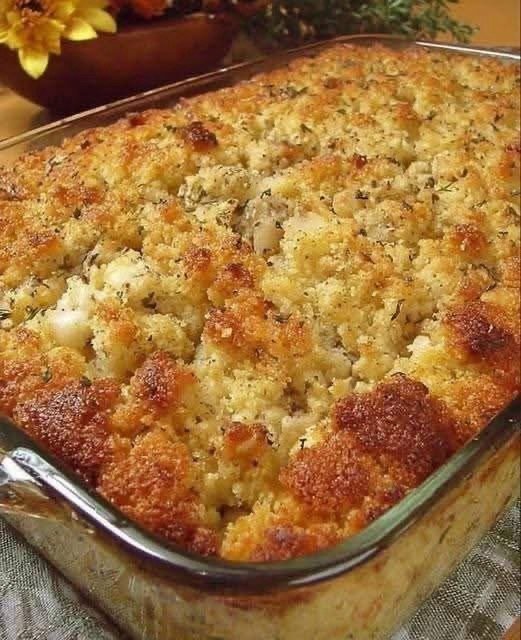
If there’s one dish that defines holiday tables across the American South, it’s a golden, savory pan of cornbread dressing. Unlike its Northern cousin stuffing (which is stuffed inside the turkey), cornbread dressing bakes separately in a casserole dish, developing a crispy top and a soft, moist, herb-infused interior. Made from crumbled, day-old cornbread mixed with celery, onions, sage, and rich turkey or chicken broth, this dressing is deeply flavorful, incredibly comforting, and surprisingly easy to make. Whether you’re planning Thanksgiving, Christmas, or simply craving a taste of Southern hospitality on a chilly Sunday afternoon, this recipe delivers that nostalgic, from-scratch flavor without any boxed mixes. Let me show you how to make the cornbread dressing your family will request year after year.
Why You’ll Love This Recipe
- Authentic Southern flavor: Made with homemade (or quality store-bought) cornbread, fresh sage, and aromatic vegetables—no sugary cornbread mixes here.
- Perfectly moist with a crispy top: The right ratio of broth to bread gives you that ideal texture: soft and spoonable inside, golden and slightly crunchy on top.
- Make-ahead friendly: You can bake the cornbread and chop the vegetables a day or two in advance, then assemble and bake when you’re ready.
Ingredients
- For the cornbread (or use 6 cups crumbled day-old cornbread):
- 1 cup yellow cornmeal
- 1 cup all-purpose flour
- 1 tablespoon baking powder
- ½ teaspoon salt
- 2 large eggs
- 1 cup buttermilk
- ¼ cup vegetable oil or melted butter
- For the dressing:
- 6 cups crumbled day-old cornbread (from above or store-bought)
- 4 cups day-old white bread or sandwich bread, torn into small pieces (or 4 cups dried bread cubes)
- ½ cup unsalted butter (1 stick)
- 2 cups finely diced yellow onion (about 1 large onion)
- 1½ cups finely diced celery (about 3–4 ribs)
- 3 cloves garlic, minced
- 4 cups low-sodium chicken or turkey broth (plus more if needed)
- 2 large eggs, lightly beaten
- 2 tablespoons fresh sage, finely chopped (or 2 teaspoons dried sage)
- 1 tablespoon fresh thyme leaves (or 1 teaspoon dried thyme)
- 1 teaspoon fresh rosemary, minced (or ½ teaspoon dried rosemary)
- 1 teaspoon salt
- 1 teaspoon black pepper
- ½ teaspoon poultry seasoning (optional but recommended)
Instructions
- Make the cornbread (if homemade): Preheat oven to 400°F. Grease an 8×8 or 9×9 baking pan. In a large bowl, whisk together cornmeal, flour, baking powder, and salt. In another bowl, whisk eggs, buttermilk, and oil. Combine wet and dry ingredients until just mixed. Pour into pan and bake for 20–25 minutes until golden and a toothpick comes out clean. Cool completely, then crumble. For best results, make the cornbread a day ahead and leave it out overnight to dry.
- Preheat oven and prep pan: Preheat oven to 350°F. Grease a 9×13-inch casserole dish or a large cast-iron skillet.
- Combine the breads: In a very large bowl, combine the crumbled cornbread and torn white bread pieces. Toss gently.
- Sauté the aromatics: In a large skillet over medium heat, melt the butter. Add the diced onion and celery. Cook for 8–10 minutes until softened and translucent, but not browned. Add the minced garlic and cook for 1 more minute.
- Season the vegetables: Stir in the sage, thyme, rosemary, salt, pepper, and poultry seasoning. Cook for 30 seconds until fragrant.
- Combine everything: Pour the sautéed vegetable mixture over the bread mixture. Toss gently to distribute.
- Add broth and eggs: In a separate bowl or large measuring cup, whisk together the chicken broth and beaten eggs. Pour this over the bread mixture gradually, stirring gently as you go. The mixture should be very moist but not soupy—it will look like wet sand or thick oatmeal. If it seems dry, add another ½ cup of broth.
- Transfer to baking dish: Spoon the dressing into the prepared 9×13-inch dish or cast-iron skillet. Spread evenly but do not pack it down firmly (you want a light, fluffy texture).
- Bake: Bake uncovered for 35–45 minutes, until the top is golden brown and crispy, and the center is set (not jiggly). For an extra-crispy top, broil for the last 2–3 minutes, watching carefully.
- Rest and serve: Let the cornbread dressing rest for 10 minutes before serving. This allows it to set up beautifully. Garnish with fresh parsley or sage leaves if desired.
Tips for Best Results
- Use day-old, slightly stale bread: Fresh bread turns mushy. Leave your cornbread and white bread out on the counter uncovered overnight, or toast the bread pieces lightly in a 300°F oven for 10 minutes.
- Don’t overmix: Stir gently—overmixing compacts the bread and makes the dressing dense instead of light and fluffy.
- Adjust broth carefully: Different breads absorb liquid differently. Start with 4 cups of broth, then add more by the ¼ cup until the mixture is moist but not swimming. A good test: squeeze a handful—it should hold together but not drip liquid.
- Use homemade broth if possible: Turkey or chicken broth made from simmering bones adds deep, rich flavor. Low-sodium store-bought broth works, but avoid bouillon cubes (too salty).
- Don’t skip the eggs: Eggs act as a binder, giving the dressing structure and preventing it from crumbling into dry breadcrumbs.
Variations and Substitutions
- Gluten-free cornbread dressing: Use gluten-free cornbread and gluten-free white bread. Ensure your broth is gluten-free.
- Dairy-free: Replace the butter with olive oil or vegan butter. Use unsweetened plain almond milk mixed with 1 teaspoon vinegar in place of buttermilk for the cornbread.
- Sausage cornbread dressing: Brown 1 pound of breakfast sausage or spicy Italian sausage, drain, and add it to the vegetable mixture.
- Oyster dressing (classic Southern): Fold 1 pint of shucked oysters (drained and roughly chopped) into the dressing just before transferring to the baking dish.
- Mushroom and leek dressing: Replace celery with chopped leeks and add 8 oz of sautéed cremini mushrooms.
- Apple and bacon dressing: Add 1 cup of diced tart apple and 6 slices of cooked, crumbled bacon.
- Herbaceous version: Double the fresh herbs and add 2 tablespoons of fresh parsley and 1 tablespoon of fresh chives.
How to Store and Reheat
Store leftover cornbread dressing in an airtight container in the refrigerator for up to 5 days. To reheat, place individual portions on a baking sheet and warm in a 350°F oven for 8–10 minutes, or return the entire casserole to a 350°F oven for 15–20 minutes covered, then 5 minutes uncovered to re-crisp the top. You can also microwave, but the texture will be softer. To freeze, assemble the dressing completely but do not bake. Cover tightly with foil and freeze for up to 3 months. Bake from frozen at 350°F for 60–75 minutes, removing the foil for the last 15 minutes. Do not freeze already-baked dressing—it becomes watery.
Serving Suggestions
Cornbread dressing is the ultimate Southern holiday side dish, but it’s delicious year-round. Serve it alongside roasted turkey or chicken with gravy ladled generously over the top. For a full Southern spread, pair with creamy mashed potatoes, collard greens, candied yams, and cranberry sauce. Leftovers make a fantastic next-day lunch topped with a fried egg or tucked into a turkey sandwich. For a nontraditional but delicious twist, crumble leftover dressing over a bowl of soup or stew, or press patties of cold dressing into a skillet to crisp up like stuffing cakes.
Nutritional Information
Approximate values per serving (based on 12 servings, using homemade cornbread with buttermilk and butter, and chicken broth):
Calories: 320 | Protein: 9g | Carbohydrates: 38g | Fiber: 4g | Net Carbs: 34g | Fat: 15g | Saturated Fat: 7g | Cholesterol: 75mg | Sodium: 620mg | Potassium: 210mg | Vitamin A: 10% DV | Vitamin C: 4% DV | Calcium: 12% DV | Iron: 15% DV.
Note: Values vary significantly based on bread types, amount of butter, and broth sodium content.
FAQs
Can I use a store-bought cornbread mix?
Yes, but choose one that’s not sweet. Many Jiffy-type mixes contain added sugar, which doesn’t belong in authentic Southern cornbread dressing. Look for a “cornbread mix” without sugar, or use a bakery cornbread and let it go stale. Ideally, make your own with the simple recipe above—it takes only 25 minutes.
What’s the difference between cornbread dressing and stuffing?
Stuffing is traditionally cooked inside the turkey cavity, absorbing meat juices as it cooks. Cornbread dressing is baked separately in a dish. Dressing also typically uses cornbread as the primary bread, whereas stuffing often uses white bread. Dressing has a softer interior with a crispy top; stuffing can be more compact.
Why is my cornbread dressing dry?
You likely didn’t add enough broth, or you overbaked it. The mixture should look quite moist before going into the oven—it will dry out slightly as it bakes. Cover the dish with foil for the first 30 minutes of baking if you notice it browning too quickly. Always check for doneness at the lower end of the bake time.
Can I make cornbread dressing without eggs?
Yes, though the texture will be more crumbly. Replace each egg with ¼ cup of unsweetened applesauce or a flax egg (1 tablespoon ground flaxseed mixed with 3 tablespoons water per egg). The dressing will still be delicious but won’t slice as neatly.
How far in advance can I make cornbread dressing?
You can bake the cornbread and dry it out up to 2 days ahead. Chop the vegetables and store them in the fridge. On the day of serving, sauté the vegetables, combine everything, and bake. You can also assemble the unbaked dressing (without eggs) the night before, refrigerate, then stir in the eggs and bake the next day.
Conclusion
This cornbread dressing is pure Southern comfort—herbaceous, savory, and studded with tender bits of onion and celery, all held together by rich broth and baked to golden perfection. It’s the side dish that often steals the show, and once you try this homemade version, you’ll never go back to a box. I’d love to see your dressing come out of the oven—tag me in your holiday photos or leave a comment with your family’s favorite add-in. Don’t forget to save this recipe for your Thanksgiving planning. Happy cooking, y’all!
“`