

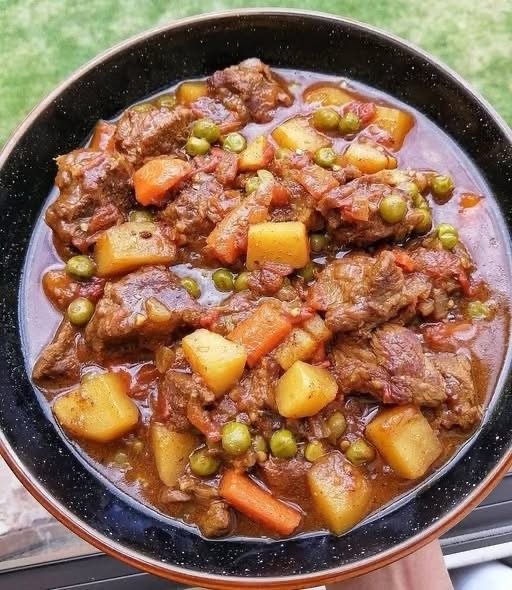
There are stews that are thin and watery, and then there is beef veggie stew—the kind of thick, hearty, deeply flavorful, vegetable-packed meal that warms you from the inside out. This recipe combines tender chunks of beef chuck, potatoes, carrots, celery, onions, and peas in a rich, savory broth. It is a complete, satisfying meal that tastes like it simmered all day, yet it comes together with simple ingredients and straightforward steps.
The beauty of beef veggie stew is its versatility. You can use almost any vegetables you have on hand—parsnips, turnips, green beans, or mushrooms. The slow simmering transforms economical beef chuck into tender, melt-in-your-mouth perfection, while the vegetables soak up all the savory flavor. A final touch of fresh parsley adds brightness.
This beef veggie stew is perfect for chilly evenings, for Sunday dinners, for meal prep, or for any time you crave a warm, nourishing, one-pot meal. Serve it with crusty bread or over mashed potatoes.
Why You Will Love This Beef Veggie Stew
· Thick, hearty, and satisfying: A complete meal in a bowl.
· Packed with tender beef and vegetables: Nutritious and filling.
· One-pot meal: Minimal cleanup.
· Great for meal prep: Tastes even better the next day.
· Budget-friendly: Uses economical beef chuck and seasonal vegetables.
· Freezer-friendly: Make a double batch and save one for later.
· Customizable: Use any vegetables you like.
Ingredients
Here is everything you need for beef veggie stew:
For the Beef:
· 2½ pounds beef chuck roast, cut into 1½-inch cubes
· 1 teaspoon salt
· ½ teaspoon black pepper
· 2 tablespoons olive oil
For the Vegetables and Broth:
· 1 large yellow onion, diced
· 3 cloves garlic, minced
· 3 carrots, peeled and cut into 1-inch chunks
· 2 celery stalks, sliced
· 1 pound baby potatoes (or Yukon Gold), halved or quartered
· 4 cups low-sodium beef broth
· 1 can (15 ounces) diced tomatoes, undrained (optional)
· 2 tablespoons tomato paste
· 1 tablespoon Worcestershire sauce
· 2 bay leaves
· 2 sprigs fresh thyme (or 1 teaspoon dried)
· 1 sprig fresh rosemary (or ½ teaspoon dried)
· 1 cup frozen peas (added at the end)
· 2 tablespoons fresh parsley, chopped (for garnish)
For Thickening (Optional):
· 2 tablespoons cornstarch mixed with 2 tablespoons cold water
Step-by-Step Instructions
Step 1: Prepare the Beef
Pat the beef cubes dry with paper towels. Season with salt and pepper.
Step 2: Sear the Beef
Heat the olive oil in a large Dutch oven or heavy-bottomed pot over medium-high heat. Working in batches, add the beef in a single layer and sear for 2 to 3 minutes per side, until deeply browned. Transfer the beef to a plate and set aside.
Step 3: Sauté the Aromatics
Reduce the heat to medium. Add the diced onion to the same pot. Cook for 3 to 4 minutes until softened. Add the minced garlic and cook for 30 seconds.
Step 4: Deglaze the Pot
Pour in ½ cup of the beef broth, scraping up any browned bits from the bottom of the pot.
Step 5: Add the Remaining Ingredients
Return the seared beef to the pot. Add the carrots, celery, potatoes, remaining beef broth, diced tomatoes (with their juices), tomato paste, Worcestershire sauce, bay leaves, thyme, and rosemary. Stir to combine.
Step 6: Simmer
Bring the stew to a boil, then reduce the heat to low. Cover and simmer for 1½ to 2 hours, until the beef is fork-tender. Stir occasionally.
Step 7: Add the Peas and Thicken (Optional)
Stir in the frozen peas and cook for 5 minutes. If the stew is too thin, whisk in the cornstarch slurry and simmer for 5 to 10 minutes until thickened.
Step 8: Serve
Remove the bay leaves and herb sprigs. Garnish with fresh parsley. Serve hot with crusty bread.
Slow Cooker Method
Step 1: Sear the Beef and Sauté Onions
Follow steps 1 through 3 above in a skillet.
Step 2: Transfer to Slow Cooker
Transfer the seared beef and sautéed onions to a 6-quart or larger slow cooker. Add the garlic, carrots, celery, potatoes, broth, diced tomatoes, tomato paste, Worcestershire sauce, bay leaves, thyme, and rosemary.
Step 3: Slow Cook
Cover and cook on LOW for 7 to 8 hours or on HIGH for 4 to 5 hours, until the beef is fork-tender.
Step 4: Add Peas and Serve
Stir in the frozen peas and let sit for 5 minutes. Remove bay leaves and herb sprigs. Serve.
Instant Pot Method
Step 1: Sear and Sauté
Use the sauté function to sear the beef and cook the onion and garlic.
Step 2: Pressure Cook
Add the remaining ingredients (except peas and parsley). Pressure cook on HIGH for 35 minutes. Natural release for 15 minutes.
Step 3: Add Peas and Serve
Stir in the frozen peas. Let sit for 5 minutes. Serve.
Cooking Tips and Pro Tips for Best Results
· Use beef chuck: This cut has the right amount of marbling to become tender. Avoid lean cuts like sirloin.
· Do not skip the sear: Searing creates deep, savory flavor through the Maillard reaction.
· Cut vegetables uniformly: Even-sized chunks ensure they cook at the same rate.
· Add peas at the end: Peas only need a few minutes to warm through. Adding them too early makes them mushy.
· Let the stew rest: Stew tastes even better the next day. Refrigerate and reheat gently.
Variations and Substitutions
· Add mushrooms: Add 8 ounces of sliced cremini mushrooms with the onions.
· Add parsnips or turnips: Substitute for some of the potatoes.
· Add green beans: Add 1 cup of fresh or frozen green beans with the peas.
· Spicy beef stew: Add ½ teaspoon of red pepper flakes.
· Red wine beef stew: Replace ½ cup of broth with dry red wine.
· Herb beef stew: Add fresh rosemary, thyme, and parsley.
Serving Suggestions
This beef veggie stew is delicious served:
· With crusty bread: For sopping up the broth.
· Over mashed potatoes: For an extra-hearty meal.
· With egg noodles: Wide noodles catch the gravy.
· With a side salad: A crisp green salad with a tangy vinaigrette.
Storage and Reheating Instructions
Refrigerator Storage
Store leftovers in an airtight container in the refrigerator for up to 5 days.
Freezer Storage
This stew freezes beautifully for up to 3 months. Cool completely, then transfer to a freezer-safe container. Thaw overnight in the refrigerator before reheating.
Reheating Instructions
· Stovetop method (best): Reheat in a saucepan over medium-low heat, stirring occasionally.
· Microwave method: Heat individual portions for 60 to 90 seconds.
Nutritional Information
Approximate per serving (based on 6 servings, with beef chuck and potatoes):
· Calories: 480
· Protein: 38g
· Fat: 20g
· Saturated Fat: 7g
· Carbohydrates: 36g
· Fiber: 7g
· Sugar: 8g
· Sodium: 580mg
· Vitamin A: 80% DV
· Vitamin C: 25% DV
· Calcium: 8% DV
· Iron: 20% DV
Note: Nutritional values are estimates and will vary based on specific ingredients and portion sizes.
Frequently Asked Questions
Can I use a different cut of beef?
Chuck roast is best. Bottom round or brisket also work well. Avoid lean cuts like sirloin.
Why is my beef tough?
Tough beef means it was not cooked long enough. Simmer until fork-tender.
Can I add potatoes to the stew?
Yes. Add potatoes with the other vegetables. Yukon Gold or baby potatoes hold their shape best.
Can I make this in a slow cooker?
Yes. Follow the slow cooker instructions above.
Is this recipe gluten-free?
Yes, as written. Use gluten-free Worcestershire sauce.
Can I add cornstarch to thicken the stew?
Yes. Use the cornstarch slurry method described above.
Can I double this recipe?
Use a larger pot or slow cooker. Cooking time remains the same.
How do I get a richer flavor?
Brown the beef well, use beef broth instead of water, and add a splash of red wine.
Final Thoughts
Beef veggie stew is the ultimate comfort food—hearty, savory, and packed with tender beef and nutritious vegetables. The long, slow simmering transforms humble ingredients into a rich, flavorful meal that warms you from the inside out. It is the kind of dish that fills your kitchen with an irresistible aroma and brings everyone to the table.
This recipe is perfect for chilly evenings, for Sunday dinners, or for any time you crave a warm, nourishing one-pot meal. It is also great for meal prep, as it tastes even better the next day.
So sear that beef, chop those vegetables, and let the pot simmer. That is the beauty of stew—simple ingredients, patient heat, and a whole lot of deliciousness.