

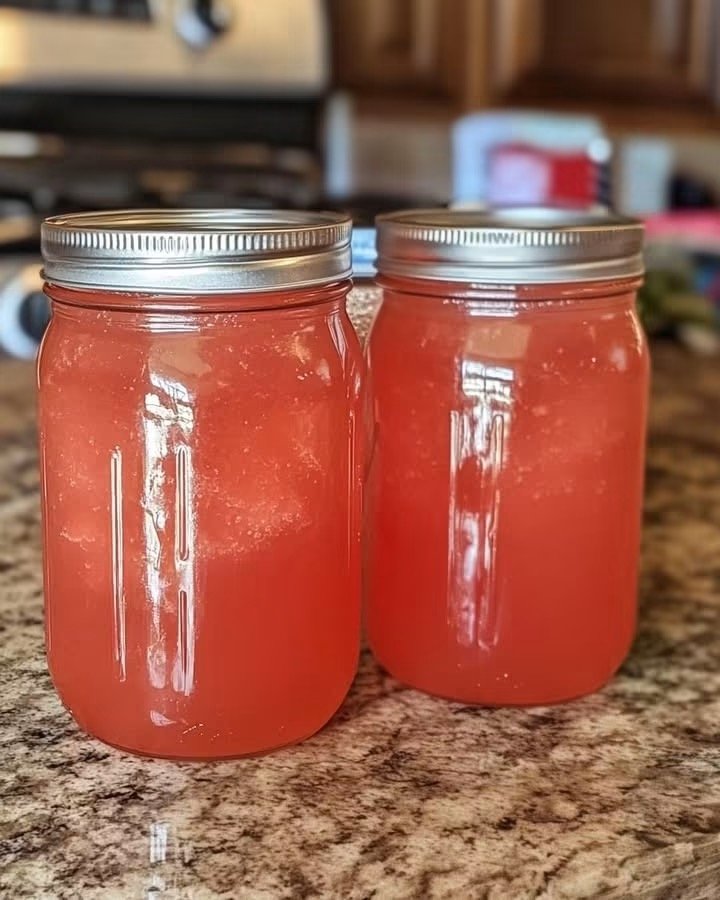
1-Ingredient Summer Melon Syrup or Watermelon Honey
When summer brings an abundance of ripe, juicy melons, there is a wonderfully old-fashioned way to preserve all that natural sweetness: turn the melon into a thick, concentrated syrup.
This 1-Ingredient Summer Melon Syrup, sometimes called Watermelon Honey, is made from just one ingredient: ripe watermelon. There is no added sugar, no corn syrup, and no complicated ingredients. The secret is simply cooking the watermelon juice slowly until much of the water evaporates and the natural sugars become concentrated.
The result is a rich, intensely fruity syrup that can be spooned over pancakes, biscuits, toast, cornbread, oatmeal, ice cream, or yogurt.
Why You’ll Love This Recipe
- Made with just 1 ingredient
- No added sugar
- A wonderful way to use extra watermelon
- Naturally sweet and intensely fruity
- Great for preserving summer flavor
- Perfect over breakfast foods and desserts
- Simple old-fashioned preparation
- Easy to make in a large batch
The One Ingredient
Fresh Ripe Watermelon
Choose a very ripe, sweet watermelon for the best results.
The amount of finished syrup will depend heavily on the size and juiciness of the watermelon and how far you reduce the juice.
A large watermelon contains a tremendous amount of water, so don’t be surprised when several cups of juice cook down to a much smaller amount of concentrated syrup.
What Is Watermelon Honey?
Watermelon honey is not actual honey. The name refers to its thick, honey-like consistency and concentrated sweetness.
The traditional idea is simple: watermelon juice is cooked slowly for a long time until enough water evaporates that the natural sugars and watermelon flavor become concentrated.
Different versions may be known by different names, including watermelon syrup, watermelon molasses, or watermelon honey.
How to Make 1-Ingredient Summer Melon Syrup
Step 1: Prepare the Watermelon
Cut the watermelon into manageable pieces.
Remove the rind and seeds if necessary.
Place the watermelon flesh in a blender or food processor and blend until completely liquefied.
Step 2: Strain the Juice
Pour the blended watermelon through a fine-mesh strainer or cheesecloth into a large pot.
Press gently to extract as much juice as possible.
Discard the remaining pulp and seeds.
Step 3: Begin Cooking
Place the watermelon juice in a large, heavy-bottomed pot.
Bring it to a gentle simmer over medium heat.
Once it begins simmering, reduce the heat to low.
The juice will produce quite a bit of foam as it cooks. Skim off excess foam from the surface as needed.
Step 4: Reduce Slowly
Continue simmering uncovered.
Stir occasionally, especially as the liquid begins to thicken.
The exact cooking time will vary depending on the amount of juice and the size of your pot. A large batch can take several hours to reduce.
The goal is to evaporate much of the water while concentrating the natural sugars and flavor.
Step 5: Check the Consistency
As the watermelon juice reduces, it will become darker, thicker, and more concentrated.
Remember that it will thicken further as it cools.
Do not wait until it becomes extremely thick in the pot, because you could accidentally reduce it too far.
Step 6: Cool and Store
Remove the pot from the heat and allow the syrup to cool.
Pour the cooled syrup into clean jars or containers.
Refrigerate promptly.
Tips for Making Watermelon Honey
Start with sweet watermelon.
The final syrup can only be as good as the fruit you start with.
Use a large pot.
A wide pot allows more surface area for evaporation and can shorten the cooking time.
Cook uncovered.
Keeping the pot uncovered allows water to evaporate efficiently.
Keep the heat low once reduced.
As the syrup becomes concentrated, it can scorch more easily.
Stir more frequently toward the end.
The thicker the syrup becomes, the more important it is to keep it from sticking to the bottom.
Remember that it thickens as it cools.
Stop cooking when the syrup is slightly thinner than your desired final consistency.
How to Use Watermelon Honey
This concentrated melon syrup is surprisingly versatile.
Try spooning it over:
- Pancakes
- Waffles
- Biscuits
- Toast
- Cornbread
- Oatmeal
- French toast
- Yogurt
- Ice cream
- Cheesecake
- Pound cake
- Fresh fruit
You can also stir a small amount into sparkling water for a refreshing summer drink.
How to Store Watermelon Syrup
Because this recipe contains only fruit and no commercial preservatives, refrigeration is important.
Transfer the finished syrup to clean, airtight containers and refrigerate.
For longer storage, freezing is a good option.
If you are interested in shelf-stable canning, use a tested preservation method rather than relying on room-temperature storage. A simple homemade reduction should not automatically be assumed to be safe for pantry storage.
Can You Freeze Watermelon Honey?
Yes.
Pour the cooled syrup into freezer-safe containers, leaving some room for expansion.
Freeze for several months for the best quality.
Thaw in the refrigerator and stir well before using.
Why Does Watermelon Syrup Become So Sweet?
Watermelon is mostly water, but it also naturally contains sugars.
When the juice is simmered for a long period, much of the water evaporates. The natural sugars and fruit flavor remain, becoming increasingly concentrated.
That is why a large amount of watermelon can produce a surprisingly small quantity of intensely flavored syrup.
Frequently Asked Questions
Is watermelon honey made with real honey?
No. Watermelon honey is simply a name for highly concentrated watermelon syrup. This one-ingredient version contains no honey.
Do I need to add sugar?
No. If your watermelon is naturally sweet and ripe, no additional sugar is necessary.
Can I use seedless watermelon?
Yes. Seedless watermelon is especially convenient because there are fewer seeds to remove during preparation.
Why is my syrup still watery?
It simply needs more reduction. Return it to low heat and continue simmering uncovered until it reaches your preferred consistency.
Why did my syrup become too thick?
It was probably reduced too far. You can gently warm it and stir in a small amount of watermelon juice or water until the desired consistency is reached.
Can I make this with cantaloupe?
Yes, although the flavor and natural sugar content will be different. The same basic technique can be used with very ripe summer melon.
1-Ingredient Summer Melon Syrup Recipe Card
Prep Time: 20 minutes
Cook Time: Several hours, depending on quantity
Total Time: Varies
Yield: Depends on the amount and sweetness of the watermelon
Ingredients
- Ripe watermelon
Instructions
- Cut the watermelon into pieces and remove the rind.
- Blend the watermelon flesh until completely liquefied.
- Strain the juice through a fine-mesh strainer or cheesecloth.
- Pour the juice into a large, heavy-bottomed pot.
- Bring to a gentle simmer over medium heat.
- Reduce the heat to low and simmer uncovered.
- Skim away excess foam as needed.
- Continue cooking until the juice has reduced considerably and become thick and concentrated.
- Stir more frequently as the syrup thickens to prevent scorching.
- Remove from heat when it reaches a syrupy consistency, remembering that it will thicken as it cools.
- Cool and transfer to clean airtight containers.
- Refrigerate or freeze for storage.
Final Thoughts
1-Ingredient Summer Melon Syrup, or Watermelon Honey, is a beautiful example of how an abundant summer fruit can be transformed with nothing more than time and gentle heat.
There is no added sugar and no complicated preparation. Just ripe watermelon, slowly reduced until its natural sweetness and flavor become concentrated into a thick, fruity syrup.
Serve it over biscuits, pancakes, oatmeal, ice cream, or toast, and enjoy a taste of summer long after watermelon season has passed.