

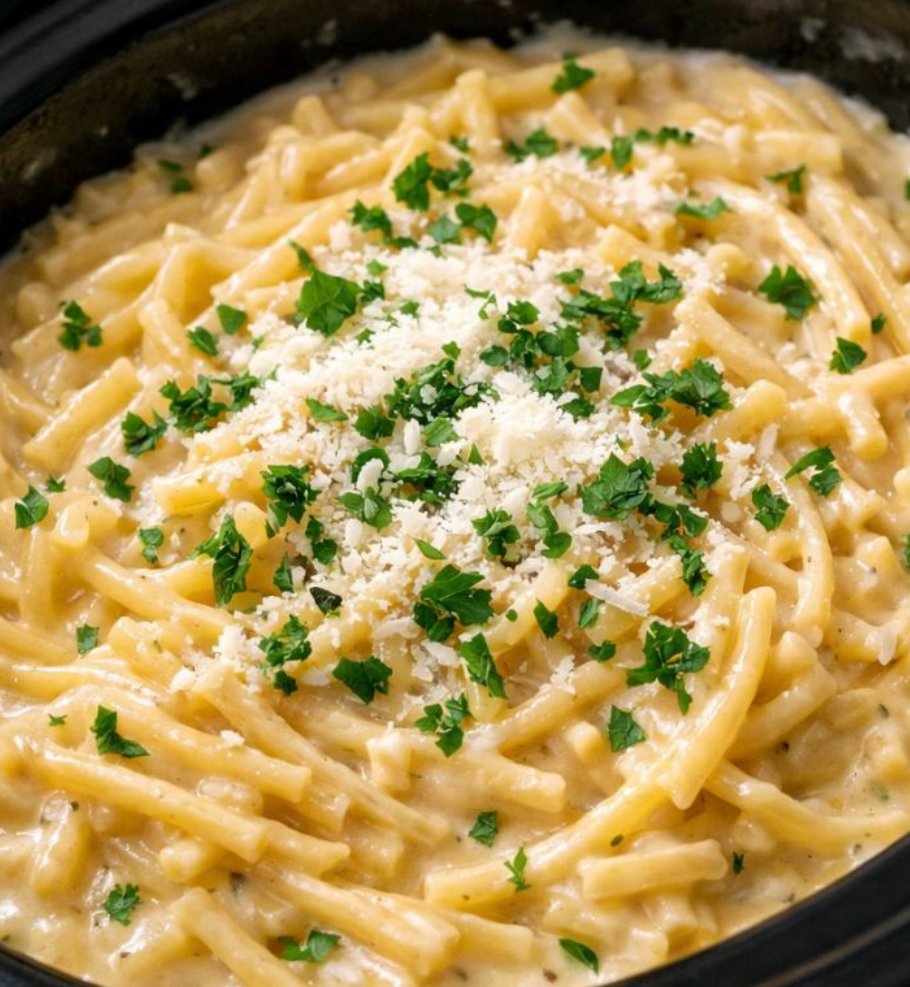
Servings: 4
Slow Cooker Size: 4 to 6 quarts
Cook Time: 1½–2 hours, plus 10–15 minutes for cream and cheese
Active Time: 5 minutes
Ingredients
-
8 oz raw spaghetti noodles, broken into 2- to 3-inch pieces
-
3 cups low-sodium chicken broth
-
1 cup heavy cream (or half-and-half)
-
1 cup grated Parmesan cheese
For Serving (Optional)
-
Fresh parsley, chopped (for color)
-
Freshly ground black pepper
-
Red pepper flakes (for heat)
-
Extra Parmesan for sprinkling
A note on the noodles: Spaghetti is traditional here, but any long pasta works – fettuccine, linguine, or bucatini all work beautifully. Break them into 2- to 3-inch pieces so they fit in the slow cooker and are easy to eat with a spoon. You can also use shorter pasta like penne or rigatoni without breaking them – just use 8 oz dry.
A note on the chicken broth: Low-sodium is important here because the Parmesan cheese adds salt. If you only have regular broth, reduce or skip any additional salt at the end. You can also use vegetable broth for a vegetarian version.
A note on the heavy cream: Heavy cream gives you the richest, creamiest, most decadent result. Half-and-half works well and is slightly lighter. Do not use milk – it won’t create the same silky sauce and may curdle. If you want a lighter version, use half-and-half and add 1 tablespoon of butter for richness.
A note on the Parmesan: Use freshly grated Parmesan if possible. Pre-shredded Parmesan has anti-caking agents that can affect how smoothly it melts. A block of Parmesan and a box grater take 60 seconds and make a noticeable difference.
Step-by-Step Instructions
Step 1: Prep the Slow Cooker
Lightly spray the inside of your 4- to 6-quart slow cooker with nonstick cooking spray. This helps prevent the noodles from sticking to the sides and bottom as they cook. (Pasta can be sticky – this step is worth it.)
Step 2: Add the Noodles
Take the 8 oz of raw spaghetti noodles and break them into 2- to 3-inch pieces. You don’t need to be precise – just snap them over the sink or in your hands.
Place the broken noodles in an even layer on the bottom of the slow cooker. It’s okay if they overlap a bit, but try to spread them out rather than piling them in one tight spot. The more spread out they are, the more evenly they’ll cook.
Step 3: Add the Broth
Pour the 3 cups of low-sodium chicken broth evenly over the dry noodles. Use a spoon to gently press down on the noodles so most of the pasta is submerged in the liquid. Don’t stir aggressively – just push them down.
At this point, it will look like a sad, soupy mess of raw pasta floating in broth. Trust the process.
Step 4: Cook the Noodles
Cover the slow cooker with the lid.
Cook on LOW for 1½ to 2 hours.
Stir once or twice during cooking if you’re home – around the 45-minute mark and again at 90 minutes. This helps the noodles cook evenly and prevents clumping. If you’re not home, it will still work – just give it a good stir when you get back.
Start checking for doneness around the 1½ hour mark. The noodles should be:
-
Just tender (al dente, not mushy)
-
Most of the broth absorbed (a little liquid at the bottom is fine)
Every slow cooker is a little different, so adjust the time as needed. If the noodles are still crunchy after 2 hours, add 15 more minutes.
Step 5: Add the Cream and Parmesan
Once the noodles are tender, pour in the 1 cup of heavy cream and add the 1 cup of grated Parmesan cheese.
Stir well until the cheese melts completely and the sauce turns creamy and coats the noodles. The heat from the noodles and the residual heat in the slow cooker will melt the cheese.
At this point, the sauce will look thin and very loose. That’s fine – it will thicken as it heats and sits.
Step 6: Final Cook
Cover the slow cooker again and cook on LOW for another 10–15 minutes.
This brief final cook does three things:
-
Heats the cream through
-
Fully melts the Parmesan into a silky sauce
-
Allows the sauce to thicken slightly
Check the consistency:
-
Too thick? Stir in an extra splash of broth or cream until it loosens up.
-
Too loose? Leave the lid off for a few minutes and stir – the sauce will thicken as steam escapes.
Step 7: Season and Serve
Taste the pasta and add a pinch of salt and black pepper if needed. How much you need depends entirely on how salty your broth and Parmesan are. Start with a little, taste, and add more if necessary.
Serve the creamy broken noodles right away while they’re hot and saucy. Garnish with fresh parsley, extra Parmesan, a crack of black pepper, or red pepper flakes for a little heat.
What to Serve With Broken Noodles
This dish is rich, creamy, and satisfying enough to be a meal on its own. But if you want to round it out:
| Side Dish | Why It Works |
|---|---|
| A simple green salad | With lemon vinaigrette – the acidity cuts the richness |
| Roasted broccoli or asparagus | Adds color, texture, and a vegetable |
| Garlic bread | Because you can never have too much bread |
| Grilled chicken or shrimp | For extra protein – add on top |
| Steamed green beans | Simple, fresh, and quick |
For a complete meal, serve the broken noodles with a side salad and a sprinkle of red pepper flakes on top. Dinner is done.
Storage and Reheating
Refrigerator: Store leftovers in an airtight container for up to 3 days. The sauce will thicken significantly as it cools – that’s normal.
Reheating:
-
Microwave (fastest): 60–90 seconds per serving. Add a splash of broth or milk before microwaving to loosen the sauce.
-
Stovetop (best method): Warm in a skillet over medium-low heat, stirring gently. Add a splash of broth or cream to bring back the silky texture.
Freezer: Not recommended. Cream-based sauces can separate and become grainy when frozen and thawed. This dish is best enjoyed fresh or within a few days.
Common Questions (FAQ)
Can I use a different type of pasta?
Yes. Any pasta works – just use 8 oz dry. For long pasta (fettuccine, linguine, bucatini), break it into 2- to 3-inch pieces. For short pasta (penne, rigatoni, shells, macaroni), leave them whole.
Can I use half-and-half instead of heavy cream?
Yes. Half-and-half works well and creates a slightly lighter sauce. Avoid using milk – it won’t create the same silky texture and may curdle.
Can I make this vegetarian?
Yes. Use vegetable broth instead of chicken broth. The rest of the recipe stays the same.
Can I add protein or vegetables?
Absolutely. Here are some great additions:
Add these at the beginning (with the noodles):
-
Sliced mushrooms
-
Diced onion
-
Minced garlic
Add these when you add the cream and Parmesan:
-
Cooked, shredded chicken
-
Cooked, crumbled bacon
-
Sautéed spinach (it will wilt into the sauce)
-
Frozen peas (they’ll thaw and warm through)
Add these as garnish at the end:
-
Fresh parsley
-
Red pepper flakes
-
Extra Parmesan
-
Toasted breadcrumbs (for crunch)
My noodles are mushy. What went wrong?
You cooked them too long. Pasta continues to absorb liquid even after it’s tender. Next time, start checking at the 1½ hour mark. Every slow cooker is different – yours may run hot.
My noodles are still crunchy. What went wrong?
A few possibilities:
-
You didn’t cook them long enough. Add 15–30 more minutes.
-
You used a different type of pasta. Whole wheat or gluten-free pasta takes longer to cook.
-
Your slow cooker runs cool. Some slow cookers cook at lower temperatures. Next time, add 30 minutes to the cooking time.
My sauce is grainy. What happened?
The Parmesan likely got too hot too quickly. To prevent this:
-
Let the noodles cool for 2–3 minutes before adding the Parmesan.
-
Add the Parmesan gradually, stirring constantly.
-
Use freshly grated Parmesan (pre-shredded has anti-caking agents that can cause graininess).
Can I make this dairy-free?
Yes, but the result will be different. Use full-fat canned coconut milk instead of heavy cream and a dairy-free Parmesan substitute (or nutritional yeast for cheesy flavor). The sauce will have a coconut flavor but will still be creamy.
Can I double this recipe?
Only if you have a 6- to 7-quart slow cooker. A standard 5-quart slow cooker cannot handle 16 oz of pasta and double the liquid. If you have a large slow cooker, double all ingredients and cook for the same amount of time (start checking at 1½ hours).
Pro Tips From My Kitchen to Yours
After making these broken noodles more times than I can count (they’ve become a regular request in my house), here’s what I’ve learned:
-
Spray the slow cooker well. Pasta is sticky. A good coating of nonstick spray makes serving and cleanup infinitely easier.
-
Break the spaghetti into uniform pieces.You don’t need a ruler, but try to keep the pieces roughly the same length so they cook evenly.
-
Stir once or twice if you’re home. This helps the noodles cook evenly and prevents them from clumping together into a solid mass.
-
Don’t skip the final 10–15 minutes after adding the cream and cheese. That short cooking time allows the sauce to thicken and the flavors to meld.
-
Use freshly grated Parmesan. It melts more smoothly and tastes significantly better than the pre-shredded stuff in a bag. A block of Parmesan and a box grater take 60 seconds.
-
Save leftover broth for loosening the sauce. When you reheat leftovers, the sauce will be thick. A splash of broth (or milk) brings it back to life.
-
Add a pinch of nutmeg. This sounds weird, but a tiny grating of fresh nutmeg (about 1/8 teaspoon) adds warmth and depth to creamy pasta sauces. Try it once and thank me later.
-
Make it spicy. A generous sprinkle of red pepper flakes at the end transforms this from cozy comfort food into something with a little kick.
The Magic of Slow Cooker Pasta
You might be wondering: why cook pasta in a slow cooker instead of on the stovetop?
The stovetop is fast. Boil water, add pasta, cook for 8–10 minutes, drain. It’s not difficult.
But here’s what slow cooker pasta gives you that stovetop pasta can’t:
Flavor. When you cook pasta directly in broth instead of water, the noodles absorb every bit of savory goodness. Stovetop pasta is seasoned only on the outside (unless you salt the water heavily). Slow cooker pasta is seasoned all the way through.
Convenience. You don’t have to watch a pot. You don’t have to worry about it boiling over. You don’t have to stand over the stove. You put the noodles in, you walk away, and you come back when it’s done.
One-pot simplicity. No colander. No draining. No second pot for the sauce. Everything happens in the slow cooker.
Forgiveness. Stovetop pasta goes from perfect to overcooked in about 30 seconds. Slow cooker pasta has a much wider window of doneness.
This recipe takes advantage of everything slow cooker pasta does well. The noodles cook in the broth, becoming infused with flavor. Then the cream and Parmesan turn that broth into a silky, luxurious sauce.
It’s not faster than stovetop pasta. But it’s easier. And in my book? Easier wins on a weeknight.
The Beauty of Broken Noodles
There’s something delightfully rustic about broken noodles.
They’re not elegant. They’re not fancy. They’re the opposite of the long, twirlable strands of spaghetti you get at an Italian restaurant.
But broken noodles are easier to eat. They fit on a spoon. They mix into the sauce more evenly. They feel like something a grandmother would make – practical, unfussy, and deeply satisfying.
This recipe embraces that rustic charm. No need for perfect, unbroken strands. Just snap the spaghetti over the sink and dump it in.
It’s freeing, in a way. A reminder that cooking doesn’t have to be perfect to be delicious.
Final Thoughts
These 4-Ingredient Slow Cooker Broken Noodles are proof that you don’t need a complicated recipe to make something extraordinary.
Spaghetti. Chicken broth. Heavy cream. Parmesan cheese.
That’s it.
And what you get in return is a pot of creamy, silky, decadent pasta that tastes like it came from a restaurant. The kind of pasta that makes you close your eyes while you eat it. The kind of pasta that you’ll crave on cold nights.
The slow cooker does the work. The ingredients do the flavoring. And you get to sit down to a meal that feels like a hug in a bowl.
No boiling water. No colander. No stress.
Just creamy, dreamy, broken noodles and a satisfied smile.
Enjoy.