

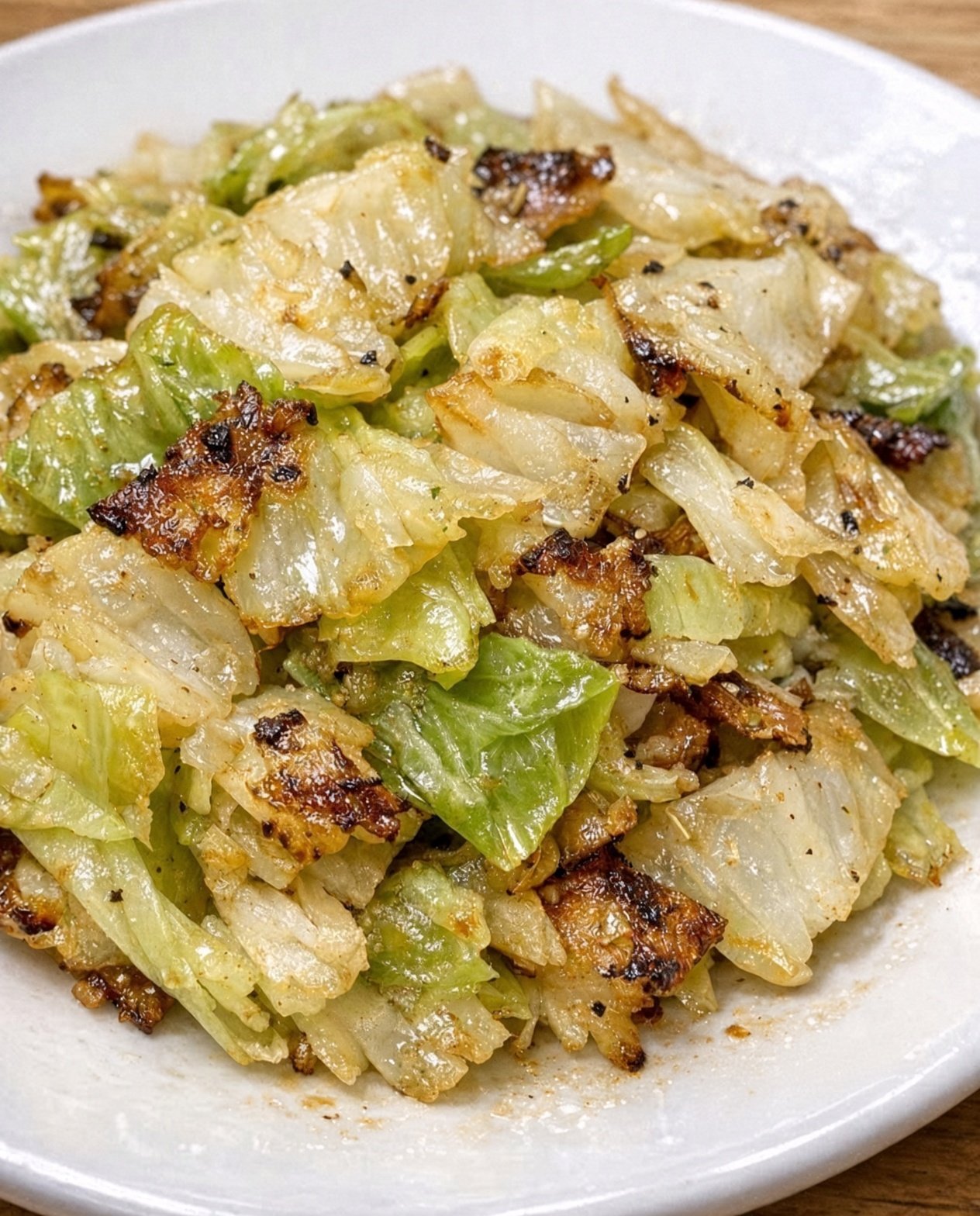
If you are looking for a simple, inexpensive vegetable side dish that tastes like old-fashioned homemade comfort food, this 3-Ingredient Skillet Cabbage is a recipe worth keeping close.
Fresh cabbage is sliced and slowly cooked in a skillet with just a few simple ingredients until it becomes tender, savory, and lightly caramelized around the edges. The natural sweetness of the cabbage develops as it cooks, creating a surprisingly flavorful dish from an incredibly short ingredient list.
This easy skillet cabbage is perfect for busy weeknight dinners, Sunday meals, holiday tables, or anytime you need an affordable side dish that comes together quickly.
Why You’ll Love This 3-Ingredient Skillet Cabbage
There is something wonderfully satisfying about turning a humble head of cabbage into a delicious side dish with very little effort.
- Only 3 main ingredients
- Made in one skillet
- Budget-friendly
- Quick and easy
- Perfect for weeknight dinners
- Great alongside meat, poultry, or beans
- Naturally comforting
- Easy to customize
- Excellent for using inexpensive pantry staples
Ingredients
You only need three main ingredients for this simple cabbage recipe.
1. Green Cabbage
Fresh green cabbage is the star of the dish.
Choose a firm head of cabbage with crisp leaves and no large bruised or damaged areas. Remove the outer leaves, rinse the cabbage, and slice it into thin strips.
2. Butter
Butter gives the cabbage a rich, savory flavor and helps the edges become beautifully golden as they cook.
You can use salted or unsalted butter. If using salted butter, taste the cabbage before adding additional salt.
3. Bacon
Cooked bacon adds smoky, savory flavor and makes the cabbage especially satisfying.
You can cook the bacon directly in the skillet, remove it, and use the rendered bacon fat to cook the cabbage. The cooked bacon can then be crumbled and stirred back into the finished dish.
Salt and black pepper can be added according to taste, but they are considered basic seasonings rather than main ingredients.
How to Make 3-Ingredient Skillet Cabbage
Step 1: Cook the Bacon
Place the bacon in a large skillet over medium heat.
Cook until crisp, turning as needed.
Transfer the bacon to a paper towel-lined plate and reserve the bacon drippings in the skillet.
Step 2: Prepare the Cabbage
Remove the outer leaves from the cabbage.
Cut the cabbage into quarters and remove the tough center core.
Slice the cabbage into thin strips.
You do not need perfectly uniform pieces. Slight variations in size will give the finished dish a pleasant mixture of tender and lightly caramelized cabbage.
Step 3: Add the Butter
Add the butter to the skillet with the bacon drippings.
Allow it to melt over medium heat.
Step 4: Add the Cabbage
Add the sliced cabbage to the skillet.
At first, the skillet may look very full. Do not worry. Cabbage loses a considerable amount of volume as it cooks.
Toss the cabbage gently so that it becomes coated with the butter and bacon drippings.
Step 5: Cook Until Tender
Cook the cabbage over medium to medium-low heat for approximately 15 to 25 minutes, stirring occasionally.
As it cooks, the cabbage will soften and begin to develop golden-brown edges.
For softer cabbage, continue cooking a little longer.
For cabbage with more texture, remove it from the heat once it is tender but still slightly crisp.
Step 6: Add the Bacon
Crumble or chop the cooked bacon and stir it into the cabbage.
Taste and add salt and black pepper if needed.
Serve warm.
The Secret to Great Skillet Cabbage
The key to flavorful skillet cabbage is allowing it enough time to cook slowly.
Cabbage contains a lot of water, so it initially steams as it cooks. As that moisture evaporates, the cabbage begins to brown and caramelize.
Do not rush the process by using extremely high heat. Medium or medium-low heat gives the cabbage time to soften while developing a delicious golden color.
How Thin Should I Slice the Cabbage?
Aim for strips approximately 1/4 to 1/2 inch wide.
Very thin cabbage will cook quickly and become extremely soft. Slightly thicker strips retain more texture.
If you prefer a rustic appearance, simply slice the cabbage into rough strips rather than measuring each piece.
Can I Make This Without Bacon?
Yes.
If you want a vegetarian version, simply omit the bacon and use butter to cook the cabbage.
You can also add extra black pepper or your favorite herbs to give the dish additional flavor.
Keep in mind that without bacon, the finished dish will have a milder and more buttery flavor.
Can I Use Red Cabbage?
Yes, although the flavor and appearance will be different.
Red cabbage has a slightly stronger flavor and can become very tender when cooked.
Green cabbage is generally preferred for this particular skillet recipe because it has a mild flavor and caramelizes beautifully.
Can I Add Onions?
Absolutely.
Sliced onions are one of the most delicious additions to cooked cabbage.
However, if you add onions, the recipe will no longer be a strict three-ingredient recipe.
For the best results, sauté the onions in the bacon drippings before adding the cabbage.
Can I Add Garlic?
Yes.
Fresh minced garlic can be added during the final few minutes of cooking. Garlic burns easily, so avoid adding it too early.
What Kind of Skillet Should I Use?
A large cast-iron skillet works especially well because it retains heat and encourages beautiful browning.
A large stainless-steel or nonstick skillet will also work.
The most important thing is to use a skillet large enough to hold the cabbage without making it impossible to stir.
Tips for the Best 3-Ingredient Skillet Cabbage
Use Fresh Cabbage
Fresh cabbage provides the best texture and flavor.
Give the Cabbage Room
If possible, use a large skillet so the cabbage has enough surface area to brown.
Do Not Stir Constantly
Occasional stirring allows some of the cabbage to remain in contact with the hot skillet and develop golden-brown edges.
Adjust the Heat
If the cabbage is browning too quickly, lower the heat. If it is becoming soft without any browning, increase the heat slightly.
Taste Before Adding Salt
Bacon and butter can already contribute plenty of salt, so taste the finished cabbage first.
What to Serve With Skillet Cabbage
This versatile side dish works with almost any hearty main course.
Fried Chicken
The buttery cabbage makes an excellent side for crispy fried chicken.
Roast Chicken
Serve it alongside roasted chicken for a simple family dinner.
Pork Chops
Cabbage and pork are a classic combination. The smoky bacon in this recipe makes the pairing even better.
Meatloaf
Serve skillet cabbage with mashed potatoes and meatloaf for a comforting dinner.
Sausage
Smoked sausage, kielbasa, or another favorite sausage pairs beautifully with cooked cabbage.
Ham
The savory flavors of ham and cabbage complement each other perfectly.
Beans and Cornbread
For a simple budget-friendly meal, serve the cabbage with beans and warm cornbread.
Can I Make This Recipe Ahead of Time?
Yes.
Skillet cabbage can be cooked ahead and refrigerated until you are ready to serve it.
Store the cooled cabbage in an airtight container in the refrigerator for up to 3 to 4 days.
Reheat gently in a skillet over medium-low heat or in the microwave.
Can I Freeze Cooked Cabbage?
Yes, although the texture will become softer after freezing and thawing.
Allow the cabbage to cool completely before transferring it to a freezer-safe container.
Freeze for up to approximately 2 to 3 months for the best quality.
Thaw overnight in the refrigerator and reheat thoroughly before serving.
How Do I Reheat Skillet Cabbage?
The stovetop is one of the best methods.
Place the cabbage in a skillet over medium-low heat and cook until heated through. Add a small amount of butter if needed.
You can also reheat individual portions in the microwave.
Easy Variations
Although the original recipe uses only three main ingredients, this dish is incredibly flexible.
Southern-Style Cabbage
Add a little onion and extra black pepper for a classic Southern-inspired variation.
Garlic Butter Cabbage
Add minced garlic during the final few minutes and use a little extra butter.
Spicy Cabbage
Add crushed red pepper flakes or a pinch of cayenne for some heat.
Sausage and Cabbage
Add sliced smoked sausage for a more substantial one-pan meal.
Ham and Cabbage
Replace or combine the bacon with diced cooked ham.
Onion and Cabbage
Sauté sliced onions until golden before adding the cabbage.
Frequently Asked Questions
How long does cabbage take to cook in a skillet?
Most sliced cabbage becomes tender in approximately 15 to 25 minutes over medium to medium-low heat. Cooking time depends on how thinly it is sliced and how soft you prefer it.
Why is my cabbage watery?
Cabbage naturally releases water as it cooks. If your cabbage seems too watery, continue cooking uncovered until some of the moisture evaporates.
How do I get my cabbage browned?
Use a large skillet, avoid overcrowding it, and do not stir constantly. Allowing the cabbage to sit against the hot skillet helps it develop golden-brown edges.
Can I use pre-shredded cabbage?
Yes. Bagged shredded cabbage can save preparation time. Keep in mind that thinner pieces will cook faster.
Can I make this recipe with frozen cabbage?
Fresh cabbage is preferred for the best texture, but frozen cabbage can be used in a pinch. Expect it to be softer once cooked.
Is skillet cabbage good for meal prep?
Yes. It stores well in the refrigerator and reheats easily, making it a convenient side dish for several meals.
Recipe at a Glance
Recipe: 3-Ingredient Skillet Cabbage
Cuisine: American Southern-inspired
Preparation Time: 10 minutes
Cooking Time: 20 minutes
Total Time: Approximately 30 minutes
Servings: 6
Cooking Method: Stovetop skillet
Main Ingredients: Green cabbage, butter, bacon
Final Thoughts
3-Ingredient Skillet Cabbage is a perfect example of how simple ingredients can create an incredibly satisfying dish. Fresh cabbage becomes tender and lightly caramelized in a skillet with rich butter and smoky bacon, creating a side dish that is inexpensive, easy, and full of comforting flavor.
Whether you serve it with fried chicken, pork chops, ham, sausage, meatloaf, or a simple plate of beans and cornbread, this cabbage recipe fits right into a classic home-cooked meal.
Keep this recipe handy whenever you need a quick vegetable side dish that does not require complicated ingredients or a lot of preparation. Sometimes the simplest recipes really are the best.