
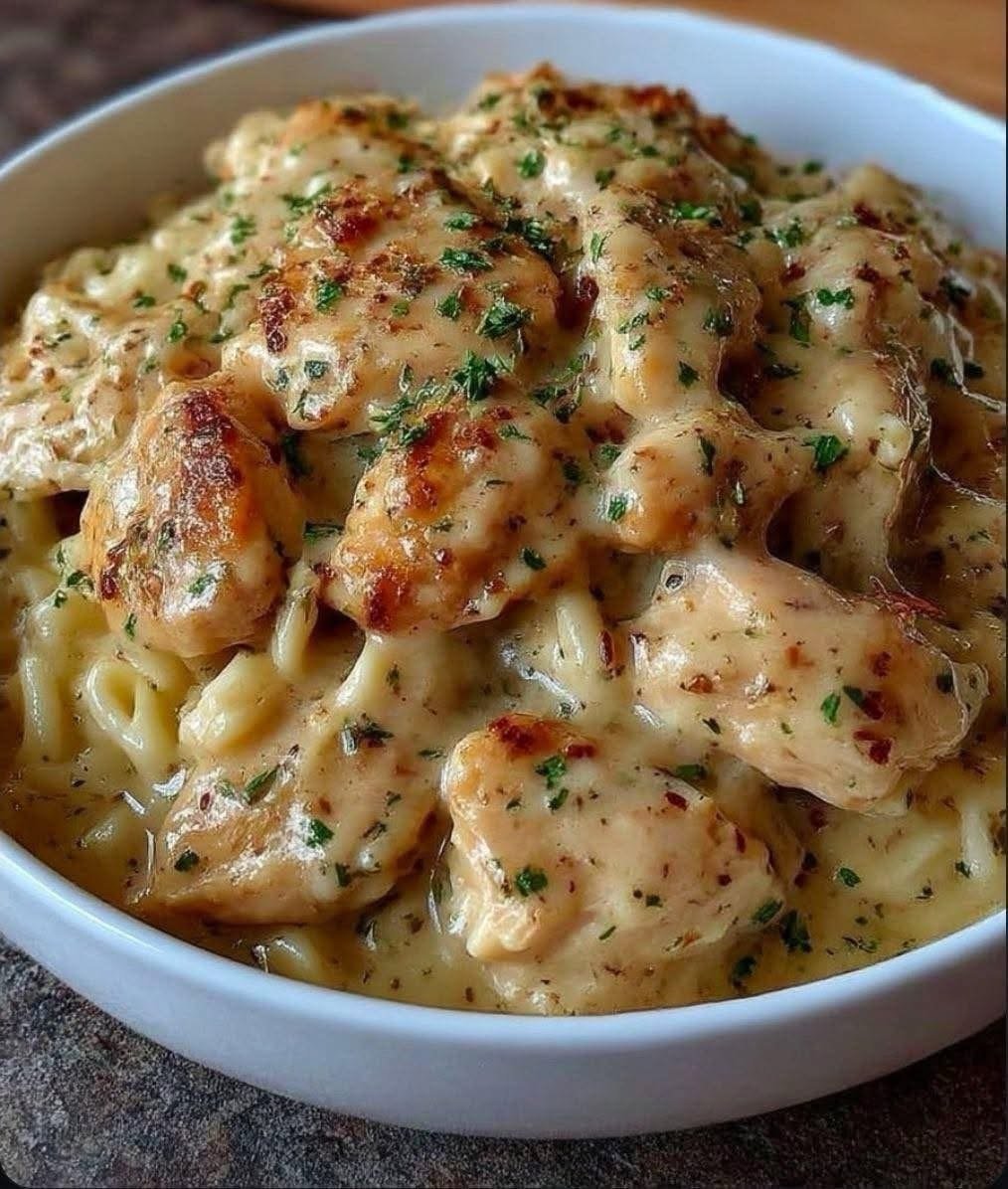
There are certain meals that feel like a warm hug on a busy weeknight. One pan chicken with buttered noodles is exactly that—tender, juicy chicken breasts or thighs cooked to golden perfection alongside a mountain of silky, buttery egg noodles, all in a single skillet. The chicken drippings flavor the noodles, the butter creates a luscious sauce, and the entire dish comes together faster than takeout delivery.
This recipe is a celebration of simplicity. You do not need a dozen pots and pans, complicated techniques, or hard-to-find ingredients. Just a skillet, a few pantry staples, and about 30 minutes. The chicken is seasoned simply with salt, pepper, and garlic powder, then seared until crispy and golden. The noodles are boiled separately (yes, that is one extra pot—but the rest is one pan), then tossed into the same skillet with butter, Parmesan, and fresh parsley. The result is a dish that is greater than the sum of its parts: comforting, satisfying, and deeply flavorful.
Whether you are feeding a hungry family on a Tuesday night or looking for a dish that pleases both kids and adults, this one pan chicken with buttered noodles delivers. It is the kind of meal you will memorize, make on autopilot, and crave again and again.
Why You Will Love This One Pan Chicken with Buttered Noodles
· Ready in 30 minutes: Faster than ordering in.
· One skillet (plus one pot for noodles): Minimal cleanup.
· Juicy, flavorful chicken: Golden brown crust, tender interior.
· Silky, buttery noodles: Coated in a simple, irresistible butter-Parmesan sauce.
· Family-friendly: No weird ingredients, no spicy surprises.
· Customizable: Add vegetables, change the herbs, or use different pasta.
· Great for meal prep: Leftovers reheat beautifully.
Ingredients
Here is everything you need for one pan chicken with buttered noodles:
For the Chicken:
· 4 boneless, skinless chicken breasts (about 6 ounces each) or 6 chicken thighs
· 1 teaspoon salt
· ½ teaspoon black pepper
· 1 teaspoon garlic powder
· ½ teaspoon paprika (optional)
· 2 tablespoons olive oil
· 2 tablespoons unsalted butter
For the Buttered Noodles:
· 8 ounces egg noodles (or fettuccine, pappardelle, or linguine)
· 4 tablespoons unsalted butter
· 2 cloves garlic, minced
· ¼ cup freshly grated Parmesan cheese
· 2 tablespoons fresh parsley, chopped (plus extra for garnish)
· ¼ teaspoon salt (or to taste)
· ⅛ teaspoon black pepper
· Optional: ¼ cup reserved pasta water (for silkier sauce)
Optional Add-Ins:
· 1 cup frozen peas (thawed)
· ½ cup heavy cream (for creamy buttered noodles)
· Lemon zest from 1 lemon
Step-by-Step Instructions
Step 1: Start the Noodle Water
Bring a large pot of generously salted water to a boil. Add the egg noodles and cook according to package directions until al dente. Reserve ¼ cup of pasta water before draining. Drain the noodles and set aside.
Step 2: Prepare and Season the Chicken
Pat the chicken breasts or thighs completely dry with paper towels. This is essential for a good sear. In a small bowl, combine the salt, black pepper, garlic powder, and paprika. Season both sides of the chicken generously.
Step 3: Sear the Chicken
Heat a large skillet (cast iron or stainless steel works best) over medium-high heat. Add the olive oil and swirl to coat. When the oil is shimmering, carefully place the chicken in the skillet. Do not overcrowd—cook in batches if necessary.
Sear for 4 to 5 minutes per side, until deep golden brown and crispy. The chicken should be cooked through (internal temperature of 165 degrees Fahrenheit for breasts, 175 for thighs). Transfer the chicken to a plate and cover loosely with foil to keep warm.
Step 4: Deglaze the Pan (Optional but Flavorful)
If there are browned bits stuck to the bottom of the skillet (there should be), deglaze with a splash of reserved pasta water or chicken broth. Scrape up the bits with a wooden spoon. This adds flavor to the noodles.
Step 5: Make the Buttered Noodle Sauce
Reduce the heat to medium-low. Add the 4 tablespoons of butter to the same skillet. Once melted, add the minced garlic and cook for 30 to 60 seconds until fragrant. Do not let the garlic brown.
Step 6: Combine Noodles and Sauce
Add the drained egg noodles to the skillet. Toss to coat in the garlic butter. If the noodles seem dry, add the reserved pasta water a tablespoon at a time until they are silky and coated. Add the Parmesan cheese, fresh parsley, salt, and pepper. Toss again. If using peas or heavy cream, add them now and heat through.
Step 7: Serve
Slice the seared chicken breasts (or leave thighs whole). Place a generous portion of buttered noodles on each plate or in a shallow bowl. Top with the sliced chicken. Garnish with additional parsley and Parmesan. Serve immediately.
Cooking Tips and Pro Tips for Best Results
· Pat the chicken completely dry: Moisture is the enemy of a good sear. Use paper towels to blot the chicken until it is dry to the touch.
· Do not crowd the pan: Overcrowding lowers the pan temperature and causes steaming instead of searing. Cook in batches if needed.
· Let the chicken rest: After cooking, let the chicken rest for 5 minutes before slicing. This allows the juices to redistribute.
· Reserve pasta water: The starchy pasta water is liquid gold. It helps the butter sauce cling to the noodles and adds creaminess without cream.
· Use freshly grated Parmesan: Pre-shredded cheese contains anti-caking agents that prevent smooth melting. Grate your own from a block.
· Season the pasta water generously: The water should taste like the sea. This is your only chance to season the noodles from the inside out.
· Do not overcook the noodles: Cook to al dente—they will continue to absorb sauce in the skillet.
Variations and Substitutions
· Lemon butter chicken and noodles: Add the zest of 1 lemon and 2 tablespoons of lemon juice to the butter sauce. Garnish with fresh dill.
· Chicken and mushroom buttered noodles: Add 8 ounces of sliced cremini mushrooms to the skillet after removing the chicken. Sauté until golden, then proceed with the butter and garlic.
· Creamy chicken and noodles: Stir in ½ cup of heavy cream along with the Parmesan. Add a pinch of nutmeg.
· Spicy chicken and noodles: Add ½ teaspoon of red pepper flakes to the butter sauce. Use spicy chicken sausage instead of chicken breasts.
· Vegetarian version: Omit the chicken and add 2 cups of roasted vegetables (broccoli, zucchini, bell peppers) to the noodles.
· Gluten-free: Use gluten-free egg noodles or fettuccine. Ensure your chicken broth and other ingredients are gluten-free.
· Herb-loaded version: Add 1 tablespoon each of fresh chopped thyme, rosemary, and chives to the butter sauce.
· Add greens: Stir in 2 cups of fresh spinach at the end, letting it wilt into the hot noodles.
Serving Suggestions
This one pan chicken with buttered noodles is a complete meal on its own, but it pairs beautifully with:
· Roasted vegetables: Asparagus, broccoli, or green beans roasted with olive oil and garlic.
· Simple green salad: A crisp salad with a lemony vinaigrette cuts through the richness.
· Garlic bread: For sopping up any extra butter sauce.
· Steamed peas: A classic pairing with buttered noodles.
· Roasted cherry tomatoes: Sweet, bursty tomatoes add brightness.
For a complete meal, serve this dish with a side of roasted asparagus and a glass of crisp white wine like Pinot Grigio.
Storage and Reheating Instructions
Refrigerator Storage
Store leftover chicken and noodles separately in airtight containers in the refrigerator for up to 4 days. The noodles may absorb the butter sauce and become softer.
Freezer Storage
The chicken freezes well for up to 2 months. The buttered noodles do not freeze well—the texture becomes mushy. Freeze the chicken separately, and make fresh noodles when ready to serve.
Reheating Instructions
For the chicken:
· Oven method: Reheat at 325 degrees Fahrenheit for 10 to 12 minutes.
· Skillet method: Reheat over medium-low heat with a splash of broth for 3 to 4 minutes per side.
· Microwave method: Heat in 30-second intervals until warm.
For the noodles:
· Skillet method (best): Reheat in a non-stick skillet over medium-low heat with a splash of milk, cream, or pasta water. Toss until hot and creamy.
· Microwave method: Heat in 30-second intervals, adding a teaspoon of water or milk to restore moisture.
Do not reheat more than once. Only reheat the portion you plan to eat.
Nutritional Information
Approximate per serving (based on 4 servings, with chicken breast and buttered noodles):
· Calories: 620
· Protein: 38g
· Fat: 32g
· Saturated Fat: 16g
· Carbohydrates: 45g
· Fiber: 2g
· Sugar: 2g
· Sodium: 780mg
· Vitamin A: 15% DV
· Calcium: 12% DV
· Iron: 15% DV
Note: Nutritional values are estimates and will vary based on specific ingredients, portion sizes, and use of additional cream or cheese.
Frequently Asked Questions
Can I use chicken thighs instead of breasts?
Yes. Boneless, skinless chicken thighs are even more forgiving and stay juicier than breasts. Sear for 4 to 5 minutes per side, then reduce the heat and cook until they reach an internal temperature of 175 degrees Fahrenheit (thighs are better at a higher temp than breasts).
What is the best pasta for buttered noodles?
Egg noodles are classic, but wide egg noodles, fettuccine, pappardelle, or linguine all work beautifully. The wider the noodle, the more sauce it holds. Avoid thin noodles like angel hair or spaghetti—they become mushy.
How do I get a crispy sear on the chicken?
Pat the chicken completely dry. Let it sit at room temperature for 10 minutes before cooking. Use a hot pan (medium-high heat) and do not move the chicken for the first 3 to 4 minutes. It will release naturally when a crust has formed.
Can I add vegetables to this dish?
Absolutely. Sauté sliced mushrooms, bell peppers, or zucchini in the skillet after removing the chicken. Add frozen peas or spinach at the end. Roasted broccoli or asparagus also work well on the side.
How do I keep the buttered noodles from drying out?
Use reserved pasta water to create a silky sauce. The starch in the water helps the butter cling to the noodles. If the noodles seem dry, add a splash of warm milk, cream, or broth. Do not rinse the noodles after draining—the starch helps the sauce adhere.
Can I make this dish dairy-free?
Yes. Use a dairy-free butter substitute and omit the Parmesan cheese, or use a vegan Parmesan. For the chicken, olive oil works fine. The noodles will still be delicious, just less rich.
Why did my chicken stick to the pan?
The pan was not hot enough, or you tried to flip the chicken too soon. Let the pan heat until the oil is shimmering. Place the chicken in the pan and do not touch it for 3 to 4 minutes. It will release naturally when a crust has formed.
Can I cook the noodles directly in the same pan?
This recipe is called “one pan” but requires a separate pot for the noodles. You can cook the noodles in the same skillet if you add more liquid, but the texture suffers. For the best results, use one pot for the noodles and one skillet for the chicken and sauce—two pans total.
Final Thoughts
One pan chicken with buttered noodles is the definition of weeknight comfort. It is fast, simple, and deeply satisfying. The chicken is golden and juicy, the noodles are silky and buttery, and the entire dish comes together in about the time it takes to watch a single episode of your favorite show.
This is the kind of recipe you will turn to again and again. It is flexible enough to use whatever you have on hand—thighs instead of breasts, fettuccine instead of egg noodles, a handful of spinach or peas thrown in at the end. It is forgiving, foolproof, and guaranteed to please.
So pat that chicken dry, get your skillet hot, and boil that pasta water. In half an hour, you will have a meal that feels like a warm hug on a plate. Serve it with a sprinkle of parsley and a little extra Parmesan, and watch it disappear. That is the magic of simple, honest cooking.