
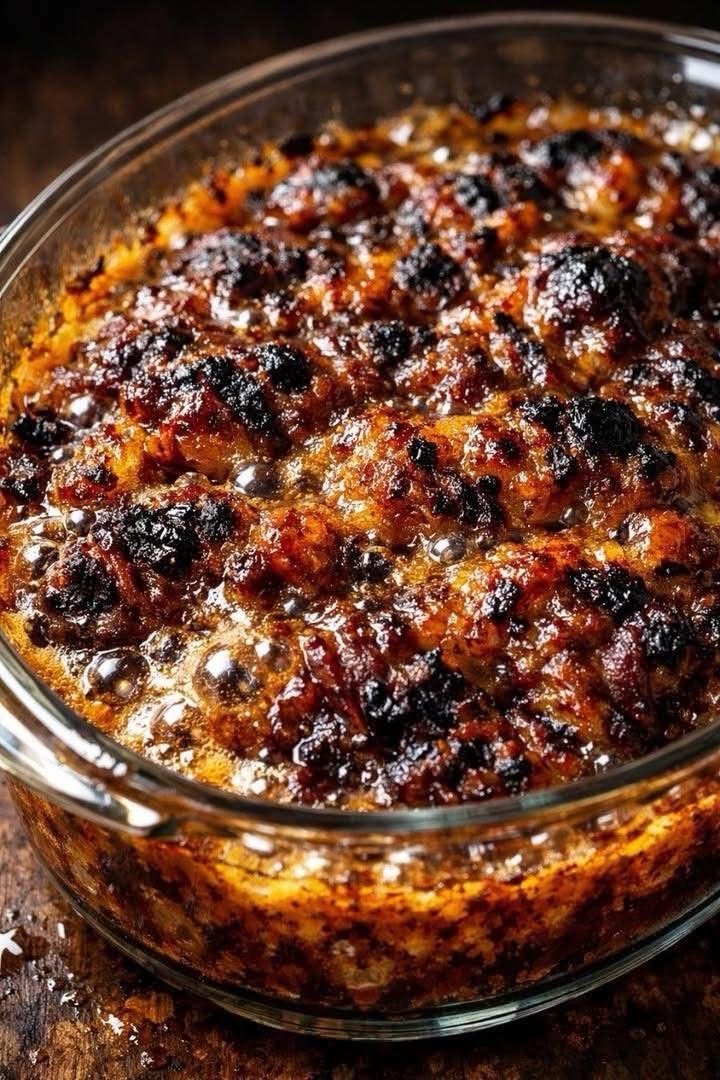
During the Great Depression, families learned to transform a handful of humble ingredients into something deeply satisfying. The depression era caramelized oven bake is a perfect example of this resourceful cooking—a dish that takes simple potatoes, onions, and a modest amount of meat and turns them into a golden, caramelized masterpiece. There were no fancy ingredients, no expensive cuts of meat, and certainly no waste. Every single item in the pantry had a purpose.
This depression era caramelized oven bake gets its magic from low, slow cooking. As the dish bakes, the natural sugars in the onions and potatoes slowly caramelize, creating a sweet, savory, almost buttery flavor that tastes far more luxurious than its ingredient list suggests. The meat—whether hot dogs, smoked sausage, or inexpensive beef—renders its juices into the potatoes, creating a light gravy that coats every bite . This is the kind of meal that filled bellies during hard times and still has the power to bring comfort today.
What makes this recipe so special is that it requires almost no effort. You layer the ingredients in a baking dish, cover it, and let the oven do the work. The result is a one-pan dinner that is crispy on top, tender underneath, and caramelized throughout. It is budget-friendly, filling, and surprisingly delicious. If you have never tried a depression-era recipe before, this caramelized oven bake is the perfect place to start.
Why You Will Love This Depression Era Caramelized Oven Bake
· Extremely budget-friendly: Uses inexpensive, shelf-stable ingredients that stretch to feed a crowd.
· One-pan simplicity: Layer, bake, and serve. Minimal dishes and minimal fuss.
· Deep, caramelized flavor: Slow baking brings out the natural sweetness in onions and potatoes.
· Highly adaptable: Works with whatever meat or vegetables you have on hand.
· Make-ahead friendly: Tastes even better the next day as the flavors meld.
· Naturally gluten-free: No flour or thickeners required.
Ingredients
Here is everything you need for an authentic depression era caramelized oven bake:
Base Ingredients:
· 2 pounds russet or Yukon Gold potatoes, thinly sliced (about 1/4-inch thick)
· 2 large yellow onions, thinly sliced
· 4 to 6 hot dogs or 12 ounces smoked sausage (kielbasa or andouille), sliced into 1/2-inch rounds
· 3 tablespoons neutral oil (vegetable, canola, or bacon drippings)
· 1 cup water or beef broth
· 1 ½ teaspoons kosher salt
· 1 teaspoon black pepper
Optional Add-ins (Period-Authentic):
· 1 bell pepper, sliced (adds sweetness and color)
· 2 cloves garlic, minced
· ½ teaspoon smoked paprika
· 1 tablespoon ketchup or tomato paste (if available)
For Serving (Optional):
· Fresh parsley or chives
· Crusty bread or dinner rolls
Step-by-Step Instructions
Step 1: Preheat and Prepare
Preheat your oven to 325 degrees Fahrenheit (165 degrees Celsius). Lightly grease a 9×13-inch baking dish with oil or butter to prevent sticking and encourage browning along the edges .
Step 2: Slice the Vegetables and Meat
Peel the potatoes if desired, though leaving the skins on is more authentic and adds nutrients. Slice the potatoes into thin, even rounds—about ¼-inch thick. Uniform slices ensure even cooking . Thinly slice the onions into half-moons. Slice the hot dogs or smoked sausage into ½-inch rounds.
Step 3: Layer the Ingredients
Depression-era cooking was all about layering flavors. Arrange half of the potato slices in an even layer across the bottom of the prepared baking dish. Sprinkle with a little salt and pepper. Scatter half of the sliced onions over the potatoes. Arrange half of the sliced hot dogs or sausage over the onions .
Repeat the layers: remaining potatoes, remaining onions, and remaining meat. If you are using optional ingredients like bell peppers or garlic, scatter them between the layers.
Step 4: Add Liquid and Season
Drizzle the oil evenly over the top of the layered dish. Pour the water or beef broth carefully along the side of the dish (not directly over the top, to avoid washing off seasonings). The liquid should come about halfway up the sides of the casserole. Sprinkle the remaining salt and pepper over everything.
Step 5: Cover and Bake
Cover the baking dish tightly with aluminum foil. This traps steam and helps the potatoes become tender while allowing the onions to soften and release their natural sweetness. Place the covered dish on the middle rack of the preheated oven.
Bake covered for 45 minutes.
Step 6: Uncover and Caramelize
After 45 minutes, remove the foil carefully (steam will escape). The potatoes should be nearly tender. Return the dish to the oven, uncovered, and increase the temperature to 375 degrees Fahrenheit (190 degrees Celsius).
Bake uncovered for another 20 to 30 minutes, or until the top layer of potatoes is golden brown and crispy, the onions are deeply caramelized, and the edges are bubbling. The liquid should have reduced into a light, savory gravy .
Step 7: Rest and Serve
Remove the depression era caramelized oven bake from the oven and let it rest for 10 minutes before serving. This resting period allows the juices to settle and thicken slightly. Garnish with fresh parsley or chives if desired. Serve warm, straight from the baking dish.
Cooking Tips and Pro Tips for Best Results
· Slice potatoes evenly: Use a mandoline or a sharp knife to get consistent ¼-inch slices. Uneven slices lead to some potatoes being mushy while others remain undercooked.
· Do not skip the caramelization step: The uncovered baking time at a higher temperature is essential for developing that golden, crispy top and sweet, caramelized onion flavor .
· Use waxy potatoes for best texture: Yukon Gold or red potatoes hold their shape better than russets, though russets work fine and were historically more common.
· Let the onions work their magic: Onions are the secret to this dish’s deep flavor. Do not reduce the amount—they will caramelize and practically disappear into the gravy.
· For extra caramelization: During the last 5 minutes of baking, turn on the broiler and watch carefully. This will create an irresistible crispy, browned top.
· Save bacon drippings: If you have bacon fat on hand, use it instead of oil. It adds incredible depth and is historically accurate.
· Do not overcrowd the dish: If your baking dish is too small, use two dishes. Overcrowding leads to steaming instead of caramelizing.
Variations and Substitutions
This depression era caramelized oven bake is endlessly flexible. Here are some ways to make it your own:
· Poor man’s meal version: Use only potatoes, onions, and hot dogs—the classic three-ingredient depression dinner .
· Beef and potato casserole: Replace hot dogs with 1 ½ pounds of beef stew meat or ground beef. Layer as directed and bake covered for 2 hours, then uncovered for 30 minutes .
· Vegetarian version: Omit the meat entirely or use plant-based sausages. Add an extra potato and a can of beans for protein.
· Cheesy topping: Sprinkle ½ cup of shredded cheddar or Parmesan over the top during the last 10 minutes of baking.
· Southern onion supper: Double the onions and reduce the meat to a garnish. This version was common in the South when meat was especially scarce .
· Add other root vegetables: Thinly sliced carrots, parsnips, or turnips stretch the dish further and add natural sweetness.
· Spicy version: Use spicy smoked sausage or add ½ teaspoon of cayenne pepper and red pepper flakes.
Serving Suggestions
This depression era caramelized oven bake is a complete meal on its own, but it pairs beautifully with simple sides:
· Crusty bread or dinner rolls: Essential for soaking up every drop of the caramelized pan juices.
· Simple green salad: A light vinaigrette cuts through the richness.
· Steamed or roasted green beans: Adds color and freshness.
· Applesauce: A classic depression-era pairing that adds sweetness and brightness.
· Pickled vegetables or sauerkraut: The acidity balances the caramelized richness.
· Fried or poached eggs: Transform leftovers into a hearty breakfast.
For beverages, iced tea, a simple lager, or even just a cold glass of milk—as many Depression-era families enjoyed—are all excellent choices .
Storage and Reheating Instructions
Refrigerator Storage
Allow the depression era caramelized oven bake to cool completely before transferring to an airtight container. Store in the refrigerator for up to 4 days. The flavors continue to develop, making leftovers even more delicious.
Freezer Storage
This dish freezes well for up to 2 months. Cool completely, then transfer to a freezer-safe container or heavy-duty freezer bag. Thaw overnight in the refrigerator before reheating.
Reheating Instructions
· Oven method (best for crispiness): Preheat oven to 350 degrees Fahrenheit. Place leftovers in an oven-safe dish, cover with foil, and heat for 15 minutes. Remove foil for the last 5 minutes to recrisp the top.
· Skillet method: Reheat in a non-stick skillet over medium heat, stirring occasionally, until hot and edges are crispy again.
· Microwave method: Quick but softens the potatoes. Heat in 60-second intervals, stirring in between, until warmed through.
Only reheat the portion you plan to eat. Avoid reheating more than once.
Nutritional Information
Approximate per serving (based on 6 servings, using hot dogs):
· Calories: 385
· Protein: 12g
· Fat: 22g
· Saturated Fat: 7g
· Carbohydrates: 36g
· Fiber: 5g
· Sugar: 6g
· Sodium: 890mg
· Vitamin C: 18% DV
· Iron: 10% DV
Note: Nutritional values are estimates and will vary based on specific ingredients and portion sizes.
Frequently Asked Questions
What exactly is a depression era caramelized oven bake?
It is a simple layered casserole made with inexpensive ingredients like potatoes, onions, and a small amount of meat (often hot dogs or smoked sausage). The dish is baked slowly so the natural sugars in the onions and potatoes caramelize, creating a sweet, savory flavor without expensive ingredients .
Why is caramelization so important in this recipe?
Caramelization is the secret to this dish’s deep, complex flavor. As the natural sugars in the onions and potatoes break down under heat, they transform into hundreds of new flavor compounds. This process creates a sweet, nutty, almost buttery taste that makes humble ingredients taste luxurious.
Can I make this without any meat?
Yes. The meatless version was common during the Depression when meat was unavailable. Simply omit the hot dogs or sausage and add an extra potato or some beans. The caramelized onions and potatoes still create a satisfying, flavorful dish .
What is the best potato for this depression era bake?
Yukon Gold potatoes are ideal because they become creamy inside while holding their shape. Russet potatoes are more authentic to the era (they were cheap and abundant) but can become slightly grainy. Red potatoes also work well.
How do I get the top truly crispy and caramelized?
The key is the uncovered baking time at a higher temperature. After baking covered at 325 degrees Fahrenheit, remove the foil, increase the temperature to 375 degrees Fahrenheit, and bake for 20 to 30 minutes more. For extra crispiness, broil for the final 2 to 3 minutes, watching carefully to prevent burning .
Can I prepare this dish in advance?
Absolutely. Assemble the entire dish (without baking), cover tightly with foil, and refrigerate for up to 24 hours. When ready to cook, add an extra 10 minutes to the covered baking time since you are starting from cold.
Why is this dish called a “poor man’s” recipe?
During the Great Depression, many families had very little money for food. Recipes like this one used the cheapest available ingredients—potatoes, onions, and inexpensive processed meats like hot dogs—to create filling meals that stretched limited resources as far as possible .
Final Thoughts
The depression era caramelized oven bake is more than just a recipe. It is a reminder that delicious food does not require expensive ingredients or complicated techniques. With potatoes, onions, a little meat, and patience, you can create something deeply satisfying. The slow caramelization process transforms humble pantry staples into a golden, crispy, sweet-savory dish that tastes like comfort.
This recipe deserves a comeback. It is budget-friendly, easy to make, and endlessly adaptable. Whether you are feeding a family on a tight budget, looking for a nostalgic taste of the past, or simply craving honest, no-fuss comfort food, this depression era caramelized oven bake delivers. Serve it with crusty bread, gather your people around the table, and enjoy every caramelized, flavorful bite.