

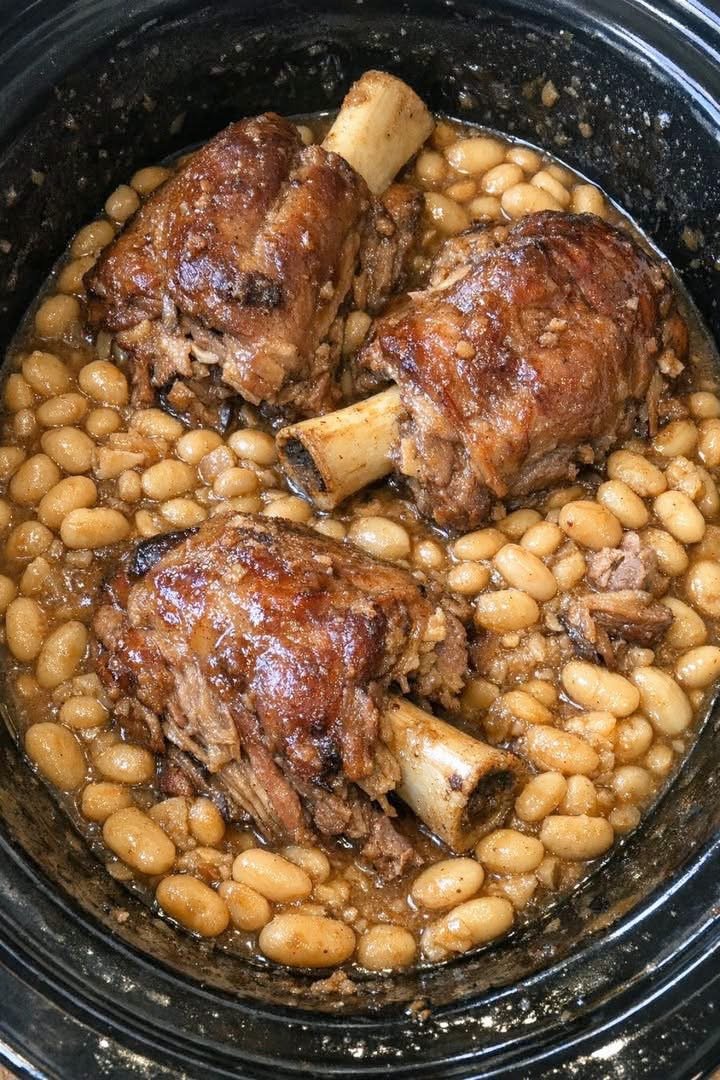
There is something special about the old-fashioned meals that were created during difficult times. They were simple, affordable, filling, and built around ingredients that could stretch a meal to feed an entire family. This Slow Cooker Depression Era Pork Shanks and Navy Beans recipe is a perfect example of that kind of cooking.
Tender pork shanks are slowly cooked with creamy navy beans, onions, garlic, and simple seasonings until the meat is fall-apart tender and the beans become rich and flavorful. It is a humble meal, but one that delivers plenty of comfort and satisfaction.
The slow cooker makes this recipe especially easy. Once everything is prepared and added to the crockpot, the long, gentle cooking process does most of the work for you.
Why This Recipe Works
Recipes inspired by Depression-era cooking often focused on making the most of inexpensive ingredients. Beans provided protein and substance, while a small amount of pork could add tremendous flavor to an entire pot.
Pork shanks are particularly well suited for slow cooking. They contain connective tissue and collagen that gradually break down during cooking, creating tender meat and a naturally rich broth.
Navy beans also benefit from a long cooking time. They soften and absorb the flavors of the pork, onions, garlic, and seasonings, resulting in a hearty dish that tastes like it has been simmering all day.
Ingredients
- 1 1/2 to 2 pounds pork shanks
- 1 pound dried navy beans
- 1 medium yellow onion, diced
- 3 cloves garlic, minced
- 2 medium carrots, peeled and sliced
- 2 celery stalks, sliced
- 6 cups chicken or pork broth
- 1 bay leaf
- 1 teaspoon dried thyme
- 1 teaspoon black pepper
- 1/2 teaspoon smoked paprika
- 1 teaspoon salt, plus more to taste
- 1 tablespoon vegetable oil, optional
- 2 tablespoons chopped fresh parsley, optional
Preparing the Navy Beans
Before cooking, sort through the dried navy beans and remove any small stones, damaged beans, or debris.
Rinse the beans thoroughly under cold running water.
For the best texture and cooking time, soak the beans overnight in plenty of cold water. Drain and rinse them before adding them to the slow cooker.
If you are short on time, you can use the quick-soak method. Place the beans in a large pot, cover them with water, bring them to a boil, and cook for about two minutes. Remove the pot from the heat, cover it, and let the beans stand for about an hour. Drain and rinse before proceeding.
Preparing the Pork Shanks
Pat the pork shanks dry with paper towels and season them lightly with salt and black pepper.
For an extra layer of flavor, heat a tablespoon of oil in a large skillet over medium-high heat. Brown the pork shanks on all sides for several minutes.
This step is optional, but browning creates a deeper, more savory flavor in the finished dish.
If you are looking for the simplest possible preparation, you can skip browning and place the seasoned pork shanks directly into the slow cooker.
How to Make Slow Cooker Pork Shanks and Navy Beans
Add the soaked and drained navy beans to the bottom of the slow cooker.
Scatter the diced onion, carrots, celery, and garlic over the beans.
Place the pork shanks on top of the vegetables and beans.
Add the bay leaf, thyme, black pepper, smoked paprika, and salt.
Pour the broth into the slow cooker. The liquid should generously surround the beans and reach most of the way up the pork shanks.
Cover the slow cooker and cook on LOW for approximately 7 to 9 hours, or until the beans are tender and the pork is extremely soft.
Cooking times can vary depending on the slow cooker, the age of the beans, and whether the beans were soaked beforehand.
When the pork is tender enough to pull apart easily with a fork, carefully remove the shanks from the slow cooker.
Discard the bay leaf and remove any bones or excess fat from the pork. Return the meat to the slow cooker and gently stir it into the beans.
Taste the broth and adjust the salt and pepper as needed.
Let the dish rest for about 10 minutes before serving.
How to Tell When It Is Done
The most important thing is the texture of the beans and pork.
The navy beans should be completely tender and creamy rather than firm or crunchy. The pork should separate easily from the bone with very little effort.
If the beans are still firm, continue cooking and check them periodically.
The finished broth should be savory and rich. If you prefer a thicker consistency, remove the slow cooker lid during the final 20 to 30 minutes of cooking and allow some of the liquid to evaporate.
You can also gently mash a small portion of the beans against the side of the slow cooker and stir them back into the pot. This naturally thickens the broth without adding flour or cornstarch.
Recipe Tips
Brown the pork first
Although browning is not required, it adds a wonderful roasted flavor to the finished dish.
Do not rush the beans
Dried beans can vary considerably in cooking time. Older beans may take longer to soften, so rely on tenderness rather than the clock alone.
Season gradually
Pork shanks and broth can already contain salt, so it is better to start with a modest amount and adjust toward the end of cooking.
Keep the vegetables simple
Onion, carrots, celery, and garlic provide plenty of flavor without overpowering the beans and pork.
Let it rest
Allowing the finished dish to sit for several minutes gives the broth a chance to settle and thicken slightly.
What to Serve With It
This hearty pork and bean dish is filling enough to serve on its own, but a few simple sides make it even better.
Serve it with warm cornbread, crusty bread, biscuits, or a simple green salad.
Steamed cabbage, roasted carrots, green beans, or braised greens also pair beautifully with the rich pork and creamy beans.
For a particularly traditional-style meal, serve generous spoonfuls of the beans and broth in shallow bowls with pieces of tender pork on top.
Storing Leftovers
Allow leftovers to cool before transferring them to airtight containers.
Store them in the refrigerator for up to four days.
The beans often become even more flavorful after sitting overnight. The broth may also thicken considerably once chilled.
For longer storage, the cooked pork and beans can be frozen in airtight freezer-safe containers. Leave a little room at the top because the liquid will expand as it freezes.
Thaw frozen leftovers in the refrigerator before reheating.
Reheating
Reheat leftovers gently on the stovetop over medium-low heat or in the microwave.
If the beans have become very thick, add a small amount of broth or water while reheating and stir gently until the desired consistency returns.
Make sure the pork and beans are heated thoroughly before serving.
Frequently Asked Questions
Can I use canned navy beans?
Yes, but the cooking method needs to change. Canned beans are already cooked, so they do not need several hours in the slow cooker. For the best results, use dried navy beans for this recipe because they absorb the pork and broth flavors during the long cooking process.
Can I use another cut of pork?
Absolutely. Pork shoulder, ham hocks, or a meaty ham bone can work well. Each cut will give the dish a slightly different flavor and texture.
Do I have to soak the beans?
Soaking is recommended because it can reduce cooking time and help the beans cook more evenly. However, you can use the quick-soak method if you forget to soak them overnight.
Can I make this recipe without browning the pork?
Yes. Simply season the pork and place it directly into the slow cooker. The dish will still be delicious, although browning adds another layer of flavor.
Why are my beans still hard?
Cooking time can vary depending on the beans. Older dried beans sometimes take much longer to become tender. Continue cooking until they reach the texture you want.
A Simple Meal With Old-Fashioned Character
Slow Cooker Depression Era Pork Shanks and Navy Beans is the kind of recipe that reminds us that good food does not need to be complicated or expensive.
A few humble ingredients, a slow cooker, and plenty of time transform inexpensive pork and dried beans into a deeply satisfying meal. The tender meat, creamy beans, aromatic vegetables, and savory broth come together in a dish that feels both rustic and comforting.
It is a recipe worth keeping for busy weeknights, cold-weather dinners, family gatherings, or whenever you want a hearty meal that tastes like it has been passed down through generations.