

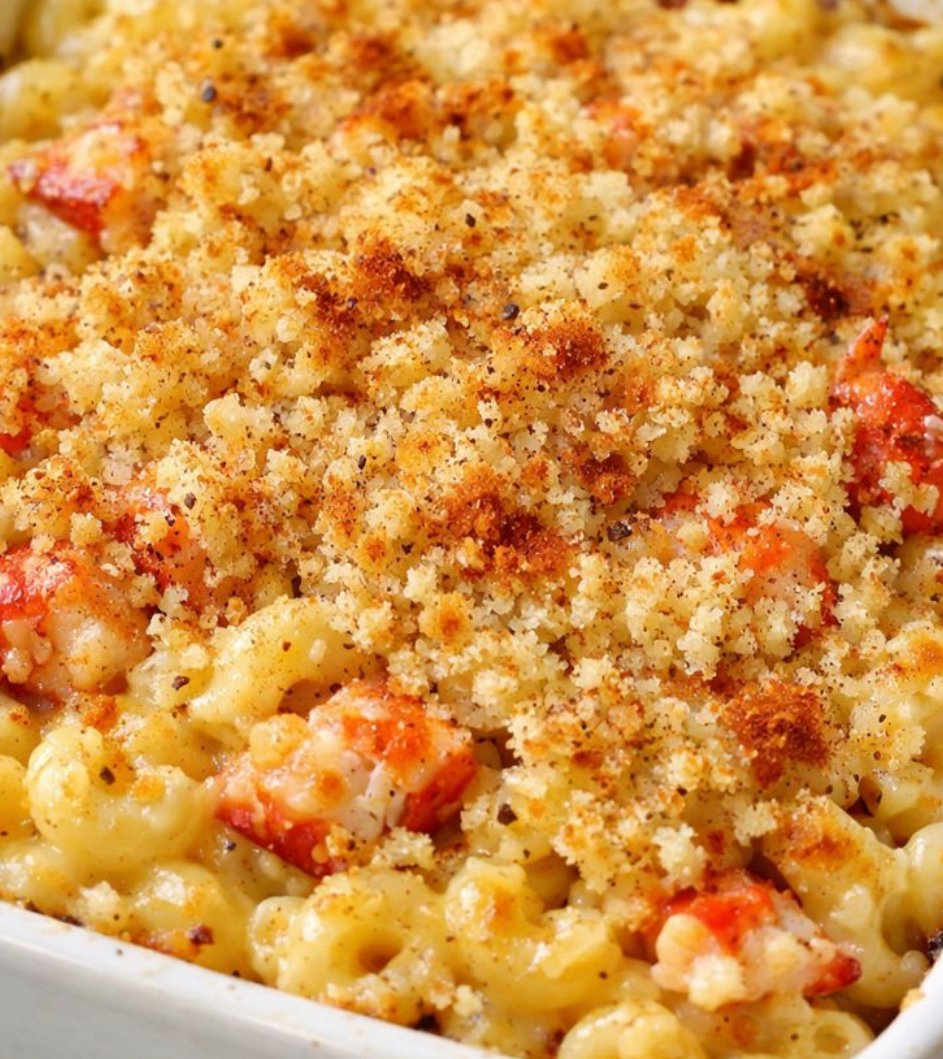
There is mac and cheese, and then there is lobster mac and cheese. This is the latter—a dish that takes the humble, beloved comfort food of childhood and elevates it to something worthy of a special occasion, a holiday table, or a Tuesday night when you simply feel like treating yourself.
This Oven-Baked Lobster Mac and Cheese is rich, creamy, and decadent without being complicated. Tender elbow macaroni is enveloped in a silky sauce made from sharp cheddar, nutty Gruyère, and a whisper of Parmesan. Generous chunks of sweet, succulent lobster are folded throughout, ensuring every bite contains a piece of that luxurious seafood. A golden, buttery breadcrumb topping adds the perfect crunchy contrast to the creamy pasta beneath.
While this dish feels fancy enough for a dinner party or a romantic Valentine’s meal, it is surprisingly straightforward to make. The sauce comes together on the stovetop with a simple roux, the lobster is folded in at the end to preserve its delicate texture, and the oven does the rest. Serve it as a show-stopping main course or a decadent side dish. Either way, prepare for silence at the table—the kind where everyone is too busy enjoying their food to talk.
Why You’ll Love This Recipe
-
Restaurant-quality dish made at home
-
Creamy, cheesy, and loaded with real lobster
-
Golden, buttery breadcrumb topping adds perfect crunch
-
Impressive enough for holidays and special occasions
-
Surprisingly straightforward with basic techniques
-
Can be assembled ahead of time and baked just before serving
Oven-Baked Lobster Mac and Cheese
Prep Time: 25 minutes | Cook Time: 20-25 minutes | Resting Time: 10 minutes | Total Time: Approximately 1 hour
Yield: 6 servings
Ingredients
For the Pasta:
-
12 ounces elbow macaroni, uncooked
-
Salt for pasta water
For the Cheese Sauce:
-
3 tablespoons unsalted butter
-
3 tablespoons all-purpose flour
-
3 cups whole milk, warmed
-
1 teaspoon Dijon mustard
-
1 teaspoon kosher salt, plus more to taste
-
½ teaspoon black pepper
-
1 teaspoon paprika (sweet or smoked)
-
2 cups shredded sharp cheddar cheese, packed
-
1 cup shredded Gruyère cheese, packed
-
½ cup grated Parmesan cheese (optional, for extra richness)
For the Lobster:
-
1 pound cooked lobster meat, chopped into bite-size pieces
For the Topping (Optional):
-
2 tablespoons melted butter
-
1 cup panko or plain breadcrumbs
For Garnish:
-
2 tablespoons chopped fresh parsley
Instructions
1. Preheat and Prepare:
Preheat your oven to 375°F (190°C). Lightly grease a 9×13-inch baking dish with butter or nonstick spray. Set it on the counter where you will be able to easily pour the sauce over the pasta.
2. Cook the Pasta:
Bring a large pot of salted water to a boil. Add the elbow macaroni and cook until just al dente, following the package directions but shaving off about 1 minute from the recommended cooking time. The pasta will continue to cook in the oven, and starting slightly underdone prevents it from becoming mushy.
Drain the macaroni well and spread it evenly in the prepared baking dish. Give it a quick stir so it does not clump together while you make the sauce.
3. Make the Roux:
In a medium saucepan, melt 3 tablespoons of butter over medium heat. Sprinkle in the 3 tablespoons of flour and whisk constantly for about 1 to 2 minutes, until the mixture is smooth and slightly foamy but not browned. This is your roux, which will thicken the cheese sauce.
4. Add the Milk:
Slowly pour in the warmed milk while whisking constantly, making sure to break up any lumps. Continue whisking and cook over medium heat for 4 to 6 minutes, until the sauce thickens enough to coat the back of a spoon. The sauce should be smooth and velvety.
5. Season the Sauce:
Whisk in the Dijon mustard, kosher salt, black pepper, and paprika. Taste and adjust seasoning if needed. Remember that the cheese will add additional saltiness and flavor, so go easy on extra salt at this stage.
6. Add the Cheeses:
Turn the heat to low. Add the shredded cheddar and Gruyère, a handful at a time, whisking gently after each addition until melted and smooth. If using Parmesan for extra richness, stir it in now. The sauce should be silky, decadent, and intensely cheesy.
7. Fold in the Lobster:
Gently fold the chopped cooked lobster meat into the hot cheese sauce, stirring carefully to distribute it evenly without breaking up the lobster pieces too much. The lobster just needs to warm through; overcooking will make it tough.
8. Assemble the Casserole:
Pour the lobster-cheese mixture evenly over the cooked macaroni in the baking dish, making sure to cover all the noodles. Use a spatula or spoon to gently nudge the sauce into the corners and down between the pasta so everything is coated but not overly stirred.
9. Add the Topping (Optional):
If you like a crunchy top, in a small bowl mix the 2 tablespoons of melted butter with the breadcrumbs until they look like damp sand. Sprinkle this mixture evenly over the top of the sauced macaroni.
10. Bake:
Place the baking dish on the middle rack of the oven. Bake for 20 to 25 minutes, or until the top is lightly golden and the edges are bubbling. If you want a deeper brown crust, you can broil for 1 to 2 additional minutes, watching very closely so it does not burn.
11. Rest and Serve:
Remove the dish from the oven and let the lobster mac and cheese rest for about 5 to 10 minutes. This allows the casserole to set slightly so it is not too runny when scooped. Sprinkle with chopped fresh parsley if using, then serve warm, scooping down through the crunchy top to get plenty of sauce and lobster in each serving.
Recipe Notes & Pro Tips
Choosing Lobster Meat: You can use fresh cooked lobster meat, frozen thawed lobster meat, or even high-quality canned lobster in a pinch. If using frozen, thaw completely in the refrigerator and pat dry before chopping. Avoid imitation lobster (surimi), which has a完全不同 texture and flavor profile.
Do Not Overcook the Lobster: The lobster is already cooked when you add it to the sauce. It only needs to warm through. Overcooking will make it rubbery and tough. Fold it in gently at the end and let the residual heat do the work.
The Importance of Warm Milk: Adding cold milk to a hot roux can cause lumps and slow down the thickening process. Warm the milk in a separate saucepan or in the microwave for 60-90 seconds before adding it to the roux.
Shred Your Own Cheese: Pre-shredded cheese contains anti-caking agents like cellulose and potato starch, which can make the sauce grainy or prevent it from melting smoothly. Shredding your own cheddar and Gruyère from a block ensures a silky, lump-free sauce.
Gruyère Substitutions: Gruyère has a nutty, slightly sweet flavor that melts beautifully. If you cannot find it, substitute with Swiss cheese, fontina, or additional white cheddar. Avoid mozzarella, which becomes stringy rather than creamy.
Make Ahead for Entertaining: You can assemble the entire casserole (without the breadcrumb topping) up to 24 hours in advance. Cover and refrigerate. When ready to bake, add the breadcrumb topping and increase the baking time by 10-15 minutes because you are starting from cold.
Freezing Instructions: This dish freezes reasonably well for up to 2 months. Assemble completely but do not bake. Wrap tightly in plastic wrap and then foil. Thaw overnight in the refrigerator before baking as directed.
Serving Suggestions
Lobster mac and cheese is rich and filling, so it pairs well with lighter accompaniments:
-
A crisp green salad with lemon vinaigrette
-
Roasted asparagus or broccolini
-
Steamed green beans
-
Sautéed spinach with garlic
-
A dry white wine like Chardonnay or Sauvignon Blanc
As a main course, this recipe serves 4 to 6 people. As a side dish (alongside a roasted chicken, steak, or simply grilled fish), it can serve 8 to 10.
The History of Macaroni and Cheese
Macaroni and cheese has roots stretching back to 13th century Italy, but the version most Americans know today was popularized by Thomas Jefferson. After encountering macaroni in Europe, Jefferson brought both recipes and a pasta-making machine back to the United States. He served a version of macaroni and cheese at a state dinner in 1802.
The dish remained a luxury for the wealthy until the Industrial Revolution made pasta and cheese more affordable. In 1937, Kraft introduced its boxed macaroni and cheese dinner, which became a sensation during the Great Depression and World War II due to its low cost and long shelf life.
Lobster mac and cheese is a more recent innovation, appearing on restaurant menus in the 1990s and 2000s as part of the broader trend of elevating comfort food. It combines the nostalgic appeal of childhood mac and cheese with the luxury of seafood, creating a dish that feels both familiar and special. This recipe captures that perfect balance—creamy, cheesy, and comforting, yet undeniably elegant.