

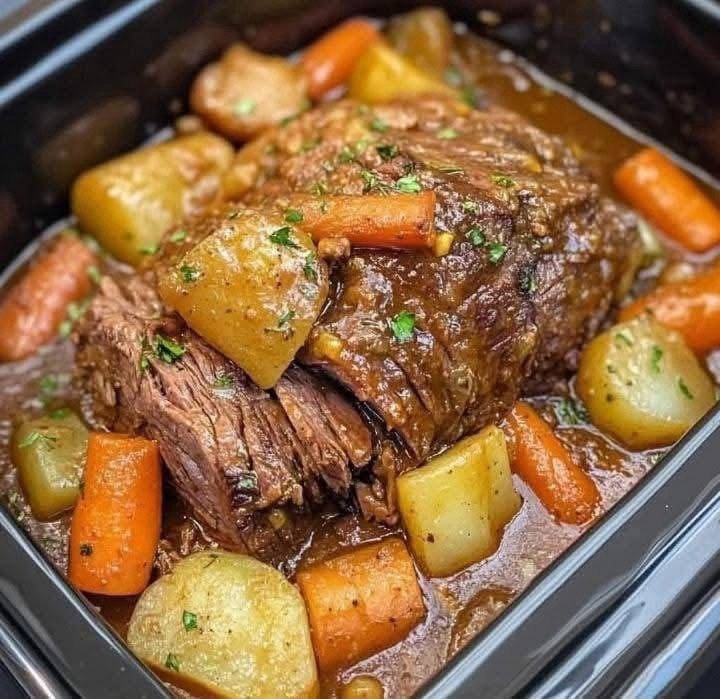
There are certain meals that define comfort. Classic pot roast is one of them. A big, beautiful chuck roast, slow-cooked for hours with carrots, potatoes, and onions until it is fall-apart tender and swimming in a rich, savory gravy. It is the kind of meal that fills your home with an irresistible aroma long before dinner is ready, drawing everyone to the kitchen. This is the pot roast of your childhood, the one your grandmother made, and now it is the one you will make for your own family.
This classic pot roast recipe is a masterclass in low-and-slow cooking. A humble chuck roast transforms into something extraordinary with time, patience, and a few simple ingredients. The meat becomes buttery and tender, the vegetables absorb all the beefy goodness, and the broth reduces into a silky, deeply flavorful gravy. It is hearty, satisfying, and pure nostalgia. Serve it with crusty bread to soak up every last drop.
Why You Will Love This Recipe
· Fall-Apart Tender Beef: Low, slow cooking transforms chuck into buttery perfection.
· Rich, Savory Gravy: Made from the natural pan juices.
· One Pot, Minimal Cleanup: Everything cooks in a single Dutch oven.
· Packed with Vegetables: Carrots, potatoes, and onions cook right alongside the meat.
· Budget-Friendly: Chuck roast is an affordable cut that becomes luxurious with time.
· Great for Meal Prep: Tastes even better the next day.
· Freezer-Friendly.
· The Ultimate Comfort Food.
Ingredients List
For the Roast:
· 3 to 4 lbs (1.3 to 1.8 kg) beef chuck roast
· 2 teaspoons kosher salt
· 1 teaspoon black pepper
· 2 tablespoons olive oil or vegetable oil
For the Vegetables:
· 1 large yellow onion, cut into large chunks
· 4 carrots, peeled and cut into 2-inch pieces
· 1 ½ lbs baby potatoes or Yukon Gold potatoes, halved (or cut into 2-inch chunks)
For the Braising Liquid:
· 3 cloves garlic, minced
· 2 tablespoons tomato paste
· 1 cup dry red wine (such as Merlot or Cabernet) or beef broth
· 2 cups low-sodium beef broth
· 2 bay leaves
· 4 sprigs fresh thyme (or 1 teaspoon dried)
· 1 teaspoon dried rosemary (or 1 sprig fresh)
For Thickening (Optional):
· 2 tablespoons cornstarch mixed with 2 tablespoons cold water
Step-by-Step Instructions
Step 1: Prepare the Roast
Pat the chuck roast completely dry with paper towels. This is essential for a good sear. Season generously on all sides with salt and pepper.
Step 2: Sear the Roast
Heat the olive oil in a large Dutch oven or heavy-bottomed pot over medium-high heat. When the oil is shimmering, carefully place the roast in the pot. Sear for 4-5 minutes per side, until deeply browned on all sides (including the edges). Do not rush this step—the brown crust adds immense flavor. Transfer the roast to a plate.
Step 3: Sauté the Aromatics
Reduce the heat to medium. Add the chopped onion to the pot and cook for 3-4 minutes until softened. Add the minced garlic and cook for 60 seconds until fragrant. Add the tomato paste and cook for 1-2 minutes, stirring constantly, until it darkens slightly. This step adds rich, savory depth.
Step 4: Deglaze the Pot
Pour the red wine (or 1 cup of beef broth) into the pot, scraping the bottom with a wooden spoon to release all the browned bits (fond). This is where much of the flavor lives. Let the wine bubble and reduce by half, about 2-3 minutes.
Step 5: Return the Roast and Add Broth
Return the seared roast to the pot. Add the beef broth, bay leaves, thyme, and rosemary. The liquid should come about halfway up the sides of the roast. If needed, add more broth or water.
Step 6: Add the Vegetables
Scatter the carrots and potatoes around the roast. Do not submerge them completely; they will steam and braise in the liquid.
Step 7: Cook Low and Slow
Bring the liquid to a gentle simmer, then cover the pot with a tight-fitting lid. Reduce the heat to low (or transfer to a 325°F oven). Cook for 3 to 4 hours, until the meat is fork-tender and shreds easily. Check occasionally to ensure the liquid is at a gentle simmer, not a boil.
Step 8: Remove the Meat and Vegetables
Carefully transfer the roast and vegetables to a serving platter. Tent loosely with foil to keep warm. Discard the bay leaves and thyme sprigs.
Step 9: Make the Gravy (Optional)
If you want a thicker gravy, pour the braising liquid into a fat separator or skim off excess fat with a spoon. Transfer the liquid to a saucepan. Bring to a simmer. Whisk in the cornstarch slurry and cook for 2-3 minutes until thickened. Season with additional salt and pepper to taste.
Step 10: Serve
Slice the pot roast against the grain (cut perpendicular to the muscle fibers) into thick slices or pull apart into large chunks. Serve with the vegetables and plenty of gravy.
Cooking Tips and Pro Tips for Best Results
· Use beef chuck roast: Chuck has the perfect amount of marbling and connective tissue for slow cooking. Avoid lean cuts like sirloin or top round, which will become dry and tough.
· Pat the meat dry before searing: Moisture on the surface prevents browning. Use paper towels to remove as much moisture as possible.
· Do not skip the sear: The Maillard reaction creates deep, complex, savory flavors that you cannot achieve from braising alone.
· Use a heavy Dutch oven: Cast iron or enameled cast iron retains heat evenly and is perfect for slow braising.
· Low and slow is the key: Cook the pot roast at a gentle simmer, not a boil. Boiling will make the meat tough. The ideal oven temperature is 325°F.
· Let it rest: Allowing the meat to rest for 10-15 minutes before slicing helps the juices redistribute.
· Slice against the grain: Look at the roast and identify the direction of the muscle fibers. Slice perpendicular to those lines. This shortens the fibers and ensures tender, easy-to-chew meat.
Variations and Substitutions
Red Wine Pot Roast:
Use 1 ½ cups of red wine and 1 cup of broth. The wine adds complexity and richness. Choose a wine you would drink, like Merlot, Cabernet, or Pinot Noir.
Beer Pot Roast:
Replace the red wine with 1 cup of dark beer (stout or porter). The beer adds a malty, slightly bitter note that pairs beautifully with beef.
Herb-Crusted Pot Roast:
Add 1 tablespoon of fresh rosemary and 1 tablespoon of fresh thyme to the seasoning rub. Use fresh herbs in the braising liquid for an aromatic, garden-fresh flavor.
Mushroom Pot Roast:
Add 8 oz of sliced cremini mushrooms along with the onions. The mushrooms add an earthy, umami depth.
Slow Cooker Pot Roast:
After searing the roast and sautéing the aromatics, transfer everything to a 6-quart slow cooker. Add the broth and vegetables. Cook on low for 8-10 hours or on high for 5-6 hours. The meat will be incredibly tender.
Instant Pot Pot Roast:
Use the sauté function to sear the roast and sauté the vegetables. Add the liquid and cook on high pressure for 70-80 minutes. Natural release for 15 minutes. The result is much faster but equally delicious.
Serving Suggestions
This classic pot roast is a complete meal. Serve it with:
· Crusty Bread or Sourdough: Essential for sopping up the rich gravy.
· A Simple Green Salad: A light, tangy salad balances the richness.
· Mashed Potatoes: For extra starch (potatoes on potatoes is pure comfort).
· Buttered Egg Noodles: A classic pairing.
· Roasted Green Beans or Asparagus: Adds color and freshness.
Pair with:
· A glass of the same red wine used in the recipe
· Horseradish or Dijon mustard on the side
Storage and Reheating Instructions
Refrigerator:
Store leftovers in an airtight container for up to 5 days. The flavors deepen significantly overnight. The gravy will thicken as it sits, which is normal.
Freezer:
Freeze in freezer-safe containers for up to 3 months. The texture of the potatoes may soften, but the meat and gravy freeze beautifully. Thaw overnight in the refrigerator before reheating.
Reheating:
· Stovetop (Best): Gently reheat in a covered pot over medium-low heat for 10-15 minutes, adding a splash of broth if needed.
· Oven: Place in a covered baking dish at 325°F for 15-20 minutes.
· Microwave: Heat individual portions for 90 seconds, then in 30-second increments.
Nutritional Information (Approximate, per serving – serves 6)
· Calories: 520
· Protein: 42g
· Fat: 28g
· Saturated Fat: 10g
· Carbohydrates: 28g
· Fiber: 4g
· Sugar: 6g
· Sodium: 780mg
· Iron: 25% Daily Value
Frequently Asked Questions (FAQ)
1. What is the best cut of beef for pot roast?
Beef chuck roast is the gold standard. It comes from the shoulder and has excellent marbling and connective tissue that breaks down during long cooking, resulting in tender, flavorful meat. You can also use bottom round or brisket, but chuck is best.
2. Why is my pot roast tough?
Tough pot roast is almost always undercooked. Chuck roast needs time for the connective tissue to break down into gelatin. If it is tough after 3-4 hours, continue cooking for another 1-2 hours. Also, make sure you are cooking at a gentle simmer (not a boil) and that you slice against the grain.
3. Can I add other vegetables to the pot roast?
Absolutely. Parsnips, turnips, celery, and mushrooms are excellent additions. Add them at the same time as the carrots and potatoes. Do not add more than 2 cups of extra vegetables, or the pot may become overcrowded.
4. Do I have to use wine?
No. Substitute the wine with an additional cup of beef broth plus 1 tablespoon of red wine vinegar or balsamic vinegar. The vinegar adds the acidity that balances the richness.
5. How do I thicken the gravy without cornstarch?
You can make a traditional roux: melt 2 tablespoons of butter in a saucepan, whisk in 2 tablespoons of flour, and cook for 1-2 minutes. Slowly whisk in 1 cup of the braising liquid until smooth and thickened. You can also simply mash a few of the cooked potatoes into the liquid—the potato starch will thicken the gravy naturally.
6. Can I cook pot roast in a slow cooker?
Yes. After searing the roast and sautéing the aromatics, transfer everything to a 6-quart slow cooker. Add the broth and vegetables. Cook on low for 8-10 hours or on high for 5-6 hours. The meat will be incredibly tender, and the gravy will be slightly thinner than the oven version.