

Ingredients
-
2 cups dry elbow macaroni (about 8 ounces)
-
3 cups water
-
1 teaspoon salt
-
1 (12-ounce) can evaporated milk (not sweetened condensed milk)
-
2 cups shredded cheddar cheese, packed (about 8 ounces)
Optional Add-ins (Not Authentic to the Depression Era, But Delicious)
-
½ teaspoon black pepper
-
¼ teaspoon paprika or cayenne (for warmth)
-
1 tablespoon butter (because why not?)
-
Cooked bacon, crumbled
-
Chopped chives or parsley for color
A note on evaporated milk: This is not the same as sweetened condensed milk. Evaporated milk is unsweetened, slightly caramelized, and creamy. Sweetened condensed milk is thick, sugary, and will ruin this recipe. Read the label.
A note on the cheese: Sharp cheddar gives you the most flavor for your money. Pre-shredded cheese works fine (and saves time), but block cheese that you shred yourself melts creamier because pre-shredded cheese has anti-caking agents. Either way, it’ll be delicious.
Step-by-Step Instructions
Step 1: Prep the Slow Cooker
Lightly grease the inside of your 4- to 6-quart slow cooker with a little oil or cooking spray. This helps prevent the pasta from sticking to the bottom and sides as it cooks.
Step 2: Add the Dry Macaroni
Pour the dry elbow macaroni into the bottom of the slow cooker. Spread it into an even layer so it cooks evenly. You should see a solid layer of uncooked pasta covering the bottom.
Step 3: Add Water and Salt
Pour the 3 cups of water and 1 teaspoon of salt directly over the dry macaroni. Stir gently to make sure all the pasta is moistened and no big dry pockets remain. This is the only stirring you’ll do for the next hour.
Step 4: Cover and Cook (First Stage)
Cover the slow cooker with the lid and cook on HIGH for 1 to 1½ hours.
Here’s the key: stir once about halfway through (around 30–40 minutes). This helps the pasta cook evenly and prevents clumping.
Start checking for doneness at 1 hour. You’re looking for macaroni that is just tender but not mushy. It should have absorbed most of the water – there might be a small amount of liquid left at the bottom, but nothing soupy.
Slow cookers vary, so trust your eyes and a fork, not the clock.
Step 5: Add the Evaporated Milk
Once the macaroni is tender and most of the water is absorbed, pour in the entire 12-ounce can of evaporated milk. Stir well to loosen any pasta that may have stuck to the bottom or sides.
At this point, the mixture will look a little soupy. That’s exactly what you want. The pasta will absorb more liquid as it finishes cooking.
Step 6: Add the Cheese
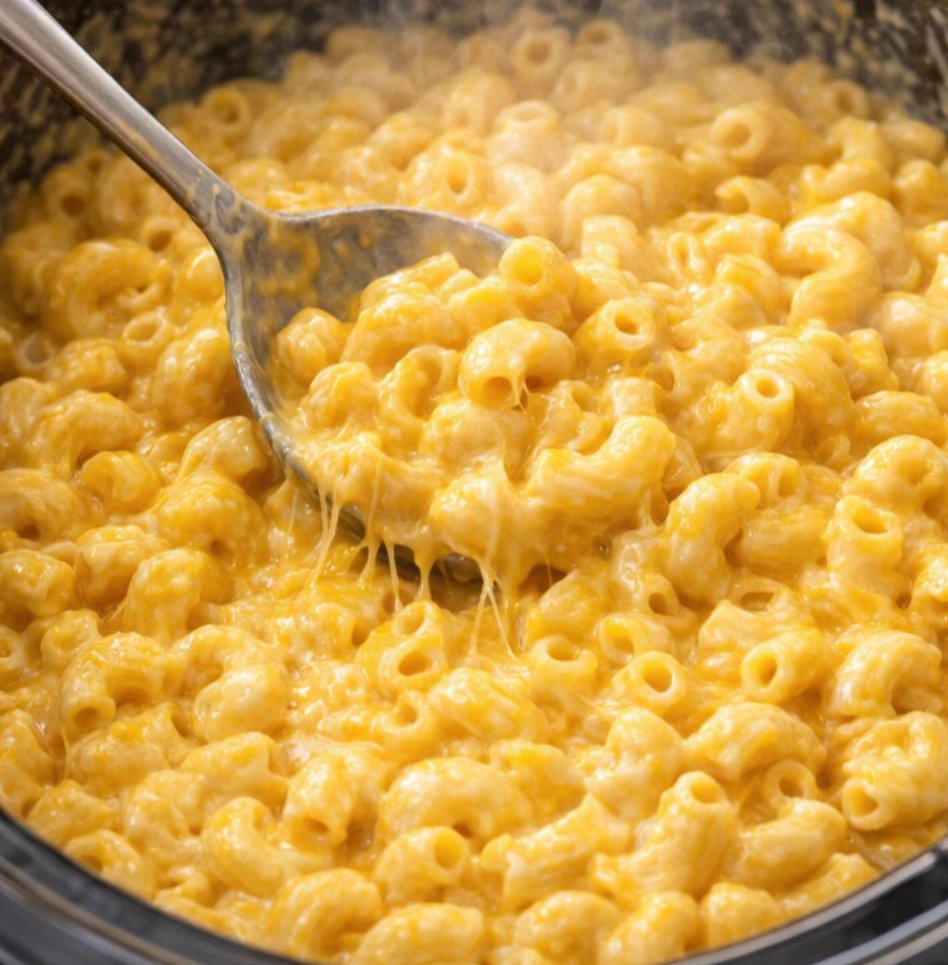
Add the shredded cheddar cheese a handful at a time, stirring after each addition, until all the cheese is melted and the sauce is smooth and creamy.
If it looks too thick at this stage (unlikely, but possible), you can stir in a splash of additional water – a tablespoon or two at a time – until it reaches your preferred consistency.
Step 7: Cover and Cook (Second Stage)
Cover the slow cooker again and cook on LOW for another 15 to 20 minutes. This allows the macaroni to soak up some of the sauce and everything to become hot, bubbly, and fully combined.
Stir once more at the end. Taste and adjust the salt if needed. (Depression Era cooks would tell you to be frugal with salt, but I say add what makes you happy.)
Step 8: Serve
Spoon the creamy macaroni into bowls. Serve hot, straight from the slow cooker.
If you’re feeling fancy, top with a sprinkle of black pepper, paprika, or chopped chives. A pat of butter melting into the top doesn’t hurt, either.
What Makes This “Depression Era”?
Let me give you a little history, because I think it makes the food taste better.
During the Great Depression (1929–1939), families had to stretch every dollar. Macaroni and cheese became a staple because:
-
Pasta was cheap. It still is. A box of elbow macaroni costs about a dollar.
-
Evaporated milk was shelf-stable and affordable. Before widespread refrigeration, canned milk was a lifesaver. It’s creamier than fresh milk and lasts for months.
-
Cheese was a treat. You didn’t use a lot, but a little sharp cheddar went a long way.
-
No eggs, no butter, no roux. Those were expensive luxuries. Depression Era macaroni skipped them entirely.
This recipe stays true to that spirit. It uses only five humble ingredients. Nothing fancy. Nothing wasteful. Just enough to make a pot of creamy, satisfying pasta that fills you up and warms you from the inside out.
But unlike your great-grandmother, you get to use a slow cooker. And I think she’d approve.
What to Serve With Depression Era Macaroni
This mac and cheese is rich, creamy, and filling on its own. But if you want to round out the meal, here are some classic pairings:
-
A simple green salad with lemon vinaigrette (cuts through the richness)
-
Steamed frozen peas or green beans (adds color and a vegetable)
-
Hot dogs or smoked sausage (very on-brand for Depression Era comfort food)
-
A dollop of applesauce (sweet and tangy contrast)
-
Buttered bread or crackers (because why not double the carbs)
For a heartier meal, stir in a cup of cooked, shredded chicken or a can of drained tuna at the cheese stage. That’s not authentic to the 1930s, but it’s delicious.
Storage and Reheating
Refrigerator: Store leftovers in an airtight container for up to 4 days. Macaroni and cheese thickens significantly as it cools – that’s normal.
Reheating: The microwave works best. Heat individual portions for 60–90 seconds, stirring halfway. Add a splash of milk or water to loosen the sauce if needed. You can also reheat on the stovetop over medium-low heat with a few tablespoons of milk.
Freezer: Not recommended. The texture of the pasta becomes mushy when thawed. This recipe is so quick and easy that you’re better off making a fresh batch.
Common Questions (FAQ)
Can I use a different pasta shape?
Absolutely. Elbow macaroni is traditional, but small shells, cavatappi, or even rotini work beautifully. Just stick to 2 cups of dry pasta. Larger shapes (like penne or ziti) may need an extra 15–20 minutes of cooking time.
Can I use regular milk instead of evaporated milk?
You can, but you’ll lose creaminess. Regular milk is thinner and more watery. If that’s all you have, use 1½ cups of whole milk and add 1 tablespoon of butter for richness. But evaporated milk is genuinely better here.
Can I use a different cheese?
Yes. Sharp cheddar is the classic choice, but you can experiment:
-
Monterey Jack – Mild and creamy
-
Colby – Similar to cheddar but softer
-
Gouda – Smoky and rich
-
A blend – Cheddar + mozzarella is a great combo
Avoid very hard cheeses (Parmesan alone won’t melt well) or pre-shredded cheese blends with anti-caking agents (they melt fine but the texture is slightly grainy).
Can I make this gluten-free?
Yes. Use gluten-free elbow macaroni. You may need to adjust the cooking time – check for doneness at 45 minutes instead of 60. Gluten-free pasta can go from tender to mushy very quickly.
My pasta turned out mushy. What happened?
Two possibilities:
-
You cooked it too long. Start checking at 1 hour. Every slow cooker is different.
-
You used a different type of pasta. Some shapes (especially smaller ones) cook faster. Check earlier next time.
My pasta turned out crunchy. What happened?
Your slow cooker runs cool, or you didn’t add enough liquid. Next time, add an extra ¼ cup of water and cook for an additional 15–30 minutes.
Can I double this recipe?
Yes, if your slow cooker is at least 6 quarts. Double all ingredients and follow the same cooking times. You may need an extra 15 minutes on the first stage – check for tender pasta before adding the milk and cheese.
Pro Tips From My Kitchen to Yours
After making this recipe more times than I’d like to admit, here’s what I’ve learned:
-
Don’t skip the halfway stir. It takes 30 seconds and prevents a solid brick of stuck-together pasta.
-
Use sharp cheddar. Mild cheddar disappears into the sauce. Sharp cheddar announces itself. You’re using five ingredients – make every one count.
-
Let it sit for 5 minutes after cooking. The sauce will thicken beautifully as it rests. If you serve immediately, it might seem a little loose.
-
Add a pat of butter at the end. Depression Era cooks wouldn’t have wasted the butter, but you’re not in a depression. One tablespoon of butter stirred in at the end adds a glorious sheen and richness.
-
Leftovers make excellent mac and cheese fritters. Roll cold mac and cheese into balls, coat in breadcrumbs, and pan-fry until golden. You’re welcome.
A Final Thought on Depression Cooking
There’s a reason Depression Era recipes are having a moment right now.
Inflation is high. Grocery bills are up. And people are looking for ways to eat well without spending a fortune.
But Depression cooking isn’t just about being cheap. It’s about being resourceful. It’s about understanding that you don’t need twenty ingredients to make something delicious. It’s about honoring the food you have and wasting nothing.
This Slow Cooker Depression Era Macaroni is proof of that principle.
Five ingredients. One slow cooker. A pot of the creamiest, coziest mac and cheese you’ve ever tasted.
It’s not fancy. It’s not expensive. It’s not complicated.
It’s just good food. The kind that fills you up and makes you feel taken care of.
And honestly? That’s the best kind of food there is.
Enjoy.