

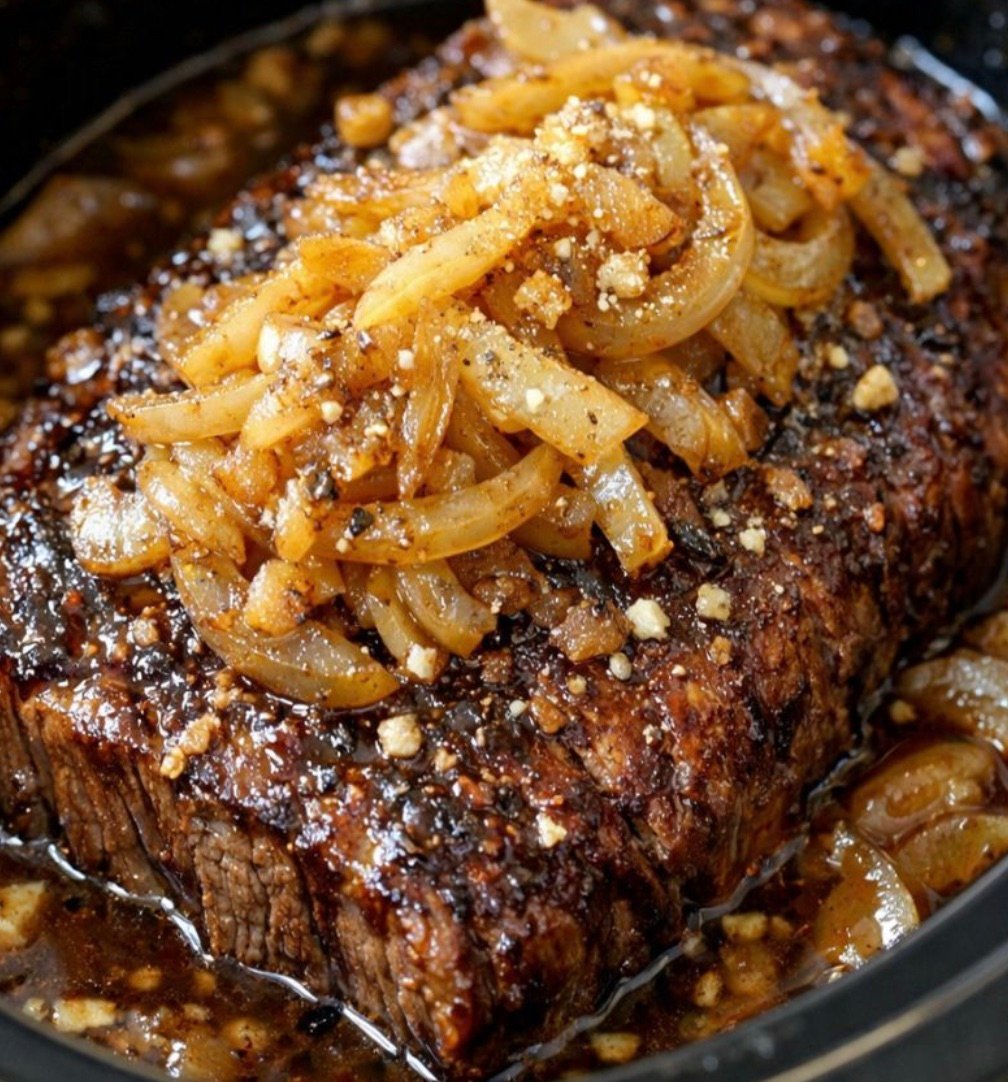
Some recipes are so unique, so deeply flavorful, that they become unforgettable. This slow cooker Amish vinegar brisket is one of them. Unlike traditional smoked or barbecue brisket, this Pennsylvania Dutch version is braised low and slow in a tangy, sweet-tart vinegar broth that transforms the meat into something extraordinary. The brisket becomes fall-apart tender, infused with the sharp brightness of apple cider vinegar, the warmth of spices, and a touch of sweetness. It is bold, unexpected, and utterly delicious.
This slow cooker Amish vinegar brisket is a staple in Amish and Mennonite communities, often served with mashed potatoes, egg noodles, or dumplings to soak up the irresistible vinegar-spiked gravy. The acidity of the vinegar cuts through the richness of the beef, creating a perfectly balanced dish. Best of all, the slow cooker does all the work, turning an affordable cut of beef into a tender, flavorful masterpiece. Serve it for a Sunday supper, a holiday meal, or any time you want something a little different.
Why You Will Love This Recipe
· Unique, Bold Flavor: Tangy, sweet, and deeply savory.
· Fall-Apart Tender: Low, slow cooking transforms brisket into buttery perfection.
· Only a Few Simple Ingredients: Brisket, vinegar, broth, sugar, and spices.
· One Slow Cooker, Minimal Cleanup.
· Set It and Forget It: Perfect for busy days.
· Budget-Friendly: Brisket is an affordable cut that becomes luxurious with time.
· Great for Meal Prep: Tastes even better the next day.
· Freezer-Friendly.
Ingredients List
For the Brisket:
· 3 to 4 lbs (1.3 to 1.8 kg) beef brisket (flat cut or point cut)
· 1 tablespoon olive oil (for searing, optional but recommended)
· 1 teaspoon kosher salt
· ½ teaspoon black pepper
For the Vinegar Broth:
· 1 cup apple cider vinegar
· 1 cup beef broth (low-sodium)
· ½ cup brown sugar (packed)
· 1 large yellow onion, thinly sliced
· 4 cloves garlic, minced
· 1 tablespoon Worcestershire sauce
· 1 teaspoon dry mustard powder
· 1 teaspoon smoked paprika (optional)
· 2 bay leaves
Optional for Thickening:
· 2 tablespoons cornstarch mixed with 2 tablespoons cold water
Step-by-Step Instructions
Step 1: Prepare the Brisket
Pat the brisket completely dry with paper towels. Season generously on all sides with salt and pepper.
Step 2: Sear the Brisket (Optional but Highly Recommended)
Heat the olive oil in a large skillet over medium-high heat. When the oil is shimmering, carefully place the brisket in the skillet. Sear for 4-5 minutes per side, until a deep golden brown crust forms. Searing creates complex, savory flavors that you cannot achieve from slow cooking alone.
Step 3: Layer the Slow Cooker
Place the sliced onions in the bottom of a 6-quart or larger slow cooker. Place the seared (or raw) brisket on top of the onions, fat side up.
Step 4: Make the Vinegar Broth
In a medium bowl or large liquid measuring cup, whisk together the apple cider vinegar, beef broth, brown sugar, minced garlic, Worcestershire sauce, dry mustard, smoked paprika (if using), and bay leaves. Pour the mixture over the brisket.
Step 5: Cook
Cover and cook on LOW for 8 to 10 hours or on HIGH for 5 to 6 hours. The brisket is ready when it is fork-tender and shreds easily. For the most tender results, low and slow is best.
Step 6: Remove the Brisket and Make the Gravy (Optional)
Carefully remove the brisket from the slow cooker and place it on a cutting board. Tent loosely with foil. Pour the cooking liquid through a fine-mesh strainer into a saucepan, discarding the solids (or reserve the onions for serving). Skim off any excess fat. If you prefer a thicker gravy, bring the liquid to a simmer and whisk in the cornstarch slurry. Cook for 2-3 minutes until thickened.
Step 7: Slice or Shred
Brisket can be served sliced (against the grain) or shredded. Slice thin slices across the grain for a more traditional presentation. Shred with two forks for a pulled-beef texture.
Step 8: Serve
Return the sliced or shredded brisket to the slow cooker, or arrange it on a platter. Pour the gravy over the top. Serve hot.
Cooking Tips and Pro Tips for Best Results
· Choose the right brisket: The flat cut is leaner and slices beautifully. The point cut has more marbling and is more flavorful, especially for shredding. Both work well.
· Do not skip searing if you have time: Searing creates the Maillard reaction, adding deep, savory notes that balance the tangy vinegar. It adds only 10 minutes but makes a significant difference.
· Use apple cider vinegar, not white vinegar: Apple cider vinegar has a milder, fruitier acidity that mellows beautifully during cooking. White vinegar is too harsh.
· Slice against the grain: Brisket has long muscle fibers. Slicing perpendicular (against the grain) shortens these fibers, making the meat more tender. Look for the direction of the lines running through the meat.
· Let the brisket rest before slicing: Allow the brisket to rest for 10-15 minutes after cooking. This lets the juices redistribute, preventing dry meat.
· The gravy is intensely flavorful: The vinegar broth reduces into a tangy, sweet, complex sauce. It is thin but packed with flavor. Thicken it with cornstarch if you prefer a traditional gravy.
· Make it a day ahead: Like many braised dishes, this vinegar brisket tastes even better the next day. Make it ahead, refrigerate overnight, and skim off any solidified fat before reheating.
Variations and Substitutions
German-Style Vinegar Brisket (Sauerbraten Inspired):
Add 1 teaspoon of whole cloves, 1 teaspoon of allspice berries, and 2 crushed gingersnap cookies during the last hour of cooking. The gingersnaps thicken the gravy and add a warm, spiced note.
Honey Vinegar Brisket:
Replace the brown sugar with ½ cup of honey. Honey adds a floral sweetness that pairs beautifully with the vinegar.
Spicy Vinegar Brisket:
Add 1 teaspoon of crushed red pepper flakes and 1 diced jalapeño. Serve with extra hot sauce on the side.
Onion Lover’s Vinegar Brisket:
Use 2 large onions instead of 1. Add 1 tablespoon of dried onion flakes to the broth. The onions melt into the gravy, adding sweetness and body.
Sweet and Sour Brisket:
Add ½ cup of ketchup and 2 tablespoons of yellow mustard to the broth. This creates a tangy, sweet, barbecue-adjacent flavor.
Vegetarian Vinegar “Brisket”:
Substitute the brisket with 2 large portobello mushrooms (stemmed) or 1 block of extra-firm tofu (pressed and sliced). Reduce cooking time to 3-4 hours on low.
Serving Suggestions
This Amish vinegar brisket is all about that tangy, savory gravy. Serve it:
· Over Mashed Potatoes: The classic pairing. The creamy potatoes soak up the tangy vinegar gravy beautifully.
· With Egg Noodles or Buttered Spaetzle: Wide noodles catch the sauce.
· With Roasted Potatoes or Potato Dumplings.
· On a Sandwich: Pile shredded brisket onto a toasted bun with coleslaw.
· Over Rice or Cauliflower Rice.
Side dishes that pair well:
· Braised red cabbage
· Roasted carrots or green beans
· Simple green salad with vinaigrette
· Crusty bread for sopping
Storage and Reheating Instructions
Refrigerator:
Store leftovers in an airtight container with the gravy for up to 5 days. The flavors deepen significantly overnight. Skim off any solidified fat before reheating.
Freezer:
Freeze in a freezer-safe container for up to 3 months. Thaw overnight in the refrigerator before reheating.
Reheating:
· Stovetop (Best): Transfer to a saucepan and reheat over medium-low heat for 10-12 minutes, stirring occasionally. Add a splash of broth or water if needed.
· Oven: Place in a covered baking dish at 325°F for 15-20 minutes.
· Slow Cooker: Return leftovers to the slow cooker on the WARM setting for 30-45 minutes.
Nutritional Information (Approximate, per serving – serves 8)
· Calories: 450
· Protein: 38g
· Fat: 22g
· Saturated Fat: 8g
· Carbohydrates: 18g
· Fiber: 0g
· Sugar: 16g
· Sodium: 580mg
· Potassium: 520mg
· Iron: 22% Daily Value
Frequently Asked Questions (FAQ)
1. Why is this called “Amish” vinegar brisket?
This recipe comes from Pennsylvania Dutch (Amish and Mennonite) cooking traditions. Vinegar is a common ingredient in the region, used to balance the richness of meats and create bright, bold flavors. This brisket is a classic example of that style.
2. Will the brisket taste like vinegar?
The vinegar mellows significantly during long cooking, mellowing into a tangy, sweet, savory sauce. It will not taste harsh like straight vinegar. The result is a bright, balanced flavor that cuts through the richness of the beef.
3. Can I use white vinegar instead of apple cider vinegar?
You can, but it is not recommended. White vinegar is much sharper and more acidic. Apple cider vinegar has a milder, fruitier flavor that mellows beautifully. If you must use white vinegar, reduce the amount to ¾ cup and add an extra ¼ cup of broth.
4. Why is my brisket tough?
Tough brisket is almost always undercooked. Brisket needs time for the connective tissue to break down into gelatin. If it is tough after 8 hours on low, continue cooking for another 1-2 hours. Also, make sure you are slicing against the grain.
5. Can I make this in the oven instead of a slow cooker?
Yes. Preheat the oven to 325°F (160°C). Sear the brisket in a Dutch oven, then add the onions and broth. Cover and bake for 3-4 hours, until fork-tender. Check occasionally and add a splash of broth if the liquid reduces too much.
6. What is the difference between the flat cut and the point cut of brisket?
The flat cut is leaner, more uniform, and slices beautifully. The point cut has more fat and marbling, making it more flavorful and ideal for shredding. Both work well for this recipe; choose based on your preference. If you want traditional sliced brisket, choose the flat cut. If you want shredded, pulled brisket, choose the point cut.