

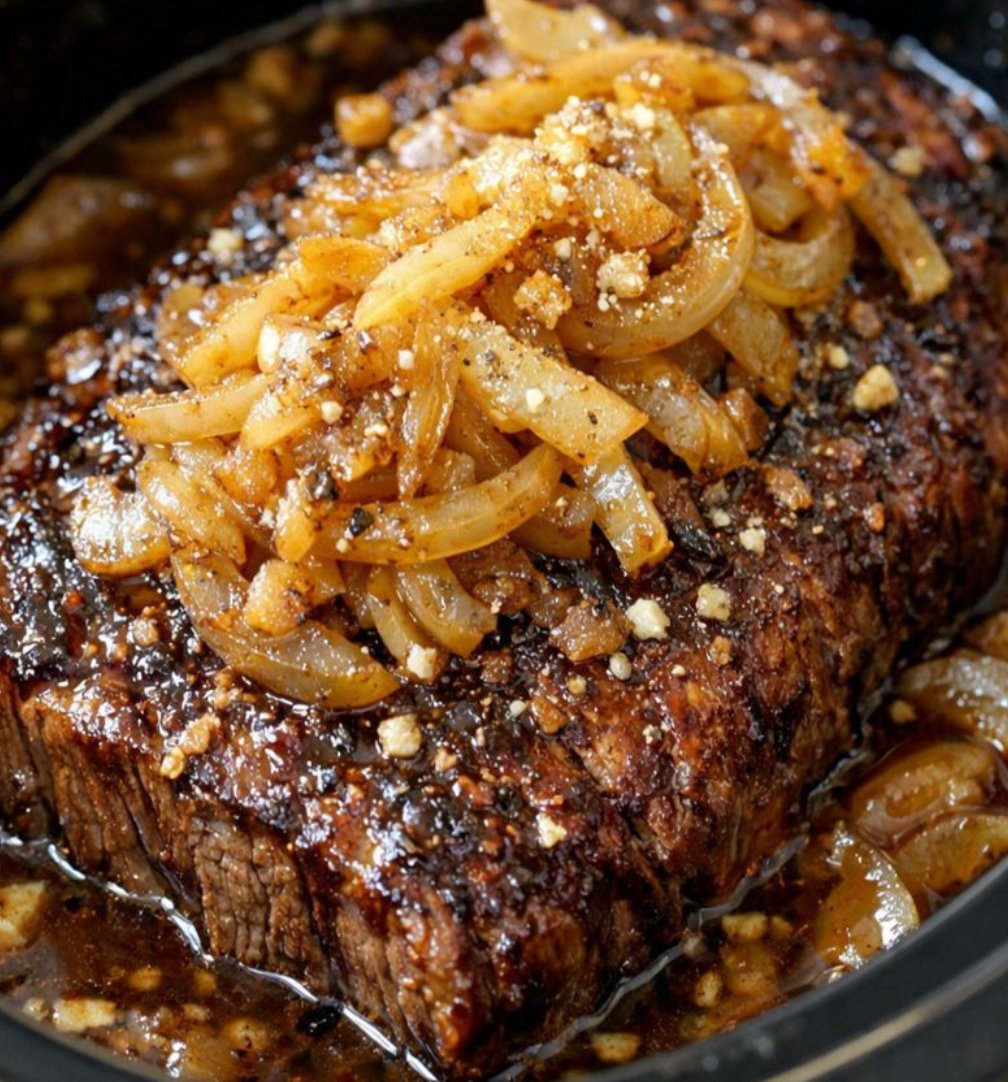
Ingredients (Servings: 6)
-
3 to 4 pounds beef brisket, trimmed but with a little fat left on
-
1 cup apple cider vinegar
-
1 cup beef broth (or water, in a pinch)
-
1 medium yellow onion, thinly sliced
-
2 tablespoons brown sugar, packed
Note: Don’t trim all the fat. A little fat left on the brisket renders during cooking, basting the meat and adding flavor.
Cooking Time at a Glance
| Cooking Method | Temperature | Time |
|---|---|---|
| Slow Cooker | LOW | 8–10 hours |
| Total Active Time | – | 10 minutes |
| Total Time | – | 8–10 hours |
Step-by-Step Instructions
1. Place the Brisket in the Slow Cooker
Lay the beef brisket in the bottom of a 5- to 7-quart slow cooker, fat side up, so it fits in a single layer as much as possible.
Why fat side up? As the brisket cooks, the fat cap renders and bastes the meat below, keeping it moist and flavorful.
2. Add the Onions
Scatter the thinly sliced onion evenly over and around the raw brisket in the slow cooker.
3. Make the Vinegar Mixture
In a measuring cup, stir together the apple cider vinegar, beef broth, and brown sugaruntil the sugar begins to dissolve.
4. Pour Over the Brisket
Slowly pour the apple cider vinegar mixture directly over the raw beef brisket and onions, making sure the meat is well coated and some liquid runs underneath.
5. Cook
Cover the slow cooker with its lid. Cook on LOW for 8 to 10 hours, or until the brisket is very tender and can be easily pulled apart with a fork. Avoid lifting the lid too often so the heat and moisture stay inside.
6. Rest and Slice
Once tender, carefully transfer the brisket to a cutting board. Let it rest for about 10 minutesso the juices settle, then slice against the grain into thin slices or shred with two forks, depending on how you like it.
7. Serve
Skim excess fat from the surface of the cooking liquid in the slow cooker. Spoon some of the warm, tangy juices and onions over the sliced brisket on a serving platter, and pass extra juices at the table.
Why Apple Cider Vinegar?
Apple cider vinegar is the star of this dish. Here’s why it works so well:
What vinegar does for brisket:
-
Tenderizes – The acid in vinegar helps break down tough connective tissue in the brisket, making it incredibly tender.
-
Adds brightness – The tangy, sharp flavor cuts through the richness of the beef.
-
Balances richness – Brisket is a fatty cut. The vinegar prevents it from tasting greasy or heavy.
-
Creates a unique flavor profile – This isn’t your average sweet, smoky brisket. It’s bold, bright, and completely different.
Why apple cider vinegar specifically? It has a milder, slightly fruity acidity compared to white vinegar. It also has a touch of sweetness that complements the brown sugar. White vinegar would be too harsh; balsamic would be too sweet.
Brisket Basics: What You Need to Know
Beef brisket is a tough cut that requires long, slow cooking to become tender. Here’s what makes it special:
Where it comes from: The brisket is cut from the breast or lower chest of the cow. It’s a heavily exercised muscle, which means it’s full of connective tissue (collagen).
The two parts of brisket:
-
The flat – Leaner, more uniform shape. Slices beautifully.
-
The point – Fattier, more marbled. More flavorful, shreds easily.
For this recipe: A whole brisket (both flat and point) is ideal. If you can only find the flat, it will still work—just watch for dryness and add a little more broth.
Why it needs long cooking: The collagen needs time to break down into gelatin. At around 190–205°F internal temperature, the collagen melts, and the meat becomes tender and shreddable.
Variations & Tips from My Kitchen
Vinegar Variations
-
Apple cider vinegar – The classic choice. Mild, fruity, slightly sweet.
-
White wine vinegar – Sharper, cleaner taste.
-
Red wine vinegar – Bolder, more robust.
-
Malt vinegar – Adds a unique, almost beery flavor.
-
Half vinegar, half water – For a less tangy result.
Sweetener Variations
-
Brown sugar – Adds molasses notes. Use light or dark.
-
Honey – Floral sweetness. Use 1½ tablespoons (honey is sweeter than brown sugar).
-
Maple syrup – Different but delicious. Use 1½ tablespoons.
-
Molasses – Very strong, dark flavor. Use 1 tablespoon.
Broth Variations
-
Beef broth – The best choice. Adds savory depth.
-
Chicken broth – Works in a pinch. Lighter flavor.
-
Water – The simplest. Add a teaspoon of beef bouillon for flavor.
Add-In Variations (Extras Beyond 5 Ingredients)
-
Garlic – Add 4–6 cloves of whole peeled garlic with the onions.
-
Bay leaves – Add 2 bay leaves (remove before serving).
-
Whole black peppercorns – Add 1 teaspoon for gentle heat.
-
Allspice berries – Add 4–5 for warm, aromatic notes (traditional in some Pennsylvania Dutch recipes).
-
Cloves – Add 2–3 whole cloves (strong; use sparingly).
Serving Suggestions
-
With mashed potatoes – The classic pairing. The tangy juices soak into the potatoes beautifully.
-
Over egg noodles – Wide noodles catch every drop of the vinegar broth.
-
On a sandwich – Pile onto a crusty roll with pickles and a drizzle of the cooking liquid.
-
With roasted root vegetables – Carrots, parsnips, and potatoes roasted alongside.
-
With coleslaw – The cool, creamy crunch balances the tangy brisket.
How to Slice Brisket (This Matters!)
Slicing brisket correctly is crucial for texture. Here’s what you need to know:
Against the grain – Look at the brisket. You’ll see lines running through the meat (the “grain”). Slice perpendicular to those lines.
Why it matters: Brisket is a tough cut with long muscle fibers. Slicing with the grain leaves those fibers intact, making the meat chewy. Slicing against the grain shortens the fibers, making each bite tender.
How to find the grain:
-
Look at the cooked brisket on the cutting board.
-
You’ll see parallel lines running along the meat.
-
Turn your knife 90 degrees and slice across those lines.
-
Slices should be about ¼ inch thick for serving.
Pro tip: When the brisket is fall-apart tender, you may not be able to slice it cleanly. In that case, just shred it with two forks. It will still be delicious.
Storage & Reheating
-
Refrigerate – Store brisket and cooking liquid together in an airtight container for up to 5 days. The flavors improve overnight.
-
Reheat (stovetop) – Warm gently in a covered saucepan over medium-low heat, adding a splash of water or broth if needed.
-
Reheat (microwave) – Microwave individual portions in 60-second bursts, stirring in between.
-
Reheat (oven) – Place in a covered baking dish at 300°F for 15–20 minutes.
-
Freeze – Freeze brisket and cooking liquid in a sealed container for up to 3 months. Thaw overnight in the fridge before reheating.
-
Make ahead – This dish is perfect for making a day ahead. The flavors meld and improve overnight.
The Pennsylvania Dutch Connection
This recipe draws inspiration from traditional Pennsylvania Dutch “sour beef” or “sour brisket.” The Pennsylvania Dutch (German-speaking immigrants who settled in Pennsylvania) were known for their frugal, practical cooking.
Why vinegar? Before refrigeration, vinegar was used as a preservative. Souring meat with vinegar helped it last longer. Over time, the technique evolved into a beloved regional specialty.
What makes it “Amish style”:
-
Simple, few ingredients
-
Bold, assertive flavor (not shy with the vinegar)
-
Frugal (uses a tough, inexpensive cut)
-
Slow-cooked (patience is a virtue)
Modern palates might find the vinegar-forward flavor surprising. But one bite of this tender, tangy brisket, and you’ll understand why it’s been a family favorite for generations.
Pro Tips for Perfect Vinegar Brisket
-
Don’t trim all the fat – Leave a ¼-inch fat cap. It renders during cooking and keeps the meat moist.
-
Use a slow cooker liner – The vinegar and onions can be sticky. A liner makes cleanup effortless.
-
Don’t lift the lid – Every time you peek, you lose heat and add 15–20 minutes to the cooking time.
-
Slice against the grain – This is the most important step for tender brisket.
-
Don’t skip the rest – The 10-minute rest allows the juices to redistribute. Slice too soon, and the juices run out.
-
Taste the cooking liquid – It should be tangy, slightly sweet, and savory. Add a pinch of salt or a drizzle of honey to balance.
-
Save the extra juices – They’re incredible spooned over mashed potatoes or used as a dip for crusty bread.
Troubleshooting Common Issues
| Problem | Likely Cause | Solution |
|---|---|---|
| Brisket is tough | Not cooked long enough | Cook another 1–2 hours on LOW |
| Too tangy/vinegary | Used too much vinegar or too strong a vinegar | Add a pinch of brown sugar; reduce cooking liquid to concentrate sweetness |
| Not tangy enough | Not enough vinegar or added too much sugar | Add a splash of apple cider vinegar at the end |
| Too salty | Used regular broth instead of low-sodium | Next time use low-sodium broth; add a peeled potato (remove after 30 minutes) |
| Dry brisket | Overcooked or too lean a cut | Next time, use fattier brisket; add ½ cup more broth |
| Burnt on bottom | Not enough liquid or slow cooker runs hot | Add ½ cup more broth next time; use a liner |
Final Bite
Slow Cooker Amish Vinegar Brisket is the kind of recipe that makes you question why you ever settled for boring brisket. The apple cider vinegar cuts through the richness like a bright, tangy revelation. The brown sugar balances it perfectly. The onions melt into the broth, adding sweetness and depth.
This is not your average barbecue brisket. It’s bolder. Brighter. More unexpected. And once you try it, you’ll wonder why you didn’t make it sooner.
Serve it sliced thin over mashed potatoes. Pile it onto a crusty roll for a sandwich. Or just eat it straight from the cutting board (no judgment here).
Four ingredients. One slow cooker. A brisket that breaks all the rules—in the best possible way.
Tangy, tender, and unforgettable. Welcome to your new favorite brisket.