

Ingredients (Servings: 4)
-
2 (12-ounce) cans gelatinous corned beef
-
2 (15-ounce) cans diced potatoes, drained
-
1 medium yellow onion, finely chopped(about 1 cup)
-
1 cup low-sodium beef broth
Note: “Gelatinous corned beef” is the canned variety (like Hormel or Libby’s). It comes in a rectangular can with a key or pull-tab opener. The gelatin is normal—it melts during cooking.
Cooking Time at a Glance
| Cooking Method | Temperature | Time |
|---|---|---|
| Slow Cooker | LOW | 6–8 hours |
| Slow Cooker | HIGH | 3–4 hours |
| Optional Pan-Fry | Medium-High | 3–5 minutes per batch |
| Total Active Time | – | 10 minutes |
| Total Time (LOW) | – | 6–8 hours |
Step-by-Step Instructions
1. Prepare the Slow Cooker
Lightly coat the inside of a 4- to 6-quart slow cooker with nonstick cooking spray or a thin layer of oil to help with cleanup.
2. Add the Corned Beef
Open the cans of gelatinous corned beef and use a spoon or spatula to scoop the contents into the bottom of the slow cooker. Break it up slightly with the spoon, but don’t worry about getting it perfectly crumbled; it will break down more as it cooks.
Yes, it looks strange. Yes, the gelatin is normal. It will melt completely during cooking.
3. Add the Onion
Sprinkle the finely chopped onion evenly over the corned beef in the slow cooker.
4. Add the Potatoes
Pour the drained canned diced potatoes over the top of the corned beef and onions, spreading them out in an even layer.
5. Add the Broth (Don’t Stir!)
Pour the beef broth evenly over everything in the slow cooker. Do not stir—leaving the layers helps the potatoes stay a bit more intact while the corned beef melts down underneath.
6. Cook
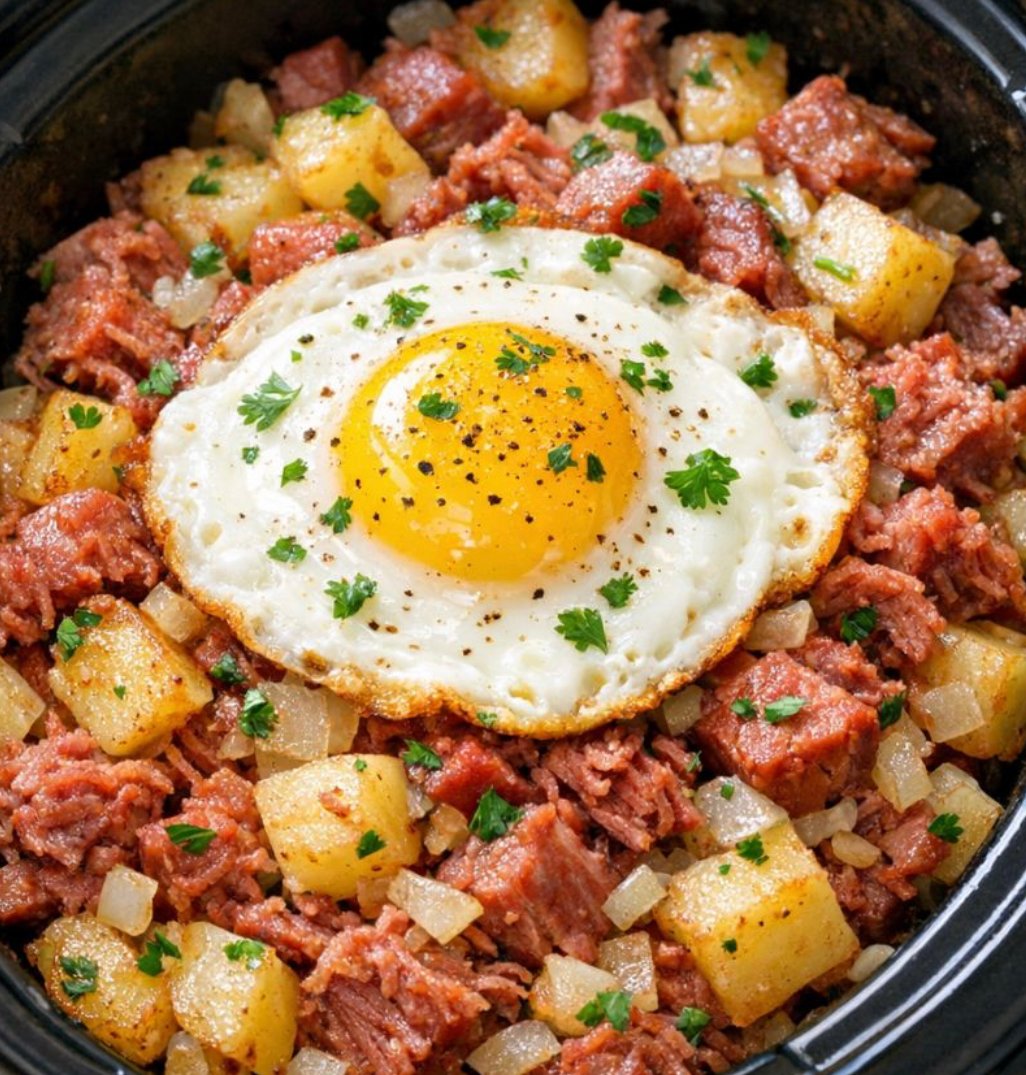
Cover the slow cooker with the lid and cook on LOW for 6 to 8 hours or on HIGH for 3 to 4 hours, until the onions are soft, the potatoes are tender, and the corned beef has broken down and combined with the potatoes into a hash-like mixture.
7. Stir and Season
Once cooked, use a large spoon to gently stir everything together, breaking up any larger pieces of corned beef and folding the potatoes through until it looks like a cohesive hash. Taste and add a pinch of salt and black pepper if needed, keeping in mind that canned corned beef is already salty.
8. Serve
Serve the hash hot straight from the slow cooker. If you like it a little crispier, scoop portions into a hot skillet with a bit of oil and pan-fry for a few minutes to get browned edges before serving.
What Is Canned Corned Beef?
Canned corned beef (often sold under brand names like Hormel, Libby’s, or Hereford) is a precooked, canned meat product with a long shelf life. It’s made from beef brisket that has been cured with salt and spices, then cooked and canned.
What it looks like: When you open the can, the corned beef is surrounded by a layer of gelatin. Don’t be alarmed—this is normal. The gelatin is simply rendered collagen from the beef. It melts completely when heated, adding richness and body to the dish.
What it tastes like: Salty, beefy, slightly spiced (cloves, bay leaves, peppercorns). The texture is tender and shreddable when heated.
Why use canned instead of fresh? Fresh corned beef brisket is delicious but expensive and takes hours to cook. Canned corned beef is cheap, shelf-stable, and ready to use. It’s the original “poor man’s” protein.
The “Don’t Stir” Rule (Important!)
This recipe asks you to layer the ingredients and then not stir before cooking. This isn’t just being fussy. There’s a good reason:
1. The corned beef needs to break down slowly – Leaving it on the bottom allows the heat to gently melt the fat and gelatin, transforming the canned meat into tender, shreddable pieces.
2. The potatoes stay intact – Potatoes are delicate. If you stir them raw into the corned beef, they can break apart and become mushy. Keeping them on top allows them to steam gently.
3. Layers create flavor – As the corned beef cooks, its juices rise up through the potatoes and onions. The potatoes trap some of that moisture, creating a perfect balance.
When to stir: After 6–8 hours, when everything is cooked through. That’s when you stir everything together.
Optional Pan-Fry: The Secret to Crispy Hash
Hash is traditionally served with crispy, browned edges. The slow cooker alone won’t give you that texture—it’s too moist. But a quick pan-fry after slow cooking transforms the dish completely.
How to do it:
-
Heat a large skillet over medium-high heatwith 1–2 tablespoons of oil or butter.
-
Scoop portions of the cooked hash into the skillet and press down lightly with a spatula to form a patty.
-
Cook undisturbed for 3–4 minutes until the bottom is golden brown and crispy.
-
Flip and cook the other side for another 2–3 minutes.
-
Serve immediately.
Why it’s worth it: The contrast between the crispy, browned exterior and the tender, savory interior takes this dish from good to unforgettable.
Pro tip: Use the pan drippings from the hash itself—no need for extra oil if your hash is moist enough.
Variations & Tips from My Kitchen
Corned Beef Variations
-
Fresh corned beef brisket – Cut into 1-inch cubes. Cook on LOW for 8–9 hours. More expensive but delicious.
-
Leftover corned beef – Shred and use instead of canned. Reduce broth to ½ cup.
-
Spam – Diced Spam works in a pinch. Reduce salt (Spam is very salty).
Potato Variations
-
Fresh potatoes – Peel and dice 4 medium russet or Yukon Gold potatoes. No need to pre-cook; they’ll cook in the slow cooker. Add ½ cup extra broth.
-
Canned whole new potatoes – Cut into quarters instead of using diced.
-
Sweet potatoes – For a different flavor profile. Use 2 medium sweet potatoes, peeled and diced.
Onion Variations
-
Red onion – Milder and adds color.
-
Sweet onion (Vidalia) – Adds natural sweetness.
-
Shallots – Use 4–5 shallots, finely chopped, for a more delicate flavor.
-
Add garlic – Add 4–6 cloves of minced garlic with the onion.
Add-In Variations (Extras Beyond 4 Ingredients)
-
Bell peppers – Add 1 chopped bell pepper with the onion.
-
Cabbage – Add 2 cups of shredded cabbage for a “corned beef and cabbage” hash.
-
Carrots – Add 1 cup of diced carrots with the onion.
-
Mushrooms – Add 8 ounces of sliced mushrooms.
-
Fresh herbs – Stir in fresh parsley or thyme at the end.
-
Hot sauce – Add a few dashes before cooking for heat.
Serving Suggestions
-
With fried eggs – The classic pairing. A runny yolk over crispy hash is pure heaven.
-
On toast – Serve over buttered toast for a hearty breakfast or lunch.
-
With ketchup or hot sauce – Traditional condiments for corned beef hash.
-
With a side of pickles – Cornichons or dill pickles cut through the richness.
-
Under poached eggs – For a corned beef hash Benedict.
Storage & Reheating
-
Refrigerate – Store in an airtight container for up to 5 days. The flavors improve overnight.
-
Reheat (skillet) – The best method for crispy hash. Heat a skillet over medium-high heat with a little oil. Press the hash into the pan and cook until browned, then flip.
-
Reheat (microwave) – Quickest option, but the hash will be soft, not crispy. Microwave in 60-second bursts, stirring in between.
-
Reheat (oven) – Spread on a baking sheet and warm at 350°F for 10–15 minutes. For crispy edges, broil for 1–2 minutes at the end.
-
Freeze – Freeze in a sealed container for up to 3 months. Thaw overnight in the fridge before reheating. The texture of the potatoes may soften, but the flavor remains good.
-
Make ahead – This dish is perfect for making a day ahead. The flavors meld and improve overnight.
The History of Corned Beef Hash
Corned beef hash has been a staple of American cuisine since the late 19th century. It originated as a way to use up leftovers—specifically, leftover corned beef from a boiled dinner.
The name: “Hash” comes from the French word “hacher,” meaning “to chop.” The dish is defined by its chopped or shredded meat and potatoes.
Why it’s “poor man’s” food: Corned beef hash was traditionally made with leftovers, stretching a small amount of expensive meat (corned beef) with cheap fillers (potatoes and onions). It was a meal of thrift and resourcefulness.
Canned corned beef hash: In the early 20th century, companies began canning corned beef hash, making it even more accessible and shelf-stable. It became a pantry staple during the Great Depression and World War II.
This slow cooker version honors that tradition of frugality—taking inexpensive canned ingredients and transforming them into something warm, satisfying, and delicious.
Pro Tips for Perfect Slow Cooker Hash
-
Don’t drain any fat from the corned beef – That fat (and the gelatin) adds flavor and richness.
-
Don’t over-stir at the beginning – Layering, not mixing, gives you the best texture.
-
Use low-sodium beef broth – Canned corned beef is very salty. Low-sodium broth gives you some control.
-
Taste before adding salt – You almost certainly won’t need extra salt.
-
Add black pepper generously – Corned beef hash loves black pepper.
-
For crispy hash, pan-fry after slow cooking – The slow cooker makes it tender; the skillet makes it crispy. Do both.
-
Serve with eggs – A fried or poached egg on top of crispy hash is one of life’s great pleasures.
Troubleshooting Common Issues
| Problem | Likely Cause | Solution |
|---|---|---|
| Too salty | Canned corned beef + regular broth | Next time use low-sodium broth; add a diced potato (remove after cooking) |
| Too moist/watery | Potatoes released too much liquid | Cook uncovered for last 30 minutes; pan-fry before serving |
| Potatoes fell apart | Overcooked or stirred too early | Next time, don’t stir until the end; use firmer canned potatoes |
| Bland | Not enough seasoning | Add black pepper, garlic powder, or hot sauce at the end |
| Corned beef didn’t break down | Cans were old or not cooked long enough | Cook another hour; break up with a spoon |
| Burned on bottom | Not enough liquid or slow cooker runs hot | Add ½ cup more broth next time; use a slow cooker liner |
Final Bite
Slow Cooker Poor Man’s 4-Ingredient Hashis the kind of recipe that feels like a secret. It’s so simple, so inexpensive, so hands-off—and yet the result is deeply satisfying, savory, and surprisingly delicious.
The corned beef melts into tender shreds. The potatoes soak up all that beefy, oniony goodness. And the whole thing costs less than a takeout coffee. Add a fried egg on top and you’ve got a breakfast that’ll fuel your whole day.
This is frugal cooking at its finest—humble ingredients, treated simply, transformed into something wonderful. Because you don’t need expensive food to eat well.
Four ingredients. One slow cooker. A meal that proves the best things in life are often the simplest.
Poor man’s hash? Rich man’s flavor.