

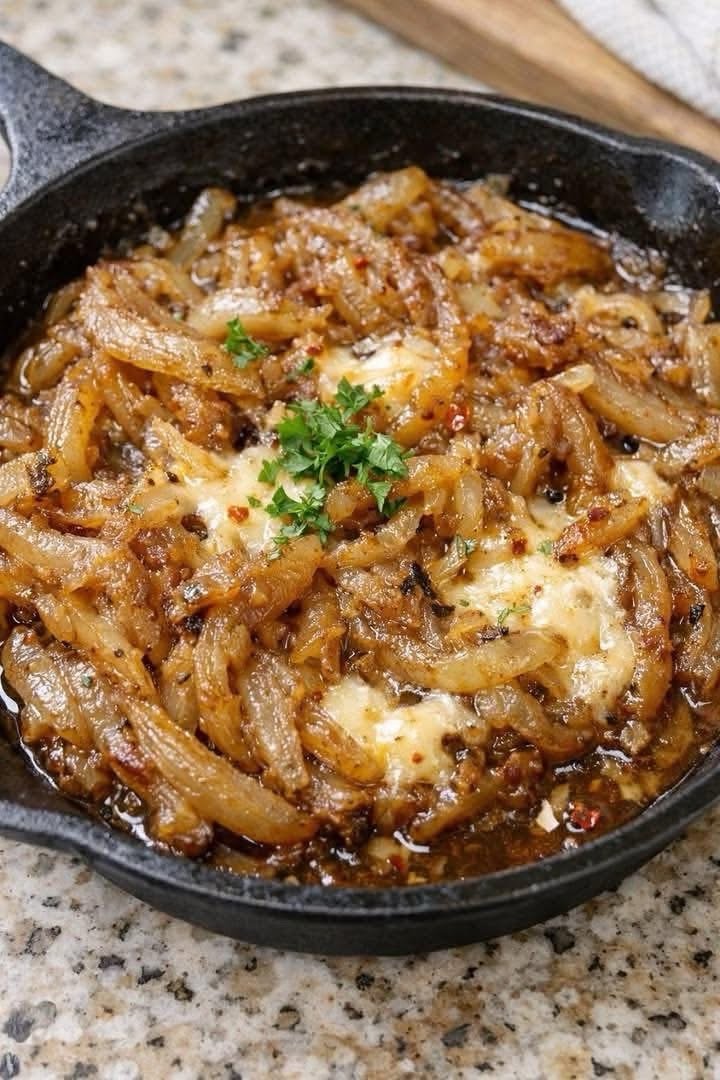
Hard times often produce the most creative cooking. During the Great Depression, families across the American South had to stretch every penny. Onions were cheap, available, and packed with flavor. This Southern 5-ingredient Depression-era onion supper was born from that necessity. It transforms humble onions into a warm, savory, almost stew-like dish that is deeply satisfying. Sliced onions simmer slowly with a little butter or bacon drippings, a splash of water or broth, and simple seasonings until they become jammy, sweet, and meltingly tender.
This Southern Depression-era onion supper is proof that you do not need expensive ingredients to eat well. With just onions, a fat source, a liquid, salt, and pepper, you can create a dish that is comforting, versatile, and surprisingly delicious. It can be a side dish alongside cornbread and beans, a topping for baked potatoes or rice, or even a meatless main course when times are tight. The long, slow cooking caramelizes the onions, bringing out their natural sweetness and creating a rich, savory “gravy” from their own juices. This is simple, honest cooking at its finest.
Why You Will Love This Recipe
· Only Five Ingredients: Onions, fat, liquid, salt, and pepper.
· Incredibly Budget-Friendly: Onions cost pennies per serving.
· Deep, Sweet, Savory Flavor: Slow cooking transforms onions into something remarkable.
· Versatile: Serve as a side dish, a topping, or a main course.
· Naturally Vegetarian and Vegan (depending on fat).
· Great for Meal Prep: Tastes even better the next day.
· A Taste of History: Connect with Depression-era Southern cooking.
Ingredients List
· 4 large yellow onions (about 3 lbs), thinly sliced
· 3 tablespoons bacon drippings, butter, or olive oil
· 1 cup water or low-sodium vegetable broth
· 1 teaspoon kosher salt
· ½ teaspoon black pepper
Optional (but recommended):
· 1 tablespoon all-purpose flour (for thickening)
· 1 teaspoon sugar (to enhance caramelization)
· Fresh parsley for garnish
Step-by-Step Instructions
Step 1: Prepare the Onions
Peel the onions. Cut them in half from root to tip, then slice them into thin half-moons, about ¼ inch thick. The thinner the slices, the faster they will caramelize and soften.
Step 2: Sauté the Onions
Heat a large skillet or Dutch oven over medium heat. Add the bacon drippings, butter, or olive oil. When the fat is hot, add the sliced onions. Cook for 10-12 minutes, stirring occasionally, until the onions are softened and starting to brown at the edges.
Step 3: Add the Liquid and Seasonings
Sprinkle the salt and pepper over the onions. Add the water or broth. If using sugar, add it now. Stir to combine. Scrape the bottom of the pan to release any browned bits (fond).
Step 4: Simmer Low and Slow
Reduce the heat to low. Cover the skillet and simmer for 20-30 minutes, stirring occasionally, until the onions are very soft, translucent, and almost jammy. The liquid should reduce into a thin, savory gravy.
Step 5: Thicken (Optional)
If you prefer a thicker, stew-like consistency, sprinkle the flour over the onions during the last 5 minutes of cooking. Stir constantly for 2-3 minutes until the gravy thickens.
Step 6: Serve
Taste and add more salt or pepper if needed. Garnish with fresh parsley if desired. Serve hot.
Cooking Tips and Pro Tips for Best Results
· Use yellow onions: Yellow onions have the best balance of sweetness and savory depth for this dish. Sweet onions (like Vidalia) will make the dish very sweet. Red onions will work but turn the dish a purple-brown color.
· Slice onions thinly and uniformly: Thin, even slices cook more evenly and caramelize faster. A mandoline makes quick work of this, but a sharp knife works well too.
· Use bacon drippings for authentic flavor: Bacon drippings are traditional in Southern Depression-era cooking. They add a smoky, savory depth that water or broth alone cannot provide. If you do not have bacon drippings, butter is the next best choice.
· Do not rush the caramelization: The long, slow cooking is essential for developing the onions’ natural sweetness. If you cook them over high heat, they will burn before they soften. Low and slow is the key.
· Scrape the bottom of the pan: The browned bits (fond) stuck to the bottom of the skillet are packed with flavor. Adding liquid and scraping them up incorporates that flavor into the gravy.
· Make it a meal: Stir in a can of drained white beans or chickpeas during the last 10 minutes of cooking for a heartier, protein-packed main course.
Variations and Substitutions
Bacon Onion Supper:
Cook 4 slices of chopped bacon in the skillet until crispy. Remove the bacon with a slotted spoon and set aside. Use the rendered bacon fat as your fat source. Add the bacon back to the skillet at the end. This version is richer and smokier.
Creamed Onion Supper:
During the last 5 minutes of cooking, stir in ½ cup of heavy cream, half-and-half, or sour cream. Add 2 tablespoons of flour mixed with 2 tablespoons of water to thicken. The result is a creamy, gravy-like dish perfect over toast or biscuits.
Tomato Onion Supper:
Add 1 can (15 oz) of diced tomatoes (undrained) along with the water. Reduce the water to ½ cup. The tomatoes add acidity and brightness, making the dish more robust. This was a common variation when tomatoes were in season.
Herbed Onion Supper:
Add 1 teaspoon of dried thyme, ½ teaspoon of dried rosemary, and 2 cloves of minced garlic along with the onions. The herbs add an earthy, aromatic depth.
Cheese-Topped Onion Supper:
After simmering, transfer the onions to a small baking dish. Sprinkle with 1 cup of shredded cheddar or Swiss cheese. Broil for 2-3 minutes until bubbly and golden. This turns the side dish into a hearty casserole.
Vegan Onion Supper:
Use olive oil or coconut oil instead of bacon drippings or butter. Use vegetable broth instead of water. The dish remains deeply flavorful and satisfying.
Serving Suggestions
This Southern Depression-era onion supper is incredibly versatile. Serve it:
· As a Side Dish: Alongside cornbread, pinto beans, collard greens, or fried potatoes.
· Over Rice or Grits: Spoon the onions and gravy over a bed of white rice, brown rice, or creamy grits.
· On Toast or Biscuits: Pile it onto thick slices of toasted bread or split buttermilk biscuits for an open-faced sandwich.
· Over Baked Potatoes: A hearty topping for baked russet potatoes.
· With Eggs: Serve alongside fried or poached eggs for a simple breakfast or brunch.
· As a Meatless Main Course: Eat a bowl on its own with a side of crusty bread.
Pair with:
· Cornbread or biscuits
· Collard greens or turnip greens
· Pinto beans or black-eyed peas
· Fried catfish or chicken (if you want to add meat)
Storage and Reheating Instructions
Refrigerator:
Store leftovers in an airtight container for up to 5 days. The flavors deepen significantly overnight. The onions will become softer and more jammy.
Freezer:
Freeze in a freezer-safe container for up to 3 months. The texture of the onions will be very soft, but the flavor remains excellent. Thaw overnight in the refrigerator before reheating.
Reheating:
· Stovetop (Best): Transfer to a saucepan and reheat over medium-low heat for 5-7 minutes, stirring occasionally. Add a splash of water or broth if the mixture is too thick.
· Microwave: Heat individual portions covered for 60-90 seconds, stirring halfway through.
Nutritional Information (Approximate, per serving – serves 4)
· Calories: 160
· Protein: 2g
· Fat: 10g (using butter)
· Saturated Fat: 5g
· Carbohydrates: 18g
· Fiber: 3g
· Sugar: 8g
· Sodium: 540mg
· Potassium: 320mg
· Vitamin C: 15% Daily Value
· Vitamin B6: 10% Daily Value
Frequently Asked Questions (FAQ)
1. Why is this called “Depression-era” onion supper?
During the Great Depression, many American families could not afford meat. They relied on inexpensive, readily available ingredients like onions, potatoes, beans, and cornmeal. Onions were particularly valuable because they added flavor and bulk to meals without costing much. This dish represents the resourcefulness of cooks who made the most of what they had.
2. Can I use red onions instead of yellow?
Yes. Red onions will work, but they are slightly more pungent and will turn the dish a purple-brown color. The flavor will be a bit sharper but still delicious. Sweet onions (like Vidalia or Walla Walla) will make the dish noticeably sweeter.
3. Do I have to use bacon drippings?
No. Bacon drippings are traditional and add the most authentic Depression-era flavor, but you can use butter, olive oil, or coconut oil. Butter adds richness, olive oil adds a fruity note, and coconut oil adds a hint of sweetness. For a truly authentic taste, save your bacon fat and use it here.
4. Can I add other vegetables to this dish?
Absolutely. Depression-era cooks often added whatever they had on hand. Sliced bell peppers, diced celery, shredded carrots, or sliced mushrooms all work well. Add them when you add the onions. Do not add more than 2 cups of extra vegetables, or the dish may become watery.
5. Is this dish gluten-free?
Yes, as written. Onions, fat, water, salt, and pepper are naturally gluten-free. If you choose to thicken with flour, substitute cornstarch (1 tablespoon cornstarch mixed with 1 tablespoon cold water) for a gluten-free thickener.
6. Can I make this dish in a slow cooker?
Yes. Sauté the onions on the stovetop first to develop flavor, then transfer them to a slow cooker. Add the liquid and seasonings. Cook on low for 4-5 hours. The result will be even softer and more jammy. This is a great hands-off method for large batches.