

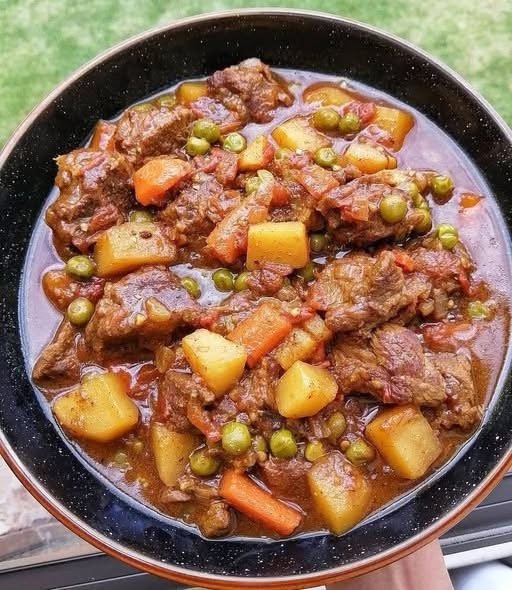
There are stews that are merely good, and then there are stews that become a family legend. This beef veggie stew falls into the second category. It is the kind of meal that simmers away on the stove for hours, filling your kitchen with an aroma so intoxicating that everyone magically appears in the kitchen long before dinner is ready. Tender chunks of beef, vibrant vegetables, and a rich, savory broth come together in perfect harmony. Every spoonful is a study in comfort: hearty, satisfying, and deeply nourishing.
This beef veggie stew is a masterclass in building flavor with simple ingredients. The beef is seared until deeply browned, creating a foundation of savory richness. Vegetables—carrots, potatoes, celery, and onions—add sweetness, texture, and color. A splash of red wine and a handful of herbs elevate the broth to something truly special. Unlike many stews that can be heavy or one-dimensional, this version balances richness with brightness, thanks to a touch of tomato paste and fresh parsley. Serve it with crusty bread or mashed potatoes, and you have a meal that will warm you from the inside out.
Why You Will Love This Recipe
· Deep, Rich Flavor: Slow-simmered beef and vegetables create an incredibly savory broth.
· One Pot, Minimal Cleanup: Everything cooks in a single Dutch oven or large pot.
· Packed with Vegetables: Carrots, potatoes, celery, onions, and peas.
· Tender, Fall-Apart Beef: Low and slow cooking transforms chuck into buttery perfection.
· Freezer-Friendly: Make a double batch and freeze half for later.
· Great for Meal Prep: Tastes even better the next day.
· Comfort Food at Its Best: The ultimate cold-weather dinner.
Ingredients List
For the Beef:
· 2 lbs (900g) beef chuck roast, cut into 1 ½-inch cubes
· 1 teaspoon kosher salt
· ½ teaspoon black pepper
· 2 tablespoons olive oil, divided
For the Aromatics and Vegetables:
· 1 large yellow onion, diced
· 3 cloves garlic, minced
· 3 carrots, peeled and sliced into ½-inch rounds
· 2 celery ribs, diced
· 1 ½ lbs (about 3 medium) russet or Yukon Gold potatoes, cut into 1-inch cubes
· 1 cup frozen peas (add at the end)
For the Broth:
· 2 tablespoons tomato paste
· 1 cup dry red wine (such as Merlot or Cabernet) or beef broth
· 4 cups low-sodium beef broth
· 2 tablespoons Worcestershire sauce
· 2 bay leaves
· 1 teaspoon dried thyme
· 1 teaspoon dried rosemary (or 1 sprig fresh)
· ½ teaspoon black pepper
For Thickening (Optional):
· 2 tablespoons cornstarch mixed with 2 tablespoons cold water
For Garnish:
· Fresh parsley, chopped
Step-by-Step Instructions
Step 1: Prepare and Season the Beef
Pat the beef cubes completely dry with paper towels. This is essential for proper browning. In a small bowl, combine the kosher salt and black pepper. Season the beef cubes evenly on all sides.
Step 2: Sear the Beef
Heat 1 tablespoon of olive oil in a large Dutch oven or heavy-bottomed pot over medium-high heat. Working in batches to avoid crowding, add the beef cubes in a single layer. Sear for 2-3 minutes per side until deeply browned. Transfer the seared beef to a plate and set aside. Repeat with the remaining beef, adding more oil as needed.
Step 3: Sauté the Aromatics
Reduce the heat to medium. Add the remaining 1 tablespoon of olive oil to the pot. Add the diced onion and cook for 3-4 minutes until softened. Add the garlic and cook for 60 seconds until fragrant. Add the tomato paste and cook for 1-2 minutes, stirring constantly, until it darkens slightly. This step deepens the flavor.
Step 4: Deglaze the Pot
Pour in the red wine (or additional beef broth), scraping the bottom of the pot with a wooden spoon to release all the browned bits (fond). Let the wine bubble and reduce by half, about 2-3 minutes.
Step 5: Add the Broth and Seasonings
Return the seared beef to the pot. Add the beef broth, Worcestershire sauce, bay leaves, thyme, rosemary, and black pepper. Stir to combine. Bring the stew to a boil, then reduce the heat to low.
Step 6: Simmer Low and Slow
Cover the pot with a lid and simmer gently for 1 ½ hours, stirring occasionally. Add the carrots, celery, and potatoes. Continue simmering for another 30-45 minutes, until the beef is fork-tender and the vegetables are soft.
Step 7: Add the Peas and Thicken (Optional)
Stir in the frozen peas. If you prefer a thicker stew, whisk the cornstarch and cold water together in a small bowl until smooth, then stir the slurry into the stew. Cook for 5-10 minutes, stirring occasionally, until the stew has thickened to your liking.
Step 8: Adjust Seasoning and Serve
Remove the bay leaves and any fresh herb sprigs. Taste the stew and add more salt, pepper, or Worcestershire sauce if needed. Garnish with fresh parsley. Serve hot.
Cooking Tips and Pro Tips for Best Results
· Pat the beef completely dry: Moisture on the surface prevents browning. Use paper towels to remove as much surface moisture as possible before seasoning.
· Sear in batches: Overcrowding the pot lowers the temperature and causes the beef to steam instead of sear. Cook in 2-3 batches for the best browning.
· Use beef chuck: Chuck roast has the perfect amount of marbling and connective tissue for stewing. It becomes tender and flavorful after long cooking. Avoid lean cuts like sirloin or tenderloin.
· Do not skip the tomato paste: Cooking the tomato paste for a minute or two before adding liquid caramelizes its natural sugars and adds a deep, savory richness to the broth.
· Use low-sodium broth: Canned and boxed broths vary widely in salt content. Low-sodium broth gives you control over the final seasoning. You can always add more salt at the end.
· Let it rest: Like many stews, this beef veggie stew tastes even better the next day. Make it a day ahead for the best flavor.
Variations and Substitutions
Guinness Beef Stew:
Replace the red wine with 1 cup of Guinness stout. The dark beer adds a rich, malty, slightly bitter depth. Use fresh thyme and rosemary. This is a classic Irish-inspired version.
Slow Cooker Beef Veggie Stew:
After searing the beef and sautéing the aromatics, transfer everything to a 6-quart slow cooker. Add the remaining ingredients except the peas and cornstarch. Cook on low for 7-8 hours or on high for 4-5 hours. Stir in the peas during the last 30 minutes. Thicken on the stovetop or with a cornstarch slurry.
Tomato-Based Beef Veggie Stew:
Add 1 can (15 oz) of crushed tomatoes or diced tomatoes along with the beef broth. Use ½ cup of red wine instead of 1 cup. The tomatoes add brightness and acidity.
Mushroom and Beef Stew:
Add 8 oz of sliced cremini mushrooms along with the onions. Sauté them until they release their liquid and start to brown. Mushrooms add an earthy, umami depth.
Herb-Forward Stew:
Add 2 sprigs of fresh rosemary, 4 sprigs of fresh thyme, and 2 sprigs of fresh sage. Tie them together with kitchen twine for easy removal. The fresh herbs make the stew taste like a garden.
Low-Fat Beef Veggie Stew:
Trim all visible fat from the beef before cubing. Use only 1 tablespoon of oil for searing. Omit the wine and use all broth. Chill the stew after cooking and skim off any solidified fat from the surface before reheating.
Serving Suggestions
This beef veggie stew is a complete meal, but these accompaniments make it even better:
· Crusty Bread or Baguette: Essential for dipping and sopping up the rich broth.
· Mashed Potatoes: Serve the stew over creamy mashed potatoes for double the comfort.
· Egg Noodles or Rice: A bed of noodles or rice catches the broth beautifully.
· Buttermilk Biscuits or Cornbread: Southern-style sides that pair perfectly with stew.
· A Simple Green Salad: A light, tangy salad balances the richness.
Garnishes to try:
· Fresh parsley, thyme, or chives
· A dollop of sour cream or Greek yogurt
· A drizzle of extra virgin olive oil
· Horseradish or whole-grain mustard on the side
Storage and Reheating Instructions
Refrigerator:
Store leftovers in an airtight container for up to 5 days. The flavors deepen significantly overnight. The stew will thicken as it sits, which is normal.
Freezer:
Freeze in freezer-safe containers for up to 3 months. Leave ½ inch of headspace for expansion. Thaw overnight in the refrigerator before reheating.
Reheating:
· Stovetop (Best): Transfer to a saucepan and reheat over medium-low heat for 10-12 minutes, stirring occasionally. Add a splash of beef broth or water if the stew is too thick.
· Microwave: Heat individual portions covered for 90 seconds, stir, then heat for another 60 seconds.
· Slow Cooker: Return leftovers to the slow cooker on the WARM setting for 30-45 minutes.
Nutritional Information (Approximate, per serving – serves 6)
· Calories: 480
· Protein: 38g
· Fat: 20g
· Saturated Fat: 7g
· Carbohydrates: 32g
· Fiber: 6g
· Sugar: 7g
· Sodium: 680mg
· Potassium: 1150mg
· Calcium: 8% Daily Value
· Iron: 28% Daily Value
Frequently Asked Questions (FAQ)
1. What is the best cut of beef for stew?
Beef chuck is the gold standard. It comes from the shoulder and has excellent marbling and connective tissue that breaks down during long cooking, resulting in tender, flavorful meat. Other good options include bottom round, top round, or brisket. Avoid very lean cuts like sirloin or tenderloin, which become dry and tough.
2. Why do I need to sear the beef before simmering?
Searing creates the Maillard reaction, a chemical process that produces deep, complex, savory flavors. The browned crust on the beef also creates fond—the browned bits stuck to the bottom of the pot—which dissolves into the broth and adds incredible depth. Skipping searing results in a much less flavorful stew.
3. Can I make this stew without wine?
Yes. Substitute the red wine with an equal amount of additional beef broth plus 1 tablespoon of red wine vinegar or balsamic vinegar. The vinegar provides the acidity that balances the richness of the stew.
4. Why is my beef tough even after hours of cooking?
Tough beef usually means it either needs more time or was cooked at too high a temperature. Collagen breaks down into gelatin at around 190°F, which requires time at a gentle simmer. If your beef is tough after 2 hours, continue simmering for another 30-60 minutes, adding a little broth if needed. Also, make sure the heat is low enough that the stew is barely bubbling, not boiling.
5. Can I add other vegetables to this stew?
Absolutely. Parsnips, turnips, rutabaga, celery root, leeks, and sweet potatoes all work beautifully. Add root vegetables (parsnips, turnips) at the same time as the potatoes. Add more delicate vegetables (zucchini, green beans) during the last 15-20 minutes of cooking. Do not add more than 6 cups of total vegetables, or the stew may become overcrowded.
6. How do I thicken stew if I do not have cornstarch?
You have several options. Mashing some of the potatoes against the side of the pot releases starch and thickens the broth naturally. You can also make a flour slurry (2 tablespoons all-purpose flour mixed with ¼ cup cold water) instead of cornstarch. Simmer for another 10-15 minutes to cook out the raw flour taste. A traditional French method is to roll butter in flour (beurre manié) and whisk it into the stew.